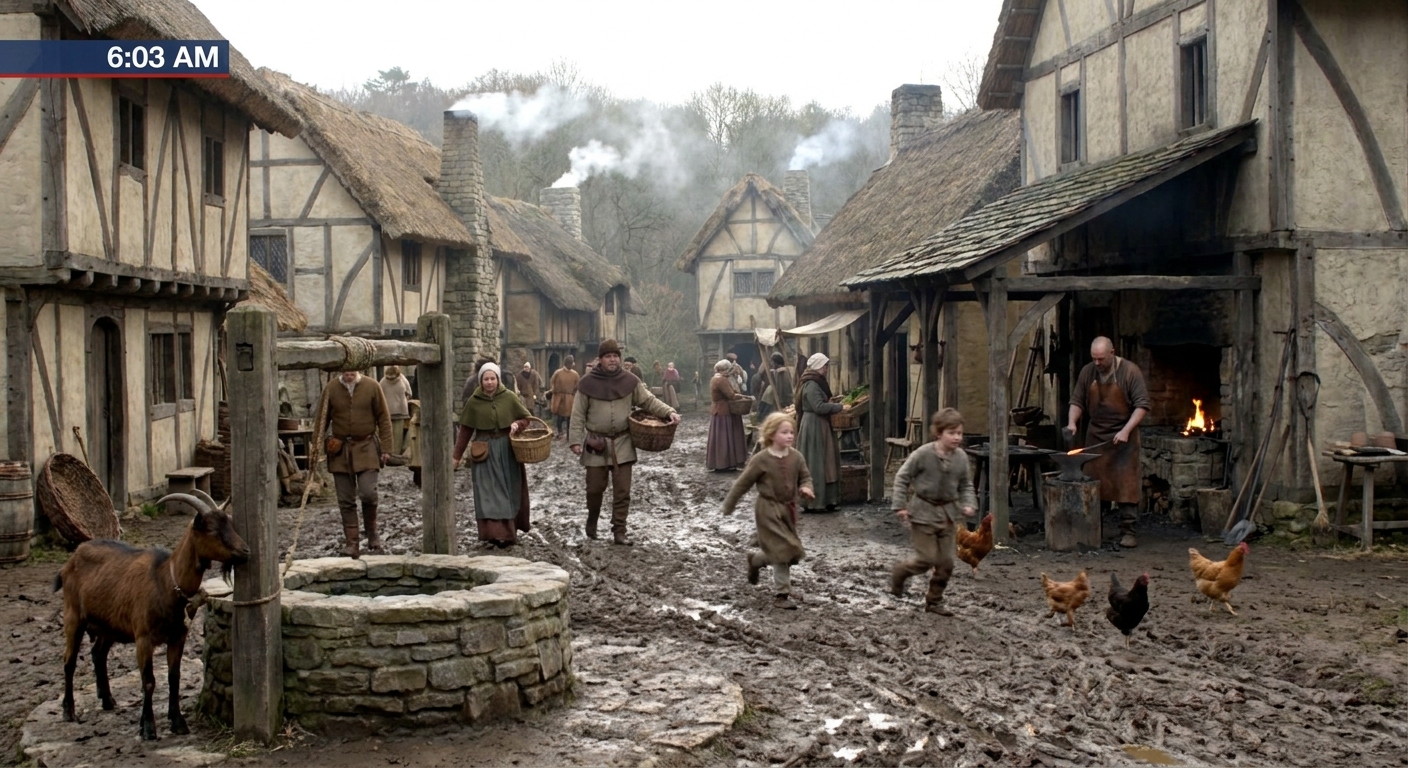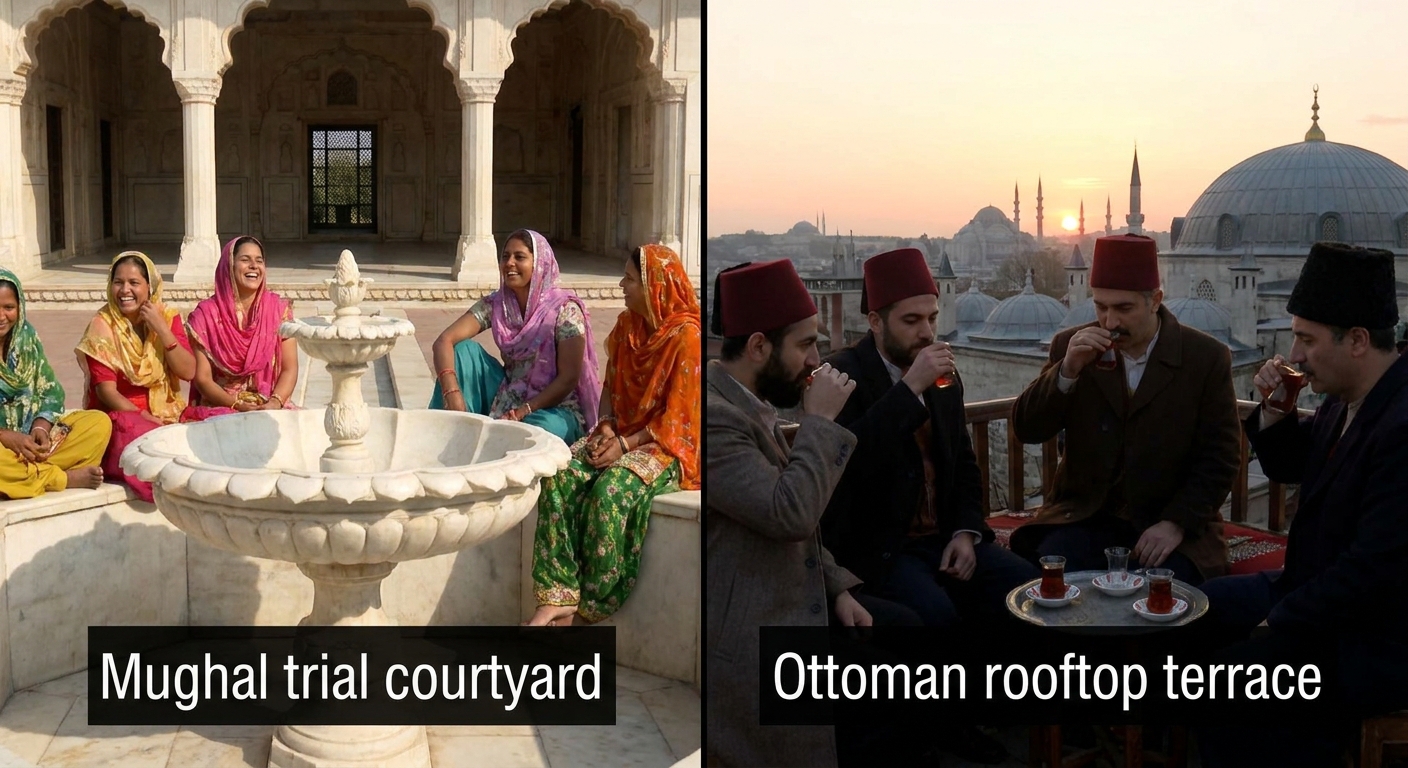
The Mughal and Ottoman empires loom large in world history as military and artistic powers. Yet their longevity rested not just on armies and mosques, but on the everyday routines of artisans, shopkeepers, women managing households, and scholars commuting to madrasas.
Why Compare Empires Through Daily Life?
Comparative political histories of these empires are common; comparative daily life histories are rarer. By juxtaposing Istanbul and Isfahan with Lahore and Agra in the 16th–18th centuries, we can see both shared Islamic urban patterns and regionally distinct textures.
This article pairs archaeological findings, travelogues, court chronicles, and architectural remains to explore how people lived between courtyard and rooftop in these two imperial worlds—and how those patterns echo in contemporary cities.
The Urban Fabric: Streets, Bazaars, and Neighborhoods
Ottoman Cities: Istanbul and Beyond
In Istanbul, the Ottoman capital, the city’s form was shaped by waqf (pious endowment) complexes. The Süleymaniye complex, for example, included not only a mosque but also:
- Hospitals
- Imarets (soup kitchens)
- Madrasas
- Baths
- Caravanserais
Archaeological work and Ottoman cadastral surveys (tahrir defterleri) show how such complexes anchored neighborhoods.
European travelers like Evliya Çelebi and Ogier Ghiselin de Busbecq describe Istanbul’s bazaars as dense, specialized, and surprisingly regulated. The Grand Bazaar (Kapalıçarşı), rebuilt after fires, emerges in records as a world of guild‑regulated shops, standardized weights, and strong surveillance.
Mughal Cities: Agra, Lahore, and Shahjahanabad
Mughal cities also revolved around monumental cores—forts, mosques, caravanserais—but with different spatial logics. The Red Fort and Jama Masjid defined Shahjahanabad (Old Delhi), while Agra’s fort and riverside gardens structured that city.
Excavations and architectural surveys in Shahjahanabad reveal mohallas (neighborhood clusters), often organized by occupation, sect, or kinship. The famed Chandni Chowk bazaar, described in court chronicles and travelers’ accounts, combined commerce with elite residences and processional routes.
Points of Convergence and Difference
Convergence:
- Both empires created imperial cores surrounded by artisanal and commercial quarters.
- Bazaars functioned as economic engines and social theaters, where clothing, speech, and gesture encoded status.
Difference:
- Ottoman waqf complexes integrated welfare institutions more systematically into neighborhood life, as revealed in endowment deeds.
- Mughal urbanism emphasized garden culture along rivers (Agra on the Yamuna, Lahore on the Ravi), blending domestic, funerary, and leisure spaces in ways less common in Istanbul.
Inside the House: Courtyards, Gender, and Privacy
Architectural Archaeology of the Domestic Sphere
In both empires, courtyard houses structured domestic life, but surviving examples and plans reveal variations.
- In Ottoman contexts, houses in cities like Safranbolu and Istanbul’s older quarters show a division between selamlık (public, male reception space) and haremlik (family/private space).
- In North Indian Mughal cities, houses in Old Delhi and Lahore featured angan (courtyards), zanana (women’s quarters), and rooftop terraces.
Archaeological and architectural surveys—such as those compiled by the architect Sedad Hakkı Eldem for Ottoman houses and by Catherine Asher and others for Mughal domestic architecture—provide plans showing circulation routes and room functions.
Daily Routines Behind Walls
Court sources and memoirs offer glimpses of elite women, but what of ordinary households?
- Ottoman probate inventories (tereke defterleri) list household goods, clothing, and debts for deceased individuals across social classes. From them we reconstruct rooms furnished with low cushions, storage chests, simple kitchen equipment, and in some cases, books and writing tools.
- In Mughal India, Persian and vernacular documents—such as legal deeds and family letters preserved in collections like the Rajasthan State Archives—reveal women owning and managing property, sometimes from within segregated domestic spaces.
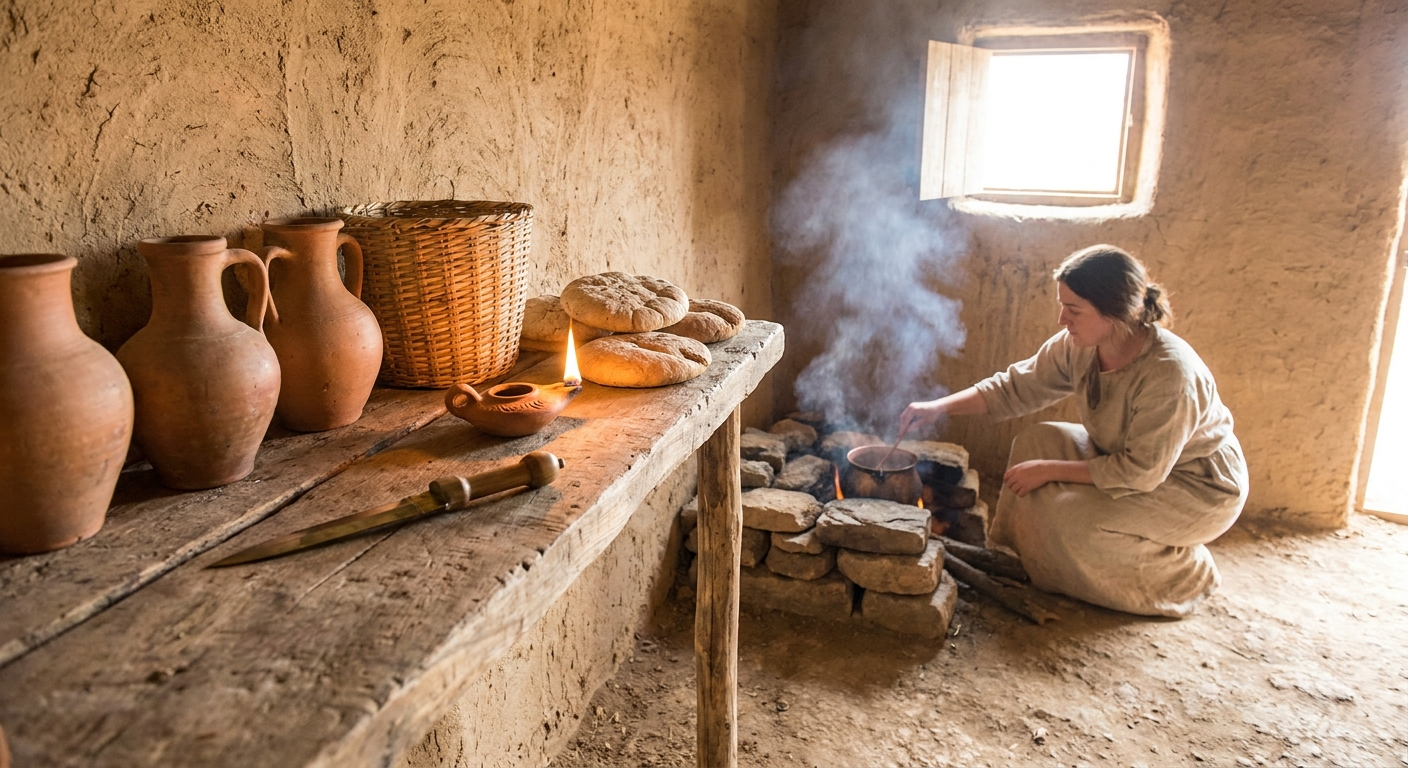
Archaeological remains of cooking hearths, grinding stones, and water storage jars in urban houses at sites like Lahore Fort’s residential quarters and older Istanbul districts indicate a familiar pattern: mornings dominated by food preparation, water hauling, and textile work, largely undertaken by women and servants.
Gendered Space, Fluid Practice
Ideological prescriptions about purdah or harem seclusion often overstated their own reach. Travelogues like that of Jean‑Baptiste Tavernier, alongside court cases about women in markets, show that many women moved through urban spaces for trade, legal disputes, and religious visits.
Yet the architectural emphasis on layered thresholds—street to entrance hall to courtyard to inner rooms—shaped how daily encounters occurred, making privacy both a constraint and a resource.
Work and Craft: Guilds, Workshops, and Invisible Labor
Ottoman Guilds and Artisans
In Ottoman cities, trade guilds (esnaf) regulated daily work. Archival documents—such as the sicils (court records)—record disputes over prices, apprenticeships, and shop locations.
Archaeological excavations around Istanbul’s Tahtakale district reveal layers of workshops: tanners, metalworkers, coffeehouses. Evliya Çelebi’s 17th‑century Seyahatname lists dozens of crafts, from bow‑makers to fez‑makers, each with rituals and hierarchies.
A day in a coppersmith’s shop might involve:
- Early‑morning furnace lighting and hammering, audible across the neighborhood.
- Midday breaks for prayer and food brought from home or nearby vendors.
- Evening cooling of metal and closing of shutters under the watchful eye of market inspectors.
Mughal Artisans and Imperial Demand
Mughal court culture generated intense demand for textiles, jewelry, miniature painting, and architecture. Yet craftsmen lived surprisingly ordinary urban existences.
The Ain‑i Akbari (Abu’l‑Fazl’s description of Akbar’s administration) lists regulated wages and prices for artisans. Archaeological finds in late medieval Lahore and Agra—kilns, pottery dumps, slag from metalworking—ground these texts in specific quarters.
Workdays centered on:
- Commission cycles tied to festivals, weddings, and court orders.
- Collaboration between Hindu, Muslim, and Jain artisans, visible in workshop neighborhoods and joint legal contracts.
- The integration of home and work: looms and tools often occupied courtyards and verandas.
Invisible Labor
Behind both guild structures and imperial workshops stood unfree and low‑status labor: porters, cleaners, kitchen helpers, enslaved persons. Their names rarely appear in records, but their presence is inferred from the sheer logistics of urban life—water provisioning, waste removal, and the maintenance of public baths, all documented in Ottoman and Mughal administrative orders.
Food, Markets, and the Senses
Shared Staples, Regional Flavors
Diet in both empires revolved around grain, legumes, vegetables, and modest amounts of meat, but preparation and ritual use diverged.
- In Ottoman Istanbul, bread from public bakeries, olives, cheese, and stews were common. Court kitchen records (matbah defterleri) detail huge quantities of rice, lamb, and spices for elite consumption.
- In Mughal cities, wheat and rice roti, lentils, yogurt, and spiced dishes dominated. The Jesuit visitor Father Monserrate, in Akbar’s court, comments on the richness of Mughal cuisine and elaborate serving practices.
Archaeological evidence—animal bones, charred seeds, ceramic assemblages—from urban middens in both regions confirm heavy use of chickpeas, lentils, and sheep/goat meat, as well as sugarcane and fruit in wealthier contexts.
Coffeehouses and Gardens: Public Leisure
Coffeehouses became central to Ottoman urban daily life by the 17th century, drawing fierce criticism and eager clientele. Court decrees alternately tried to regulate or close them, while literary sources depict them as sites of storytelling, games, and political talk.
In Mughal cities, gardens (baghs) along riversides served as leisure spaces. Court chronicles and paintings show picnics, musical gatherings, and evening strolls. The garden archaeology of Lahore and Srinagar—terraced layouts, water channels, pavilions—attests to structured yet flexible uses.
Both empires shared a concern with respectable sociability: where one could sit, who could speak, how long one could linger. Modern anxieties about public space—from loitering laws to café culture debates—have clear precedents here.
Religion in the Rhythms of the Day
Mosques punctuated daily time through the call to prayer. Yet religious practice was more diverse than a simple Sunni orthodoxy.
- Ottoman cities hosted Sufi lodges (tekkes) whose dhikr ceremonies and hospitality drew varied participants; endowment deeds describe their soup kitchens and guest rooms.
- Mughal cities encompassed mosques, Sufi shrines (dargahs), Hindu temples, and Jain basadis. Pilgrimage circuits intertwined; inscriptions at shrines record donations from patrons across religious lines.
A day might include:
- Pre‑dawn prayer in a neighborhood mosque.
- Midday visit to a dargah to tie a thread or offer a cloth, as described in Indo‑Persian hagiographies.
- Participation in festivals where soundscapes—drums, recitations, fireworks—reshaped familiar streets.
Religion did not exist apart from daily tasks; it inflected market schedules, court dates, and family rituals.
Modern Echoes: Reading Istanbul and Delhi Today
Walking through present‑day Istanbul or Old Delhi, Lahore or Sarajevo, you can still trace these imperial daily patterns:
- Bazaar logics persist in specialized markets: spice streets, cloth alleys, gold souks.
- Courtyard life survives in older houses, where domestic and economic activities remain intertwined.
- Waqf and charitable traditions inform modern foundations, schools, and soup kitchens.
- Guilds have given way to unions or informal labor markets.
- Coffeehouses and gardens compete with malls and digital sociality.
- Women’s and marginalized groups’ movements through the city have expanded and remain contested.
At the same time, modern urbanization, nationalism, and capitalist development have altered these rhythms:
Comparing Mughal and Ottoman daily life highlights that "Islamic city" is not a monolith but a cluster of overlapping practices: how to organize a courtyard, run a bazaar, or cook for extended family. By reading their cities as archives of everyday behavior, we gain tools for understanding our own struggling metropolises—their inequalities, solidarities, and stubborn habits.
Empires fall; daily routines mutate. Yet the walk from courtyard to rooftop, from home to stall to shrine, continues to structure lives across these regions, a quiet continuity beneath spectacular histories.