The grand narratives of ancient Mesopotamia—Uruk’s city walls, Hammurabi’s law code, the libraries of Ashurbanipal—are built on spectacular finds. Yet the texture of life in the world’s earliest cities is preserved in humbler objects: chipped bowls, loom weights, clay tokens.
The Power of Small Things
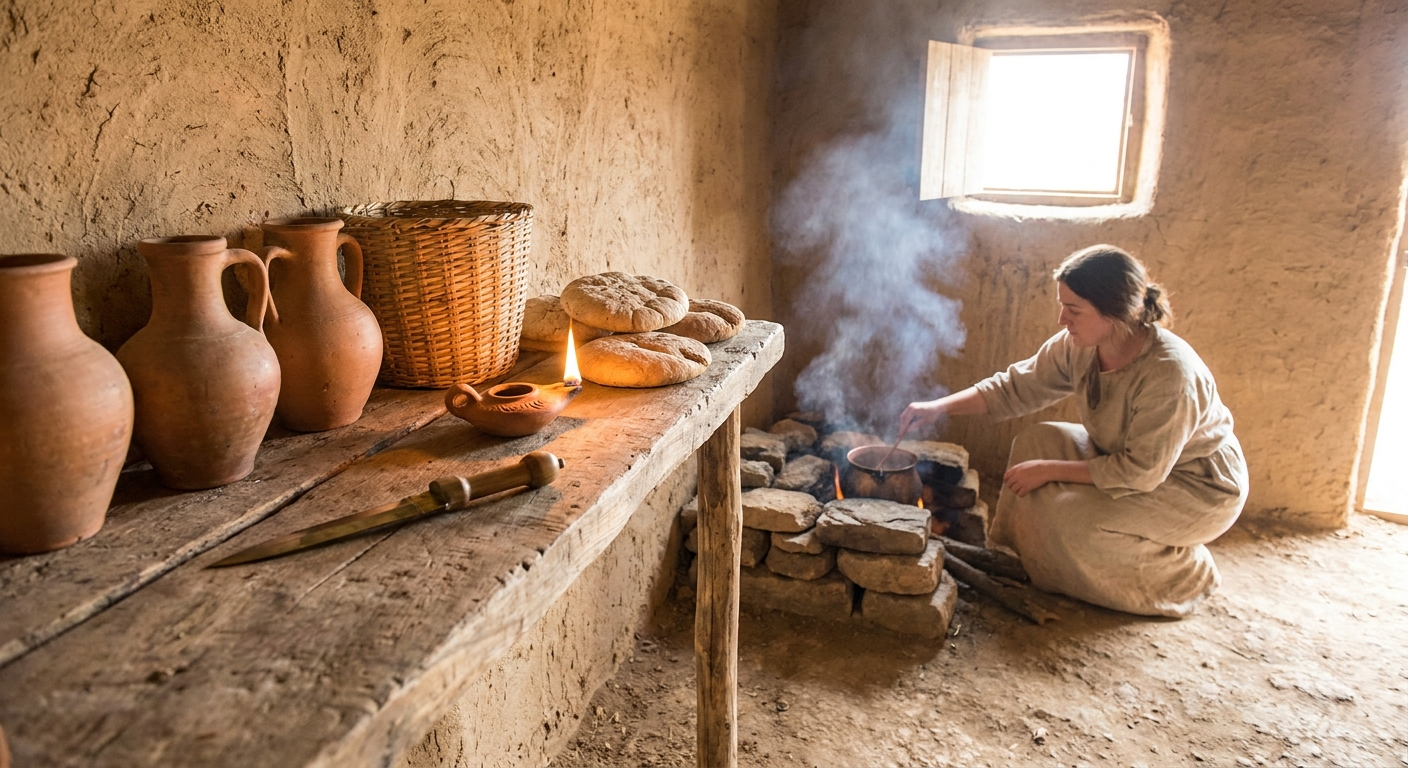
In houses excavated at sites like Ur, Nippur, and Tell Asmar, archaeologists have found rooms that functioned as kitchens or work areas, often containing clusters of everyday items. By treating these as a kind of curated "shelf," we can move item by item to reconstruct what a typical day might have looked like for a household around 2000–1700 BCE.
What follows is a scholarly listicle: seven objects, each a window into daily life, anchored in specific finds and linked to cuneiform texts and modern experience.
1. Clay Cooking Pot: Heat, Grain, and Timing
The most common kitchen artifact in Mesopotamian houses is the ceramic cooking pot, often with soot marks on the exterior. At the site of Ur (modern Tell al‑Muqayyar), Sir Leonard Woolley uncovered hearths with pots still in situ, alongside grinding stones.
What It Tells Us
- Diet: Residue analysis from similar vessels at sites like Tell Leilan indicates stews of barley, lentils, onions, and occasionally meat. The basic pattern: grain plus legumes, much like many modern diets from lentil soups to rice and beans.
- Labor and Time: Cooking a thick barley porridge or stew takes time and supervision. Someone—usually women and dependent family members—had to manage fuel, stir the pot, and avoid scorching.
Cuneiform texts such as the Old Babylonian “Instructions of Šuruppak” advise against overeating and emphasize moderation at meals, implying that even in a world where famine was never far away, daily cooking could veer toward abundance or scarcity depending on harvests and social status.
2. Grinding Stone (Quern): The Soundtrack of Morning
In domestic contexts at Nippur and Eshnunna, querns and handstones are found in corners where women likely spent much of the morning grinding grain. Wear patterns indicate prolonged, repetitive use.
What It Tells Us
- Gendered Work: Iconography on cylinder seals and reliefs often shows women engaged in grinding or bread making. Administrative tablets listing ration allocations sometimes separate male and female workers, revealing different food entitlements.
- Physical Strain: Osteological studies of skeletons from early Mesopotamian cemeteries show joint wear and spinal issues consistent with kneeling and repetitive upper‑body strain.
If the hum of an electric appliance signals breakfast today, the grating rhythm of stone on stone marked the start of Mesopotamian days, a sound shared across urban courtyards.
3. Clay Tablet and Stylus: Lists, Rations, and Memory
It might seem odd to find a clay tablet on a "kitchen shelf," but in many houses, small tablets recording rations, debts, or deliveries were kept close to where goods were stored and dispensed. At Uruk and Lagash, early administrative tablets document the outflow of grain and beer from household or temple storerooms.
What It Tells Us
- Bureaucracy at Home: Even non‑elite households needed records—who owed whom barley, which relative borrowed a tool, how much beer was issued to a worker. Some tablets are clearly school exercises, suggesting that scribal training sometimes happened in domestic spaces.
- Cognitive Worlds: The invention of cuneiform transformed daily life. A shopping list incised in wet clay—"3 sila of barley, 1 measure of oil"—is a cognitive tool not unlike a modern phone note.
Texts like the "Household Accounts" from Old Babylonian Sippar show women managing resources, sometimes named as responsible for distributing rations to dependents and servants, complicating simple models of male‑only economic control.
4. Loom Weights and Spindle Whorls: Clothes as Daily Production
Clusters of baked clay loom weights and small stone or ceramic spindle whorls in houses—such as those found at Tell Brak—reveal that textile production was embedded in domestic life.
What It Tells Us
- Everyday Craft: Production was not limited to specialized workshops. Many households spun thread and wove cloth for their own use and perhaps for local exchange.
- Women’s Economic Role: Texts from the Ur III period record large groups of women working as weavers in temple and palace contexts, but the same skills informed household economies.
Iconography from cylinder seals occasionally shows seated women spinning, much like later Greek vase paintings. The continuity of gesture—from Bronze Age Mesopotamia to modern hand‑spinners—is striking: a twist of fiber, a drop of weight, a steady rotation.
5. Ceramic Beer Jar: Fermented Staples and Social Glue
Beer was a staple in Mesopotamian diets, often safer than water and nutritionally significant. Archaeologists identify beer jars by shape and sometimes by straw impressions from sipping tubes.
At the site of Tell Bazi on the Euphrates, residue analysis in jars suggested a barley‑based beer. Cylinder seals and reliefs regularly depict people drinking from large jars with straws—a communal act.
What It Tells Us
- Nutrition and Hydration: Cuneiform ration lists, such as those from the Ur III archives of Puzrish‑Dagan, standardize daily beer allocations alongside grain and oil. Beer was not a luxury but part of the basic wage for workers.
- Social Interaction: The “Hymn to Ninkasi”, a Sumerian song praising the beer goddess, doubles as a recipe and an ode to conviviality. Beer drinking structured gatherings much as coffee, tea, or wine does today.
The presence of beer jars in domestic contexts suggests both private meals and small‑scale hospitality—neighbors sharing a drink in the courtyard as evening cooled the baked‑brick walls.
6. Small Clay Figurine: Household Gods and Intimate Rituals
Among domestic debris, archaeologists often find small terracotta figurines—of women, animals, or deities—sometimes broken, sometimes cached in corners. At Nippur, such figurines appear in household layers rather than temples.
What It Tells Us
- Domestic Religion: While major temples like the ziggurat of Ur attracted public worship, daily appeals to the divine likely happened at home. Figurines may represent protective spirits, fertility concerns, or specific gods.
- Emotional Worlds: A woman in labor, a sick child, a risky journey—moments of vulnerability likely prompted quick, informal rituals using these small objects.
Texts like personal prayers and incantations, preserved on clay tablets, reveal individuals addressing gods about illness, poverty, or unjust treatment. These intimate texts pair naturally with the mute but expressive figurines on the shelf.
7. Seal and Seal Impression: Security, Identity, and Trust
Cylinder seals—intricately carved stone rollers used to sign clay documents and seal containers—might seem elite, but simpler stamp seals appear in more modest contexts. Even small households sometimes possessed a seal to mark ownership.
What It Tells Us
- Control of Goods: A sealed jar or storeroom door meant that someone’s authority mattered. Breaking the seal was the ancient equivalent of clicking "open" on a password‑protected file.
- Personal Identity: Seals carried images and sometimes names. A seal impression on a storage jar or tablet fragment is an ancient signature, anchoring economic transactions to specific people.
Legal texts from Old Babylonian cities, including marriage contracts and property sales, bear witness to how seals structured trust. A day of shopping, brewing, and lending did not end without a series of small but consequential impressions in wet clay.
From Shelf to Story: Reassembling the Day
Taken together, these seven objects sketch a plausible day in an ordinary Mesopotamian household:
- At dawn, someone begins grinding grain while checking a clay tablet of owed rations.
- Stew simmers in a soot‑marked pot as beer jars are moved to a cooler spot.
- Loom weights sway gently in a corner as thread is spun between errands.
- A figurine in a niche receives a quick whispered plea before a family member leaves for work at a temple or workshop.
- A seal is rolled across a small clay stopper, closing a jar of precious oil for the night.
This reconstruction rests on the fusion of material culture and textual evidence:
- Excavation reports from Ur, Nippur, Tell Brak, and other sites detail the contexts of domestic finds.
- Cuneiform tablets—ranging from royal inscriptions to mundane receipts—provide the language of rations, duties, and desires.
- Scientific analyses (residues, wear patterns, osteology) add physiological and environmental dimensions.
Modern Resonances
Many of these objects have modern analogues:
- The clay tablet and stylus anticipate the shopping app and spreadsheet.
- The cooking pot and grinding stone map onto kitchen appliances and the daily negotiation of meals.
- The loom weights, figurines, and seals resemble hobby tools, household icons, and ID cards.
Recognizing these parallels does not erase the profound differences—legal slavery, rigid social stratification, vulnerability to flood and famine—but it does locate ancient Mesopotamia within a shared human repertoire of making lists, sharing food, fearing loss, and seeking protection.
Next time you look at your own kitchen shelf, imagine how an archaeologist three thousand years from now might read your coffee mug, your router, your spice jars. Daily life is always being archived, often unintentionally. In Mesopotamia, as in our present, the smallest objects can bear the heaviest historical weight.