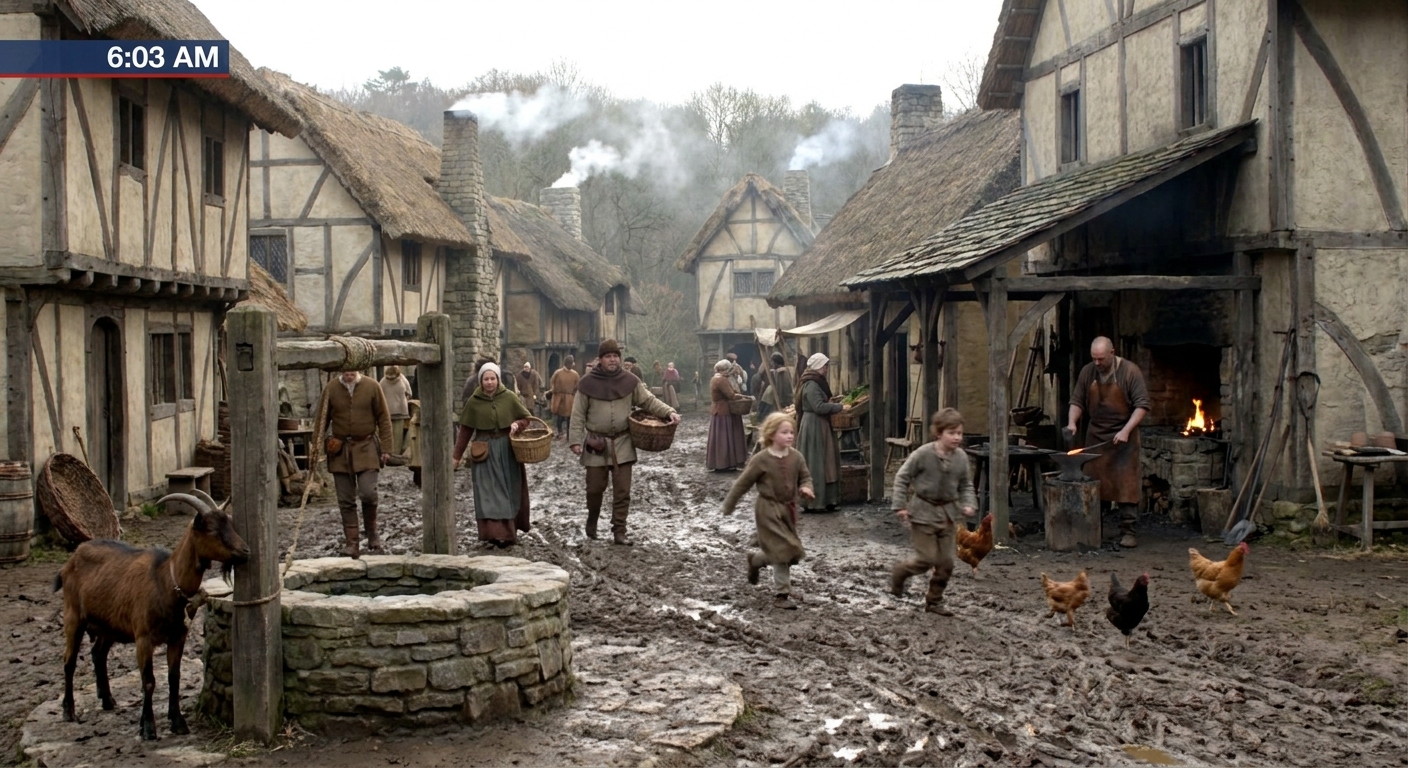
Walk into an English village that has preserved its medieval layout—narrow main street, church at the center, farms radiating outward—and you are stepping into a living archive. The landscape itself is a record of daily life around 1300: who held power, how food was grown, where labor and devotion converged.
Why a Village Is a Historical Document
Historians and archaeologists have developed a kind of "field guide" method for reading such places. It combines written records—manorial rolls, tax lists, wills—with earthworks, pottery scatter, and building remains. The goal is not simply to date structures, but to reconstruct how an ordinary day unfolded for those who lived there.
This guide walks you through that method as if you were visiting a typical village like Wharram Percy in Yorkshire or Goltho in Lincolnshire, two sites extensively excavated over the past century.
Step 1: Start at the Church—The Village’s Clock and Compass
In most medieval European villages, the church is the fixed point. Architecturally it anchors both time and space:
- The bell marked the hours for work and prayer.
- The building orientation (east–west) structured burial grounds and processions.
- The churchyard was a hub for meetings, markets, and announcements.
Evidence to Look For
- Burial patterns: Excavations at Wharram Percy revealed graves changing over time—from loosely arranged early burials to more grid‑like patterns. This suggests emerging concerns with order and parish identity.
- Wall paintings and inscriptions: Faint pigments or plaster scars indicate what people saw every week: scenes of saints, last judgments, or patron donors. In churches like St. Peter and St. Paul in Pickering, surviving wall paintings show vivid demons and angels, visual sermons for largely illiterate congregations.
Daily Life Connection
The church framed the rhythm of a "normal" day: morning mass, saint’s feast days, processions in times of drought or plague. Even people who rarely owned books encountered an intense visual and auditory environment here, akin to a weekly newsfeed of salvation, local gossip, and royal policy read out from the pulpit.
Step 2: Follow the Path to the Fields—Labor as Landscape
From the church, paths stretch outward toward the open fields. Medieval agriculture in much of Western Europe operated on a system of long, narrow strips held in common field blocks. A single household might cultivate scattered strips across several fields, a pattern visible in the fossilized "ridge and furrow" still wavering across many modern pastures.
Archaeological Clues
- Ridge and furrow: Aerial photography and LIDAR make the undulating pattern clear. At Wharram Percy, these ridges are up to a meter high, evidence of centuries of ploughing with heavy, ox‑drawn ploughs that tipped soil consistently to one side.
- Field boundaries: Low banks, ditches, or hedge lines mark shifts from common to enclosed land. The spread of permanent hedges in some areas reflects the later move toward enclosure, which eventually transformed village life.
Written Evidence
Manorial court rolls—preserved for estates like the manor of Halesowen or the bishopric of Winchester—list fines for failing to plough, obligations to provide labor days, and disputes over meadows or pastures. They show that a peasant’s schedule was governed not only by the seasons but also by the obligations owed to lords and neighbors.
A Working Day in the Fields
A typical day for a villein (unfree peasant) around 1300 might involve:
- Reporting at dawn to the lord’s demesne fields for boon work—extra days demanded at harvest.
- Ploughing strips, guided by shouted instructions, while an assistant walked ahead to clear stones.
- Interrupting work for the Angelus bell from the church tower, a reminder that time was both agricultural and liturgical.
The near‑silence of the fields today can mislead. Contemporary accounts—such as Walter of Henley’s agricultural manuals—talk of arguments over ploughshares, bargaining for extra ale, and the risk of fines for poor performance.
Step 3: Enter the House—Timber, Smoke, and Social Order
Back from the fields, domestic life unfolded in timber and earth. Stone houses were rare for peasants; most dwellings were built of wattle and daub with thatched roofs, rarely surviving above ground. Archaeological excavation, however, recovers their footprints.
House Plans and Household Size
At Wharram Percy, excavators identified longhouses with a simple two‑ or three‑cell plan:
- Byre at one end: sheltering animals.
- Hall in the center: living, cooking, and working space around an open hearth.
- Inner room (in some cases): slightly more private area for valuables and probably for higher‑status occupants.
Artifact clustering—pottery fragments, spindle whorls, iron tools—helps reconstruct activity areas. The density of finds, combined with documentary evidence, suggests that many households included extended families, servants, and sometimes lodgers.
Light, Heat, and Smell
Written sources like Piers Plowman and the Ancrene Wisse reference smoke‑filled rooms, rush‑strewn floors, and the mingling of animal and human spaces. Bioarchaeological studies of skeletons from village cemeteries show high rates of respiratory disease and arthritis, which fit this environment of indoor smoke and heavy manual labor.
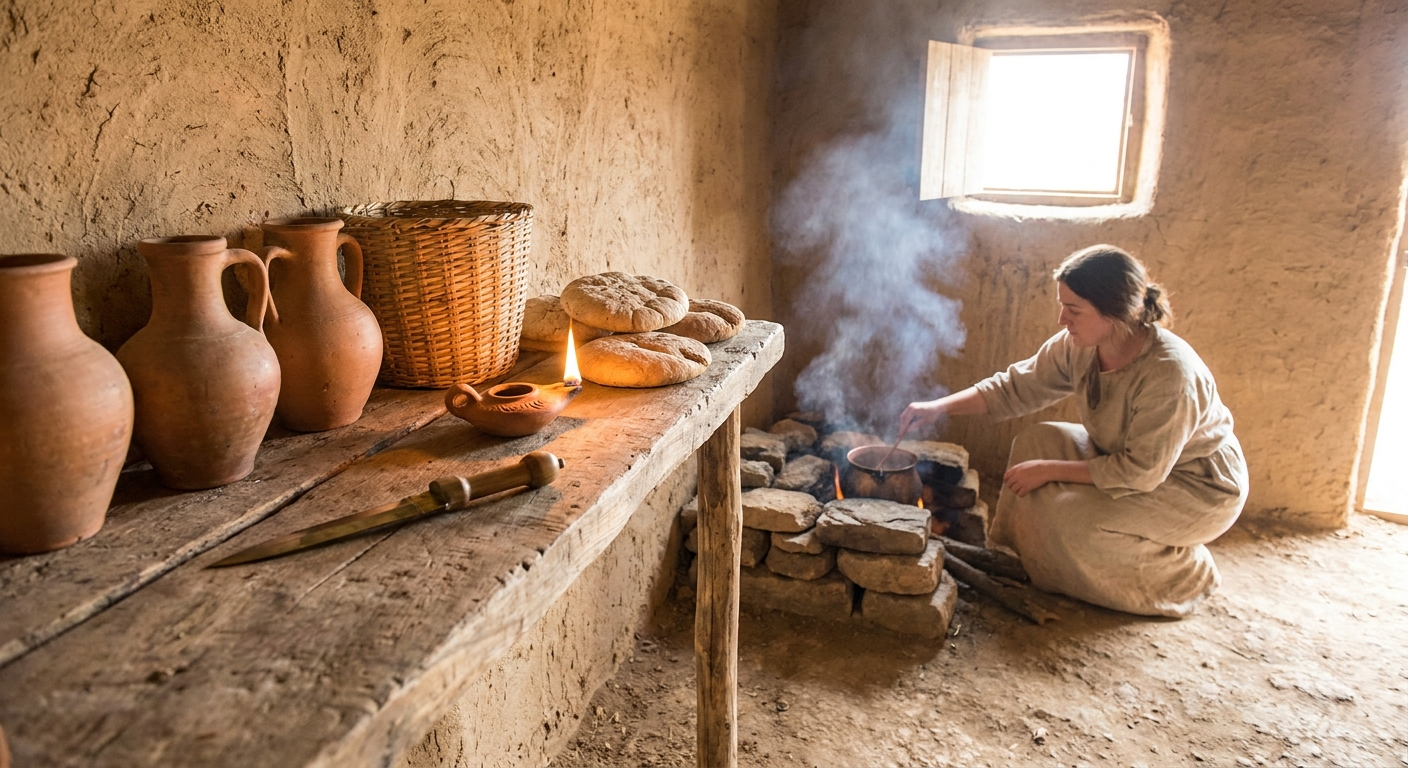
In the central hall, an open hearth burned low, its smoke drifting through a louver or simply permeating the thatch. Evening tasks clustered near this dim light: spinning wool, repairing tools, grinding grain on a quern stone. The quern’s rhythmic scrape is as much a feature of medieval evenings as the glow of a smartphone is of ours.
Step 4: Listen for Voices—Peasants in Their Own Words
For a long time, daily life in medieval villages seemed voiceless, mediated entirely through the writings of clerics and lords. But new work with pro forma legal records and chance survivals has revealed slivers of peasant self‑expression.
Court Rolls and the Drama of the Ordinary
In the manor courts of Halesowen (recorded in the 1270s–1320s), villagers appear by name to:
- Accuse neighbors of encroaching on strips or stealing wood.
- Negotiate entry fines for newly married couples taking over holdings.
- Challenge each other over debts as small as a few pence.
These moments, when someone stood before lord and neighbors, were as charged as any modern small‑claims hearing. They reveal not only obligations but also strategies, grudges, and humor.
Letters and Wills
Occasionally, personal letters survive, as in the case of the Paston Letters in 15th‑century Norfolk (later than our 1300 focus but socially comparable). They show gentry households negotiating land and marriages with villagers, giving glimpses of how rural people thought about property, memory, and kinship.
Wills, where preserved, list bequests of animals, pots, and even favorite garments. These objects carried emotional as well as economic weight; a single good cloak might be the most valuable portable possession in a house.
Step 5: Connect the Medieval Village to the Modern Street
Understanding how to "read" a medieval village helps decode the present.
- Commuting: The walk from village house to open fields mirrors present‑day commutes—not only in distance, but in how labor time is structured by outside authority. Where a bell once rang, an app notification pings.
- Shared infrastructure: The open fields, common pastures, and communal ovens echo in today’s debates over public space, from urban parks to broadband access.
- Precarity and obligation: Villeins carried a web of duties that threatened fines or loss of land if they failed. Gig workers today navigate algorithmic penalties and contract terms with comparable anxiety.
The medieval village also warns against romanticizing the "simple life". Archaeological markers of malnutrition, dental disease, and childhood mortality are stark. Yet within this hardship, the record also preserves moments of agency: a woman insisting on her inheritance in court, a man leaving his best cow to a beloved godchild, a community banding together to maintain a mill.
A Method You Can Carry With You
When you next visit an old village—whether in rural England, France, or elsewhere—you can apply this field guide:
- Find the focal building (often a church) and imagine the sounds attached to it.
- Trace paths outward, asking where work happened and who controlled access.
- Look down for earthworks, terraces, oddly ridged fields—ghosts of past labor.
- Imagine the house from the inside, using your own experience of cramped spaces, flickering light, and shared chores.
- Ask whose voices are missing, then seek them in local archives, guidebooks citing court rolls, or museum displays of daily objects.
In learning to read a medieval village, you practice a form of historical literacy that extends far beyond 1300. You train yourself to see ordinary lives as central evidence, not background scenery. And in the process, the distance between a peasant walking to the open fields and a commuter stepping onto a bus in the early morning narrows—different technologies, similar negotiations of time, power, and community.