"Collapsed" civilizations haunt popular imagination: Maya temples swallowed by jungle, Easter Island statues staring over a treeless horizon, "lost" cities in the desert. In the 20th century, archaeologist Sylvanus Morley could still describe the Classic Maya as having undergone a sudden, mysterious cataclysm.[^1]
Rethinking Collapse Beyond Apocalypse
A century of excavation, environmental sampling, and critical reading of primary sources has painted a more complex picture. Collapse is rarely a single moment; it is a drawn-out process punctuated by local resilience and transformation.
This article traces how archaeology has reshaped our understanding of three famous "collapses"—the Late Bronze Age eastern Mediterranean, the Classic Maya, and Rapa Nui (Easter Island)—and considers what these nuanced narratives might mean for a 21st century grappling with its own environmental and political stresses.
1. The Late Bronze Age: From Sea Peoples to System Failure
The Traditional Story
Older accounts, drawing heavily on Egyptian inscriptions, emphasized invasions by "Sea Peoples"—a confederation blamed for destroying cities across the eastern Mediterranean around 1200 BCE.
Ramses III’s mortuary temple at Medinet Habu boasts:
"No land could stand before their arms ... They laid their hands upon the lands as far as the circuit of the earth."
— Great Harris Papyrus, trans. Breasted
For decades, archaeologists took this rhetoric at face value, envisioning marauding outsiders toppling palaces from Ugarit to Mycenae.
Archaeology Complicates the Invasion Narrative
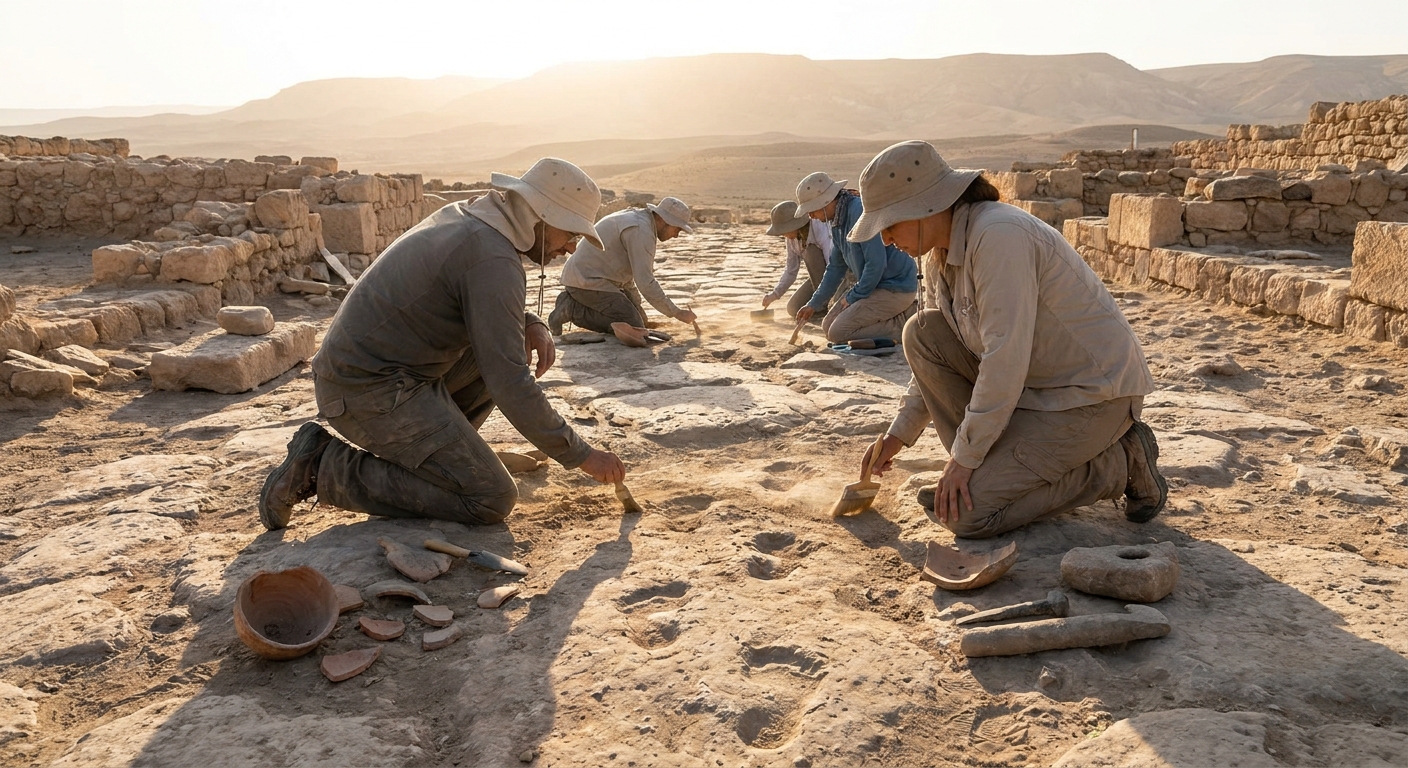
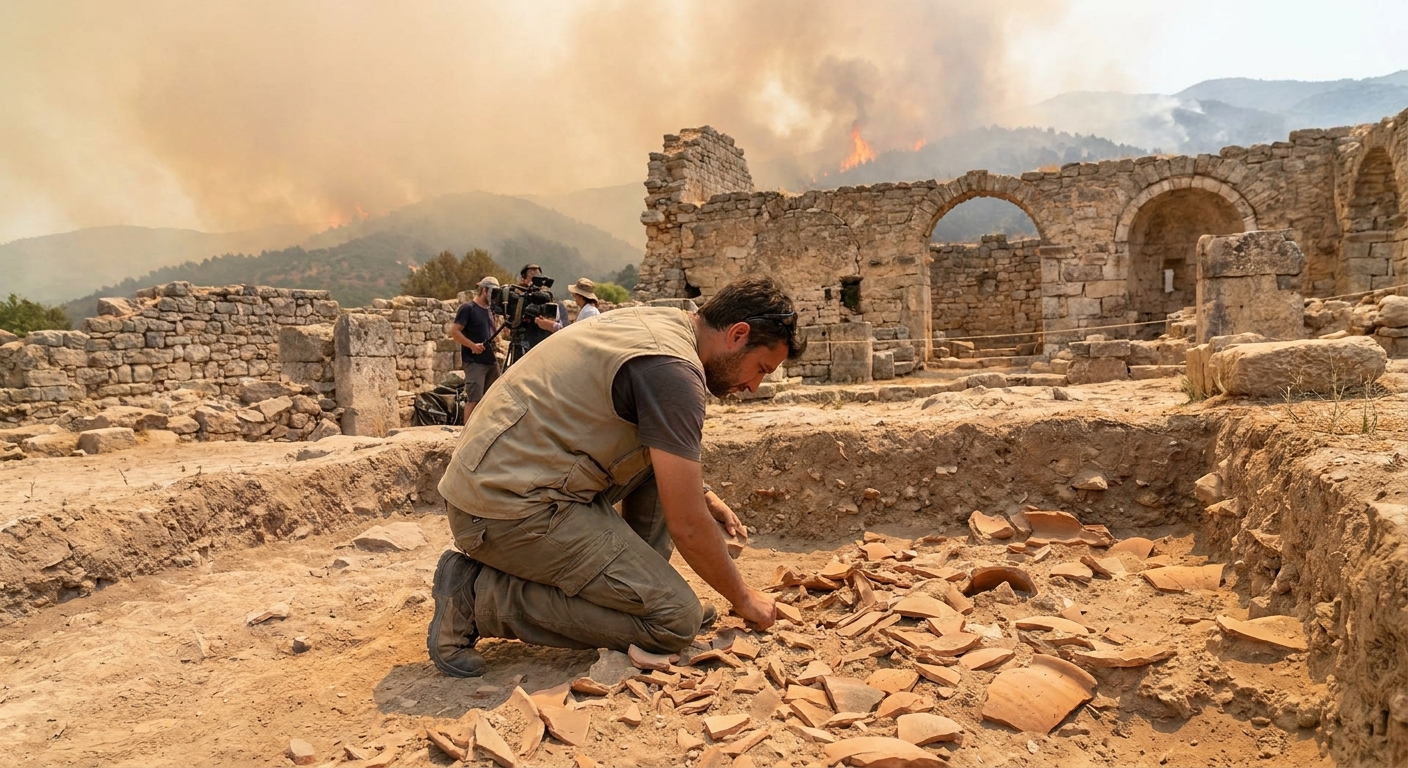
Excavations at sites like Ugarit (Syria), Hattusa (Turkey), and Mycenae (Greece) show layers of destruction around this time: burned palaces, collapsed walls, smashed storage jars. Yet patterns vary:
- Some sites show clear signs of violent destruction and are never reoccupied.
- Others decline gradually, with elite buildings abandoned while villages persist.
Meanwhile, pollen cores and lake sediments from the Levant and Anatolia indicate a period of aridification and drought.[^2] Hittite texts from the late 13th century BCE mention grain shortages and appeals for shipments, suggesting stress even before final collapses.
A Network Under Stress
Archaeologist Eric Cline and others have argued for a "systems collapse" model: a tightly interlinked world of palatial economies—trading copper, tin, grain, and luxury goods—proved vulnerable to cascading failures.[^3]
- Drought reduced harvests, undermining palace redistribution systems.
- Internal rebellions, hinted at in textual references to "apiru" and other dissident groups, weakened states.
- Migrations and raiding (including groups Egyptian scribes labeled "Sea Peoples") were both cause and symptom.
The archaeology of the post-collapse centuries—smaller sites, handmade pottery replacing elite fine wares, new iron technologies—shows not a dark age of abandonment but a period of reorganization.
Lesson: Collapse can mean the end of a particular political and economic architecture, not human disappearance. Archaeology reveals variability: some communities weathered the storm better than others.
2. The Maya: Cities in the Forest, Not Vanished
The Myth of Sudden Abandonment
Early explorers and archaeologists, reading partially understood inscriptions, cast the Classic Maya "collapse" (c. 750–900 CE) as a sudden, mysterious abandonment of great cities like Tikal and Palenque.
The 19th-century writer John Lloyd Stephens wrote of Copán:
"A desolation that withstands the power of man ... ages must have rolled away since the buildings were deserted."
— Incidents of Travel in Central America (1841)
Environmental and Epigraphic Evidence
Recent archaeology and environmental science tell a more incremental story:
- Lake sediments from the Petén region show increased charcoal (burning) and erosion, followed by declines in forest pollen—evidence for deforestation associated with intensive agriculture and fuel use.[^4]
- Stalagmites in caves record isotopic signatures consistent with multiple severe drought episodes in the 9th century CE.
- Hieroglyphic inscriptions, once deciphered, turned out to be full of wars, dynastic struggles, and shifting alliances in the 7th–9th centuries.
Urban Resilience and Regional Variation
Excavations at different Maya sites reveal diverse trajectories:
- Some centers, like Copán, show evidence of declining monument erection and elite tombs before urban contraction.
- Others, like Chichén Itzá in the northern Yucatán, flourished after the southern lowland "collapse."
Household archaeology—studying non-elite houses, trash middens, and local shrines—shows continuity in many rural communities. In several regions, populations did not vanish but reorganized around new centers and political structures.
Lesson: The Classic Maya "collapse" was a patchwork of local declines, migrations, and reconfigurations under combined climatic, political, and demographic stress. The people we call "Maya" did not disappear; their descendants still live in the region, many speaking Mayan languages and maintaining distinct cultural practices.
3. Rapa Nui (Easter Island): From Eco-Parable to Contested Past
The Popular Eco-Collapse Narrative
In a widely read account, Jared Diamond framed Rapa Nui as a cautionary tale of "ecocide": Polynesian settlers allegedly deforested the island to move giant statues (moai), triggering soil erosion, famine, warfare, and even cannibalism before European contact.[^5]
This story relied on:
- Pollen evidence showing palm forest replacement by grass.
- Oral traditions of conflict.
- Early European accounts describing a treeless landscape and social upheaval.
Archaeological Reassessment
Recent work led by archaeologists like Terry Hunt and Carl Lipo revises this picture:[^6]
- Radiocarbon dating suggests colonization around 1200 CE, later than previously thought, shortening the window for environmental change.
- Rats, introduced unintentionally, likely played a major role in preventing forest regeneration by eating palm seeds.
- Evidence of rock mulching and manavai (stone-walled planting enclosures) points to sophisticated soil and moisture management.
- Skeletal remains do not show clear signs of chronic malnutrition or widespread violence prior to European contact.
European arrival in 1722, followed by Peruvian slaving raids, disease, and missionary-imposed relocation in the 19th century, devastated the population. These historically documented traumas, rather than pre-contact "self-destruction," account for much of Rapa Nui’s demographic and cultural disruption.
Lesson: Simplistic eco-morality tales can overshadow the roles of external contact, introduced species, and colonial violence. Archaeology, integrated with ethnohistory and Indigenous perspectives, offers a more balanced narrative.
4. How Archaeologists Diagnose Collapse
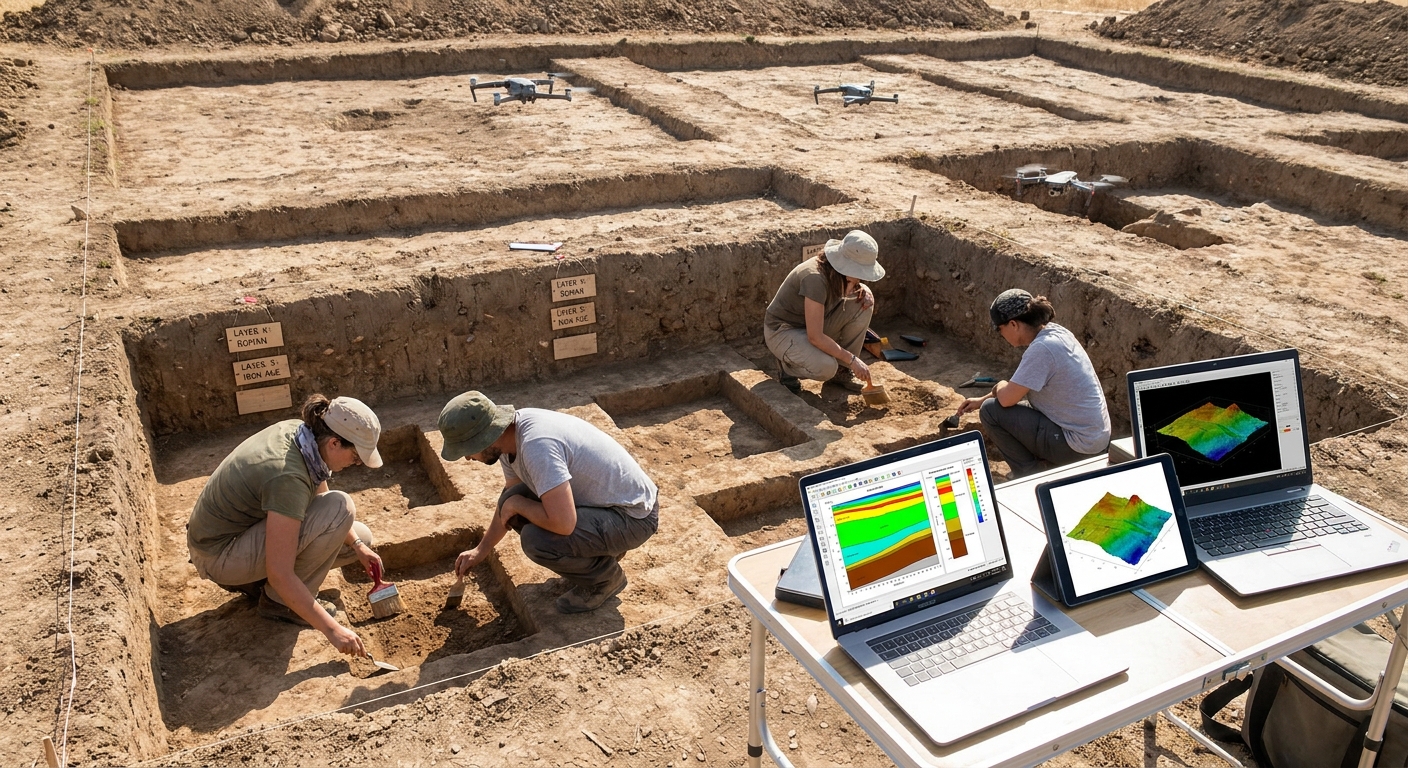
Archaeologists rarely declare "collapse" on the basis of a single dramatic layer. Instead they look for overlapping signals:
- Demographic change: Fewer or smaller sites; shifts from urban to rural settlement.
- Architectural decline: Abandonment of monumental construction; reuse of elite spaces for humbler activities.
- Material culture shifts: Loss of certain technologies or long-distance trade goods; simpler or more localized styles.
- Environmental proxies: Pollen, charcoal, isotopes, and sedimentation indicating climate stress, deforestation, or erosion.
- Bioarchaeological evidence: Changes in diet, health, trauma, and mobility in human remains.
These patterns must be interpreted cautiously. A reduction in imported luxury pottery may signal economic isolation, but it might also reflect deliberate local self-sufficiency.
Theoretical frameworks matter, too. Some archaeologists emphasize resilience, focusing on how communities absorb shocks; others foreground power and inequality, asking who bears collapse’s costs.
5. Collapse and the Modern Imagination
Why do stories of collapse grip us? Archaeology intersects with contemporary anxieties:
- Climate Change: The Maya droughts or Bronze Age aridification look uncomfortably familiar as we face our own warming and water scarcity.
- Globalization: The Late Bronze Age’s interconnected palace economies resonate with today’s entangled supply chains.
- Environmental Ethics: Rapa Nui has been used—fairly or not—as an allegory for overconsumption on a finite planet.
Yet the best archaeological work resists fatalism. A few key takeaways:
Collapse Is Uneven and Often Partial
In all three cases, some regions and social groups adapted better than others. For policy-makers today, this underscores that climate and economic shocks will not be evenly distributed.
Institutions Matter
Palatial redistribution systems in the Bronze Age or divine kingship among the Maya shaped how societies could respond. Today’s institutions—political, financial, cultural—will similarly mediate our responses to stress.
Narratives Have Politics
Framing Rapa Nui as self-inflicted collapse can obscure the roles of colonial exploitation. Likewise, blaming migratory "Sea Peoples" alone can mirror modern scapegoating of refugees rather than structural analysis.
Archaeology’s insistence on context, multi-causality, and attention to the material consequences of high-level decisions offers an antidote to simplistic blame games.
6. Archaeology as a Long-Term Laboratory
Archaeological sites are not moral fables dropped from the sky; they are data-rich case studies spanning centuries. When combined with climate science, historical texts, and ethnography, they form a long-term laboratory for understanding:
- How food systems respond to prolonged drought.
- How urban forms influence vulnerability or resilience.
- How inequality shapes who survives and who suffers.
For example, isotopic studies at Classic Maya sites show differential diet between elites and commoners; when maize harvests failed, those with diverse food access fared better. In the Late Bronze Age, reliance on a narrow suite of traded metals made palatial elites vulnerable when trade faltered.
As we build models for sea-level rise adaptation or energy transition, these deep-time analogues remind us that technological sophistication is no guarantee against institutional fragility.
Living with Ruins
In the end, archaeology reveals that "collapse" is rarely the end of the story. New social forms emerge amid ruins: post-Mycenaean communities experimenting with iron and local governance; Postclassic Maya polities redefining power; Rapanui people maintaining cultural practices under impossible colonial pressure.
We live among our own layers of future archaeology: concrete highways, landfills, plastic in ocean sediments. Whatever stories future excavators tell about us will depend on what we leave behind—and how we choose to respond to the stresses we can already see coming.
Archaeology cannot predict the future, but it does demystify the past. Broken pots and burnt timbers, when read carefully, show that societies are neither doomed to die at the first sign of strain nor guaranteed to endure. Between apocalypse and complacency lies a space for informed, historically grounded choices. That space is where archaeology can speak most clearly to the present.
[^1]: Morley, S. G. (1946). The Ancient Maya. Stanford University Press.
[^2]: Kaniewski, D. et al. (2013). Drought Is a Recurring Challenge in the Middle East. PNAS.
[^3]: Cline, E. H. (2014). 1177 B.C.: The Year Civilization Collapsed. Princeton University Press.
[^4]: Douglas, P. M. J. et al. (2015). Drought, Agricultural Adaptation, and Sociopolitical Collapse in the Maya Lowlands. PNAS.
[^5]: Diamond, J. (2005). Collapse: How Societies Choose to Fail or Succeed. Viking.