Imagine choosing not a king or a battle, but a single ordinary day in the ancient world and trying to rebuild it hour by hour. That is one of archaeology’s most ambitious and least obvious goals. Beyond artifacts and carbon dates lies a quieter puzzle: how did people move, eat, work, and argue from dawn to dusk?
Rebuilding a Lost Day
The power of archaeology is that it can turn mute debris into a narrative. Potsherds become breakfast. Footprints become family drama. Charred seeds become climate history. This article follows three case studies—the buried city of Pompeii, the desert village of Deir el-Medina in Egypt, and a Bronze Age house in Britain—to show how archaeologists reconstruct the texture of daily life.
Pompeii: A City Frozen Mid-Breath
When Mount Vesuvius erupted in 79 CE, it smothered Pompeii and Herculaneum under meters of ash and pyroclastic flows. Pliny the Younger, who watched from across the Bay of Naples, left a vivid written account:
> "A black and dreadful cloud, broken with rapid, zigzag flashes, opening, as it were, to disclose long trains of fire."
> — Pliny the Younger, Letters 6.16
His words are a rare textual frame for what archaeologists find in the ground. Yet it is not the volcanic drama that most fascinates modern researchers; it is the lives interrupted.
In a bakery on the Via dell’Abbondanza, archaeologists uncovered a circular millstone still crusted with grain dust and a bakery oven containing carbonized loaves. One loaf, stamped with the inscription “Of Celer, slave of Q. Granius Verus,” links an object to a specific person in the textual record.[^1]
A Morning in the Bakery
From these finds, a morning routine emerges:
- Before dawn: The presence of overnight lodging spaces in some bakeries suggests apprentices slept on-site, waking early to fire the ovens.
- Grinding grain: The wear patterns on the millstones, combined with animal bone remains, indicate that donkeys circled the mills, driven by low-status laborers.
- Mixing dough: Carbonized bread loaves, with standardized scoring patterns, show a surprisingly systematic production process, matching instructions found in later Roman agricultural writers like Cato and Columella.
The evidence is humble: soot stains on the ceiling, ruts in the floor, grain impressions in fossilized bread. Yet when taken together, they map out gestures and routines that no text bothers to record.
Reading the City as a Schedule
Street ruts in the paving stones record the passage of carts. Amphorae of garum (fish sauce) stacked in a shop suggest trade rhythms, while graffiti on walls—election slogans, crude jokes, love notes—show when and how public space was used.
- A tavern near the city gate contains counters with embedded dolia (large storage jars) and cups left in place, hinting at midday meals for workers.
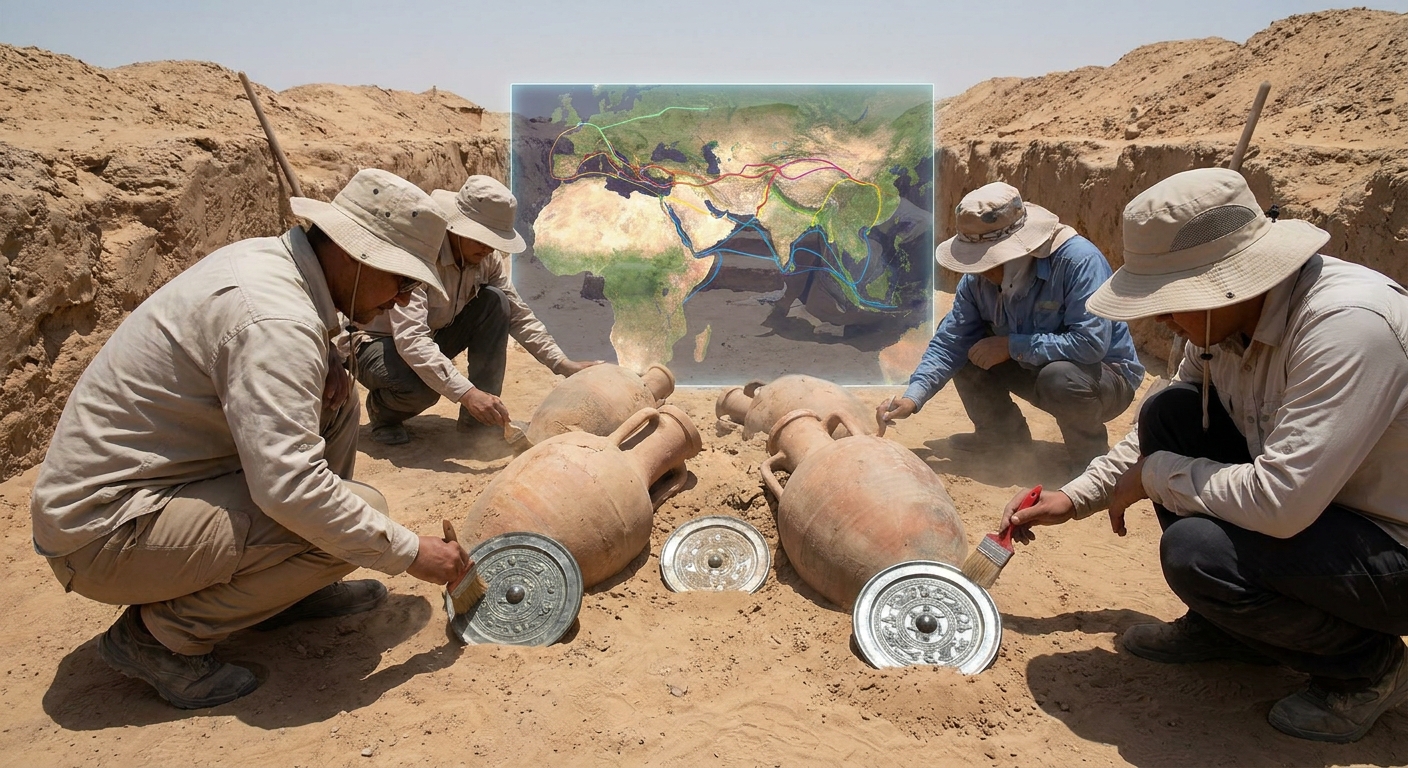
- In a townhouse, a collapsed chest of cosmetics and bronze mirrors in a peristyle garden points to an interrupted grooming routine.
Archaeologists use techniques like microstratigraphy (reading microscopic layers of sediment), residue analysis (identifying wine, oil, or perfume chemicals), and comparison with written sources like the Digest of Justinian to sequence activities in time. The city becomes not just a place, but a series of repeating days.
Deir el-Medina: The Voices of Workers in the King’s Valley
On the west bank of the Nile, opposite ancient Thebes (modern Luxor), lies Deir el-Medina, a planned village occupied by the artisans who carved and painted the royal tombs of the New Kingdom (c. 1550–1070 BCE). Here, archaeology is joined by an unusual wealth of primary written sources: thousands of ostraca (pottery sherds and limestone flakes) covered in notes.
A Community Documented from Within
These ostraca include:
- Work rosters listing who was present on which day, similar to a time sheet.
- Personal letters requesting clothing, complaining about neighbors, or asking for favors.
- Legal documents recording marriages, inheritances, and disputes.
One ostracon (O. DeM 100) records absences from work: “Absent: Paneb, with the scribe; Aapehty, with his sick mother; Hay, brewing beer.”[^2] It reads like an attendance sheet pinned to a modern office wall.
Reconstructing a Week in Deir el-Medina
Combining these notes with excavated houses, tools, and trash heaps, archaeologists can outline a weekly rhythm:
- Workdays: Teams walked to the Valley of the Kings under guard, carrying chisels, pigments, and food rations. Chisel wear and pigment analysis on tomb walls corroborate the order in which scenes were carved and painted.
- Ration deliveries: Seals and jar labels show regular issues of grain, beer, and oil, matching the textual ration lists.
- Rest days and strikes: Ostraca preserve the world’s earliest known recorded labor strike, during the reign of Ramesses III, when workers downed tools over delayed rations.[^3]
Archaeology fills the gaps in the texts. House layouts—with storage bins, sleeping platforms, household shrines—suggest private devotional practices and domestic labor largely absent from formal inscriptions focused on kings and gods.
A Burned House in Bronze Age Britain
In contrast to text-rich Pompeii and Deir el-Medina, much of prehistoric Europe is silent. No letters or attendance sheets survive from a Middle Bronze Age (c. 1500–1150 BCE) household in Britain. Yet at sites like Must Farm in Cambridgeshire, a catastrophic fire preserved a moment in time with extraordinary clarity.[^4]
Reading Ash as Narrative
The Must Farm settlement, built on stilts above a river channel, burned and collapsed into the water. Rapid burial in silt and anaerobic conditions preserved:
- Wooden bowls stacked as if awaiting use.
- Textiles folded and stored in baskets.
- Pots with food still inside.
Residue analysis revealed grains, animal fats, and even traces of honey. One large pot contained the remains of a porridge-like dish mixed with animal bone fragments. Another held a fermented beverage. By combining these chemical signatures with plant macrofossils and animal bones, archaeologists reconstruct menu and meal timing:
- Morning: grain-based porridge or bread.
- Midday/evening: stews of meat and vegetables.
- Occasional special foods: honey-sweetened dishes or beer.
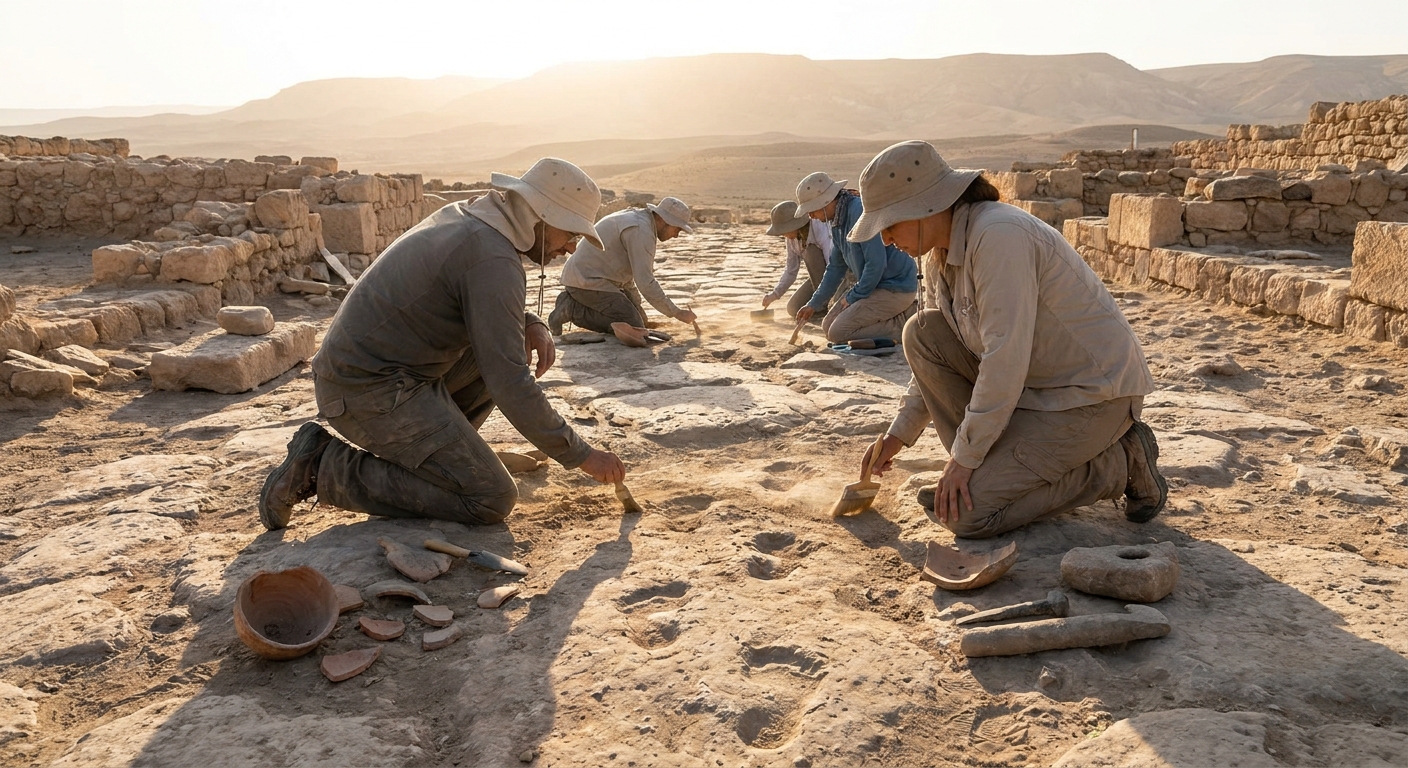
The distribution of objects on the floor—where they fell through the collapsing platform—helps determine where activities took place before the fire: weaving in one corner (based on loom weights), cooking in another (hearth, burned daub, charred food). The house becomes a map of tasks and social zones.
Methods: From Micro-Traces to Macro-Histories
Across these sites, a common toolkit allows archaeologists to narrate daily life:
- Contextual excavation: Recording precisely where each artifact is found in three dimensions and in relation to others.
- Use-wear analysis: Studying microscopic scratches and polish on tools to infer how they were used.
- Bioarchaeology: Examining human remains for signs of diet, disease, workload, and trauma.
- Environmental archaeology: Analyzing pollen, seeds, charcoal, and animal bones to reconstruct landscapes and seasons.
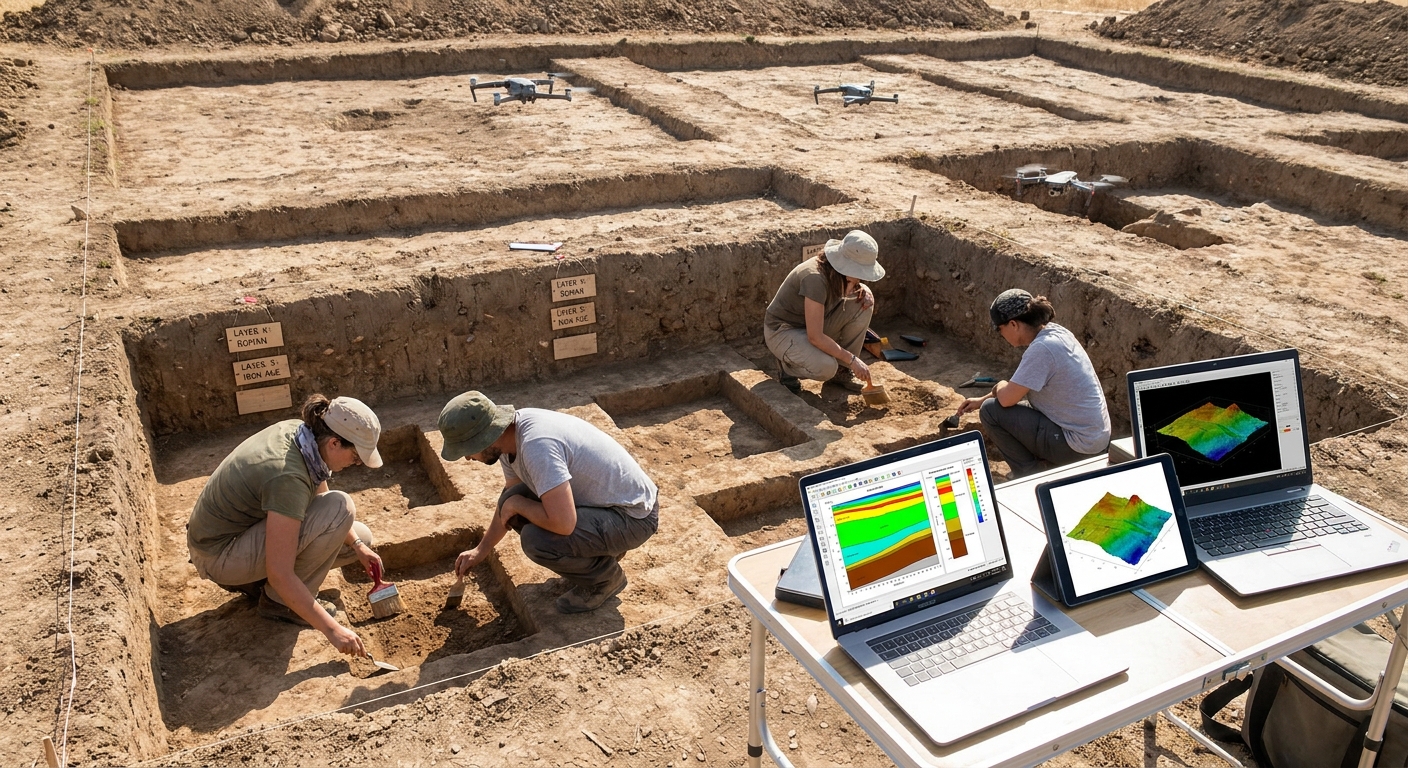
- Digital modeling: Using GIS and 3D reconstructions to simulate light, movement, and sightlines within ancient built environments.
These methods transform piles of data into plausible scenarios: when a meal was cooked, where a child slept, how far a worker walked each day.
Why It Matters Now
Understanding daily life in the past is not antiquarian trivia; it offers perspective on modern questions:
- Work and inequality: The rhythms of labor in Deir el-Medina echo modern concerns about wages, job security, and collective bargaining.
- Urban vulnerability: Pompeii’s abrupt destruction resonates with contemporary cities facing volcanic, seismic, or climate threats.
- Domestic resilience: The Must Farm house shows how families adapt to volatile environments—knowledge relevant as we reconsider housing in flood-prone or unstable regions.
Archaeology’s narrative power lies in making the past relatable without flattening its differences. By reconstructing not just what people built, but how they moved through a single day, it invites us to see history not as a parade of rulers, but as billions of lived hours.
The next time you step into a kitchen, commute to work, or write a note to a friend, you are participating in patterns that archaeologists of the far future might one day try to read back into a story. Their tools will be more advanced. Their questions may differ. But the puzzle—how to turn traces into lives—will be the same.
[^1]: Rowan, E. (2017). Roman Diet and the Evidence of Carbonized Bread from Pompeii. Antiquity Publications.
[^2]: Janssen, J. J. (1997). Village Varia: Ten Studies on the History and Administration of Deir el-Medina. Egypt Exploration Society.
[^3]: P. Turin Cat. 1880, the "Strike Papyrus"; see M. Eyre (1984), The Strike of the Workmen of Deir el-Medina.
[^4]: Knight, M. et al. (2019). Must Farm: The Story of Bronze Age Britain’s Pompeii. Cambridge Archaeological Unit.