In the spring of 1457 BCE, on a dusty plain in northern Canaan, the army of Pharaoh Thutmose III marched toward a fortified hill town called Megiddo. To later scribes, this clash was so significant that they recorded it not only on papyrus but carved it onto the walls of the Temple of Amun at Karnak. The `Battle of Megiddo` is often described as the first fully documented battle in history—a conflict that gives modern readers a rare, vivid window into Bronze Age warfare.
Introduction: A Battlefield That Became an Archetype
This is not simply the story of one victory. In its tactics, propaganda, and long political shadow, Megiddo became a template for how states would plan, justify, and remember war for millennia afterward.
Reading a War from Stone and Shards
Most pre-classical battles are spectral events: we know they happened, but their details dissolve into legend. Megiddo is different. The primary description comes from the Annals of Thutmose III, inscribed on the walls of Karnak. In one translated passage, Thutmose is made to boast:
"His Majesty proceeded northward, his victories lying in his path, making great slaughter."
— Annals of Thutmose III, Karnak Inscription (translation after J. H. Breasted)
The text is stylized royal propaganda, but it provides an itinerary of cities, lists of captured goods, and even tactical discussions: three roads to Megiddo, two safe and circuitous, one narrow and dangerous. Thutmose, against the advice of his officers, chooses the risky route.
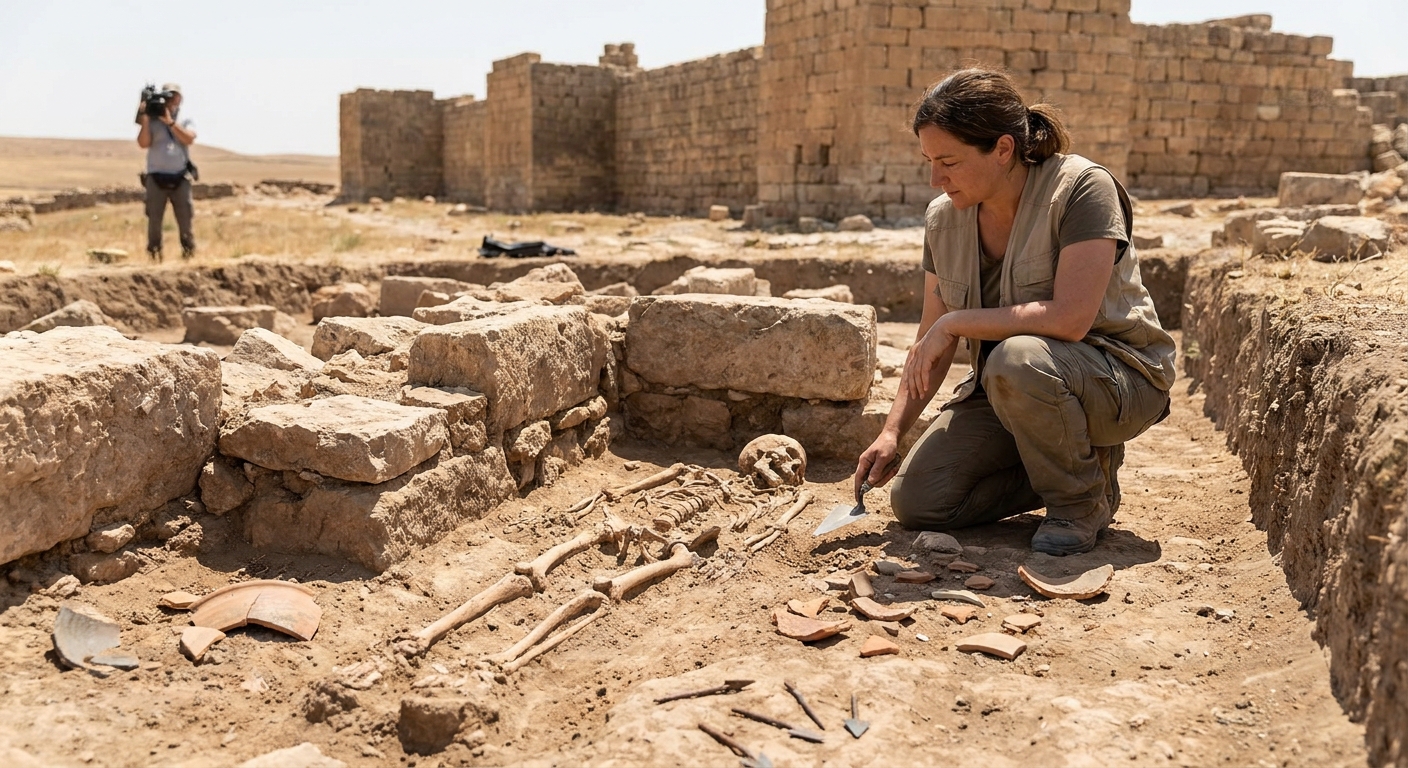
Archaeology helps us test and enrich this narrative. Excavations at Tell el-Mutesellim (the mound identified as Megiddo) since the early 20th century, led by archaeologists like Gottlieb Schumacher and later the University of Chicago and Tel Aviv University teams, have revealed massive Bronze Age fortifications, a complex palace sector, and evidence of repeated destruction layers.
Burned beams, collapsed ramparts, and concentrations of sling stones and arrowheads correspond to the site’s long military history. While no layer can be definitively "labeled" as 1457 BCE without controversy, the architectural scale of Late Bronze Age Megiddo confirms its role as a regional power center worth fighting over.
A Strategic Crossroads in Stone and Soil
Standing on the tell today, the strategic logic of Megiddo is obvious. To the north and south stretch the routes that link Egypt, the Levant, Anatolia, and Mesopotamia—what later Greeks would call the "via maris", or Way of the Sea. The Jezreel Valley below is a natural corridor, flanked by hills that both shelter and threaten.
In the Bronze Age, this landscape was a geopolitical bottleneck. Control Megiddo, and you control the flow of tribute, trade, and armies. The coalition that opposed Thutmose III, led by the king of Kadesh, understood this. According to the Karnak reliefs, over 300 local rulers joined the alliance. The battlefield at Megiddo was not a remote wasteland; it was a nodal point in a system of overlapping political and economic networks.
That same geography has drawn armies back again and again—from Assyrian king Tiglath-pileser III to the Ottoman and British forces in World War I. In 1918, General Edmund Allenby’s victory over the Ottomans here was so decisive that Western newspapers dubbed him the "Victor of Megiddo," deliberately echoing the pharaoh.
Tactics, Logistics, and the Birth of Written Operations
The Megiddo campaign reveals a surprisingly modern concern with logistics and operational planning. Thutmose’s scribes list the numbers of captured horses, chariots, and slaves, as well as detailed inventories of seized equipment. One section claims:
"List of that which was carried off: living prisoners [x], horses [x], chariots covered with gold [x]..."
— Annals of Thutmose III (Breasted, Ancient Records of Egypt)
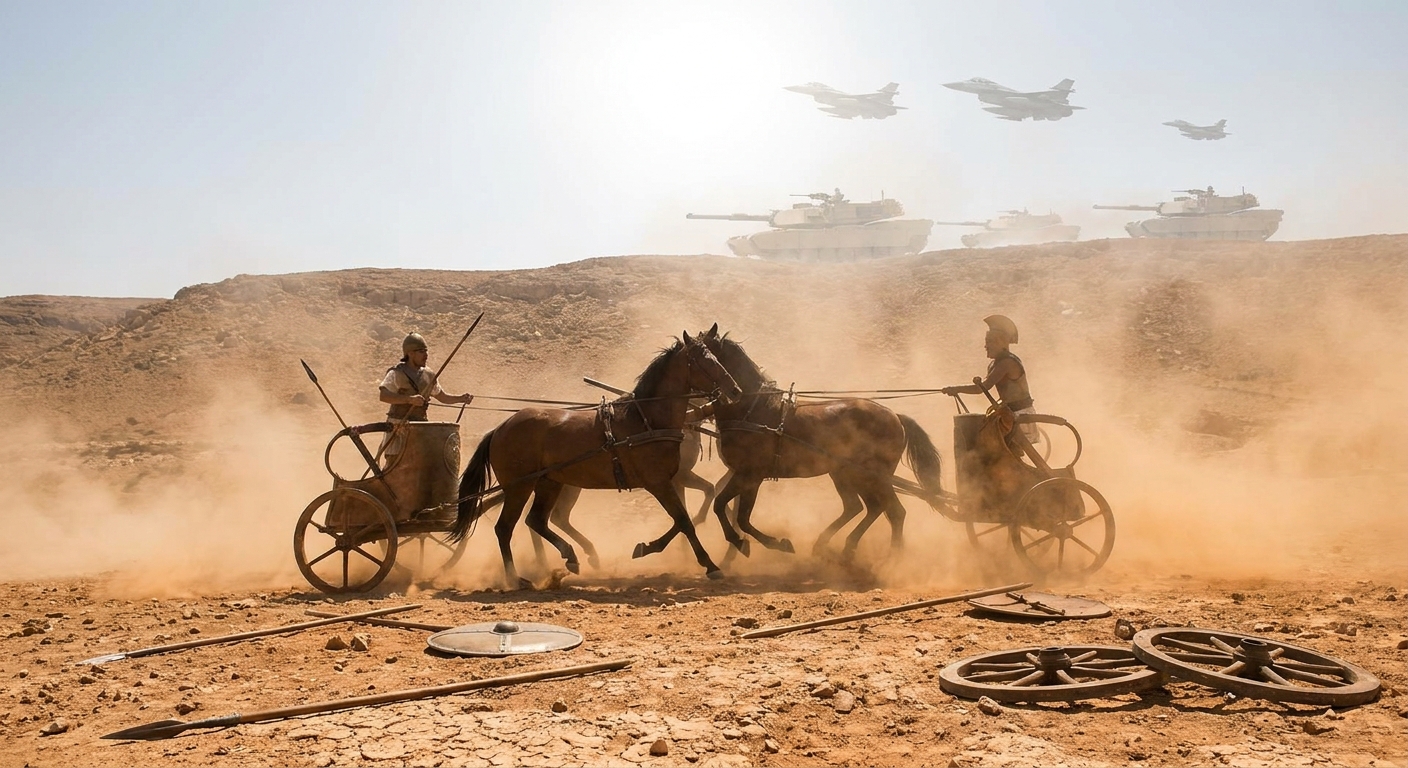
This is not merely boastful accounting; it is also a practical record of assets that will be reinvested in Egypt’s war machine. The Egyptians at this time fielded composite bowmen, charioteers, and infantry—a sophisticated combined-arms force.
Archaeological finds from Egypt and the Levant—such as chariot fittings, scale armor fragments, and composite bows preserved in tombs—confirm the technological context implied by the text. The famous tomb of Yuya and Thuya in the Valley of the Kings, for instance, yielded chariot remains and horse trappings, illustrating how elite warfare was inseparable from status and pageantry.
Equally striking is the decision-making process described. Thutmose convenes a council of officers to choose the route of advance. The Annals report their objections and then the king’s firm override. Whether or not this actually happened in such a theatrical way, the scene dramatizes phased planning, risk assessment, and command authority—ideas recognizable in any modern operations manual.
War as Spectacle and Story
Megiddo may be one of the first battles where we can see not only the fighting, but also the deliberate shaping of memory. The Karnak inscriptions are triumphal theater in stone. In reliefs and hieroglyphs, Thutmose appears larger than life, enemy chiefs cower before him, and Amun, the state god, is invoked as patron of victory.
In one passage, Amun addresses the king:
"I have established your fear among the Nine Bows [foreign lands]; the terror of you is in every land."
— Karnak Hymn to Amun, associated with Thutmose III’s campaigns
This merges divine mandate with military prowess, turning war into a sacred narrative. The underlying message is clear: resistance to Egyptian hegemony is not just futile; it is impious.
Such state-managed storytelling has enduring parallels. From Thucydides’ crafted speeches to modern press briefings and war documentaries, political communities interpret conflict through curated narratives. Megiddo shows this impulse at its earliest large-scale, textually preserved form.
From Megiddo to Armageddon: Memory, Myth, and Modern Fears
Centuries after the battle, the Hebrew Bible repurposed the name of this place into a symbolic geography of final conflict. In the Book of Revelation, "Armageddon"—likely derived from "Har Megiddo", the Hill of Megiddo—becomes the stage for an apocalyptic showdown between cosmic forces (Revelation 16:16).
The text is not about Thutmose or Canaanite coalitions, yet it reveals how war sites accrue mythic weight. A Bronze Age battlefield becomes, in the Christian imagination, the archetypal end-of-the-world battleground. The real topography of Late Bronze Age geopolitics dissolves into eschatology—but the undercurrent is the same: war as world-shaping event.
Today, "Armageddon" is shorthand for global catastrophe, often invoked in discussions of nuclear war or climate collapse. The resonance of that term depends on a chain of memory that runs through this specific patch of earth.
What Megiddo Teaches About War’s Long Shadow
The Battle of Megiddo offers several enduring lessons:
- Geography locks conflicts into place. Certain chokepoints remain contested across centuries. The Jezreel Valley, the Straits of Hormuz, the Fulda Gap in Cold War Europe—strategic landscapes echo each other.
- Every war is also a narrative project. Thutmose’s scribes, biblical authors, and modern strategists all shape how battles are remembered and why they "matter".
- Archaeology anchors the stories. Without the fortifications of Megiddo, the destruction layers, and Egyptian material culture, the Karnak Annals would be royal theater without a stage. With them, we can triangulate where propaganda meets reality.
- Technological and organizational innovations cluster around conflict. The bureaucratic record-keeping evident in Thutmose’s annals and in the physical distribution of war booty prefigures the logistical obsessions of later empires.
Conclusion: Standing Where Armies Marched
Walk the exposed walls and gates of Tell Megiddo today, and you can trace the outline of defenses that once faced Thutmose III’s advancing chariots. The hum of the modern highway in the valley below mimics, at a distance, the imagined rumble of wheels and hooves.
The power of Megiddo lies in this fusion of text, stone, and soil. It shows how war, from the very beginning of recorded history, has been about more than killing and conquest. It is about control of stories, landscapes, and futures.
When policymakers today speak of "decisive battles" or "turning points," they tap into a genre of thinking that was already sophisticated in the mid–15th century BCE. The Battle of Megiddo is not just the first well-documented battle; it is the prototype for how we still attempt to make sense of war itself—framed in narratives, situated in geography, and remembered long after the dust of the battlefield has settled.