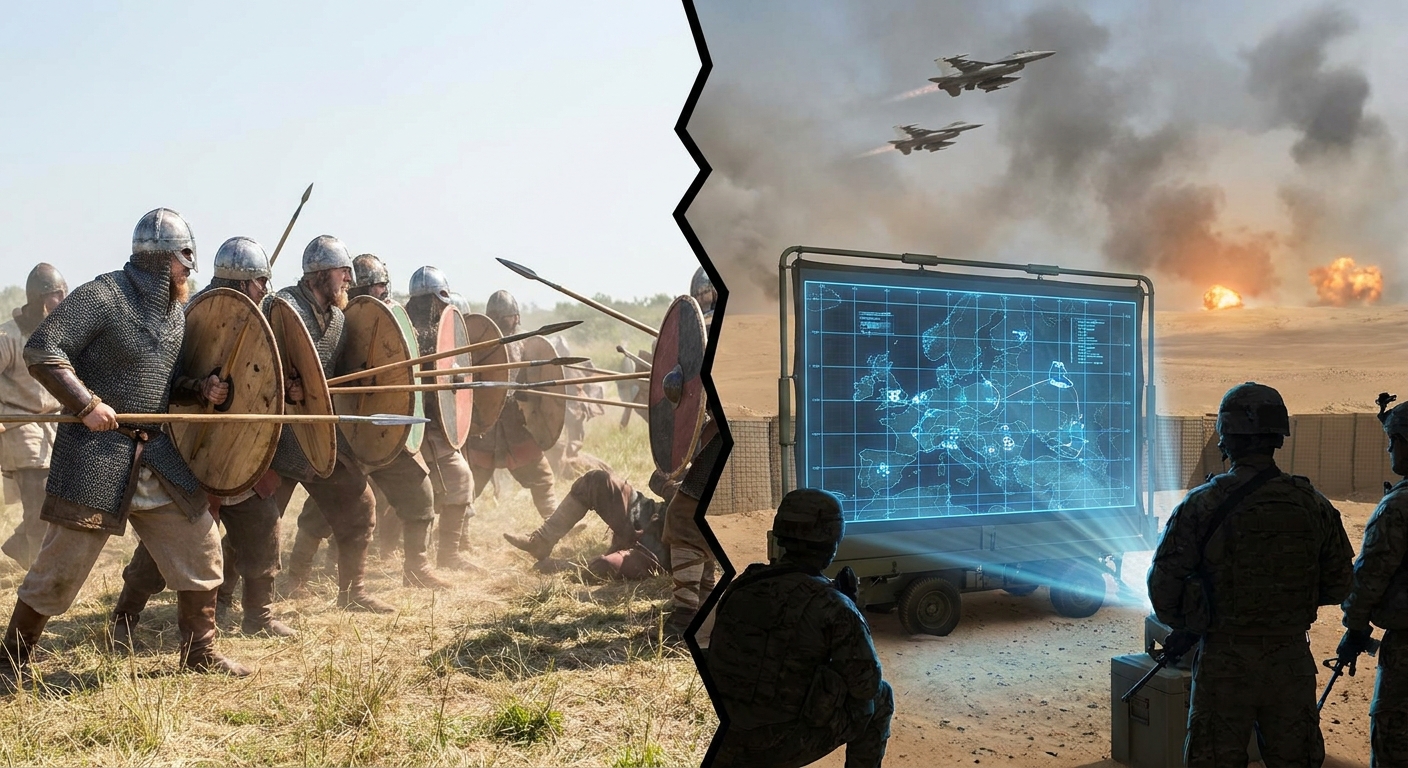
States do not merely go to war; they choose how to go to war. From the tight-knit phalanx at Marathon to drones circling silently over contemporary battlefields, societies have developed distinct "styles" of organized violence. Comparing these styles reveals continuities and ruptures in how communities think about risk, honor, economy, and technology.
Why Compare the Ways States Fight?
This guide examines four broad models of state warfare across history: the heroic, the mass-levy, the industrial, and the post-industrial. Each is illustrated with primary sources and archaeological evidence, then connected to modern strategic debates.
1. Heroic Warfare: Honor in the Front Rank
Defining Features
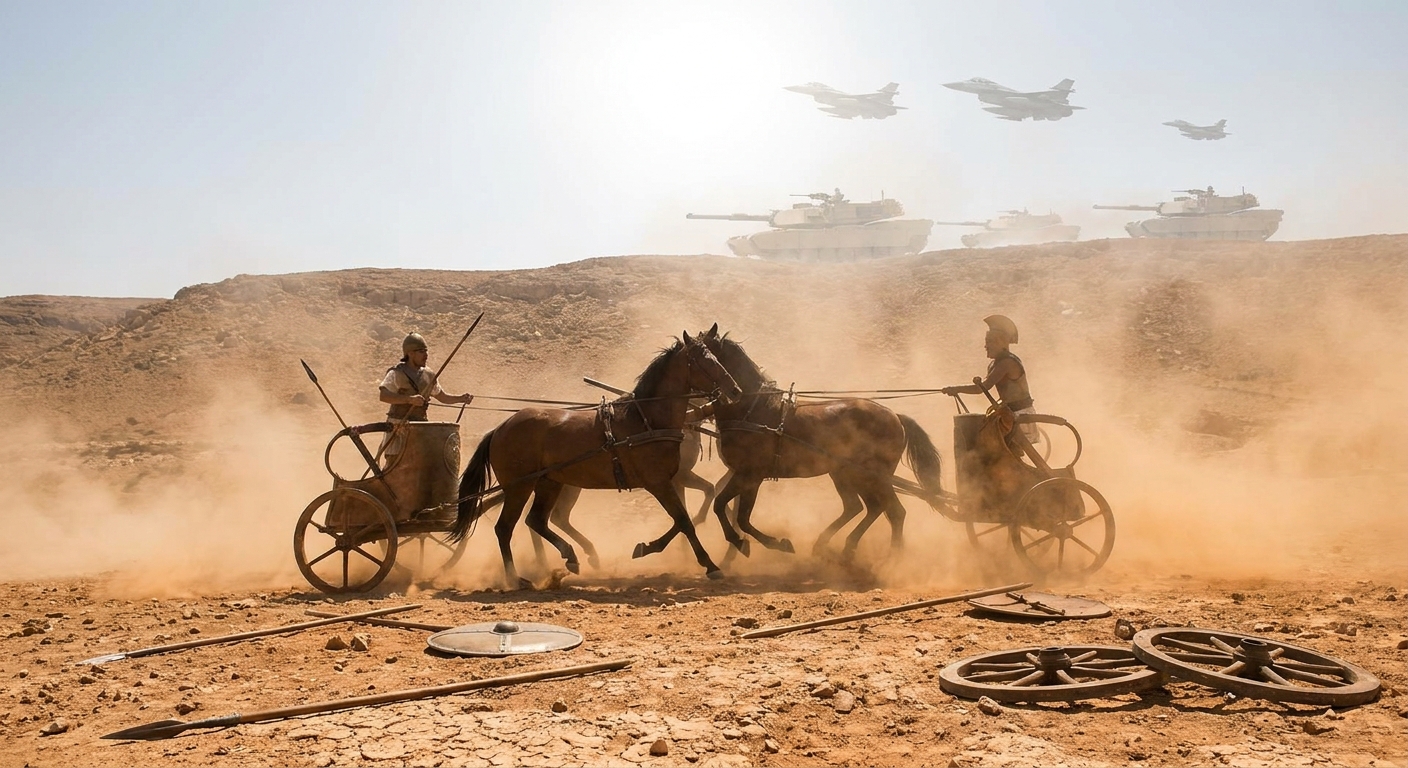
Heroic warfare places social elites in the spotlight. Combat is a stage for personal bravery, where high-status fighters dominate the front line and narratives. Think Homeric heroes, chariot nobles, or samurai.
Example: Homer’s Bronze Age Imagination
In the Iliad, likely composed around the 8th century BCE but describing an imagined Mycenaean world, warfare is framed as a sequence of duels within a larger melee. Achilles rebukes Agamemnon:
"I for my part did not come here for the sake of the Trojan spearmen...
but for your sake, shameless one, to do you pleasure."
— Iliad 1.152–160 (tr. Lattimore)
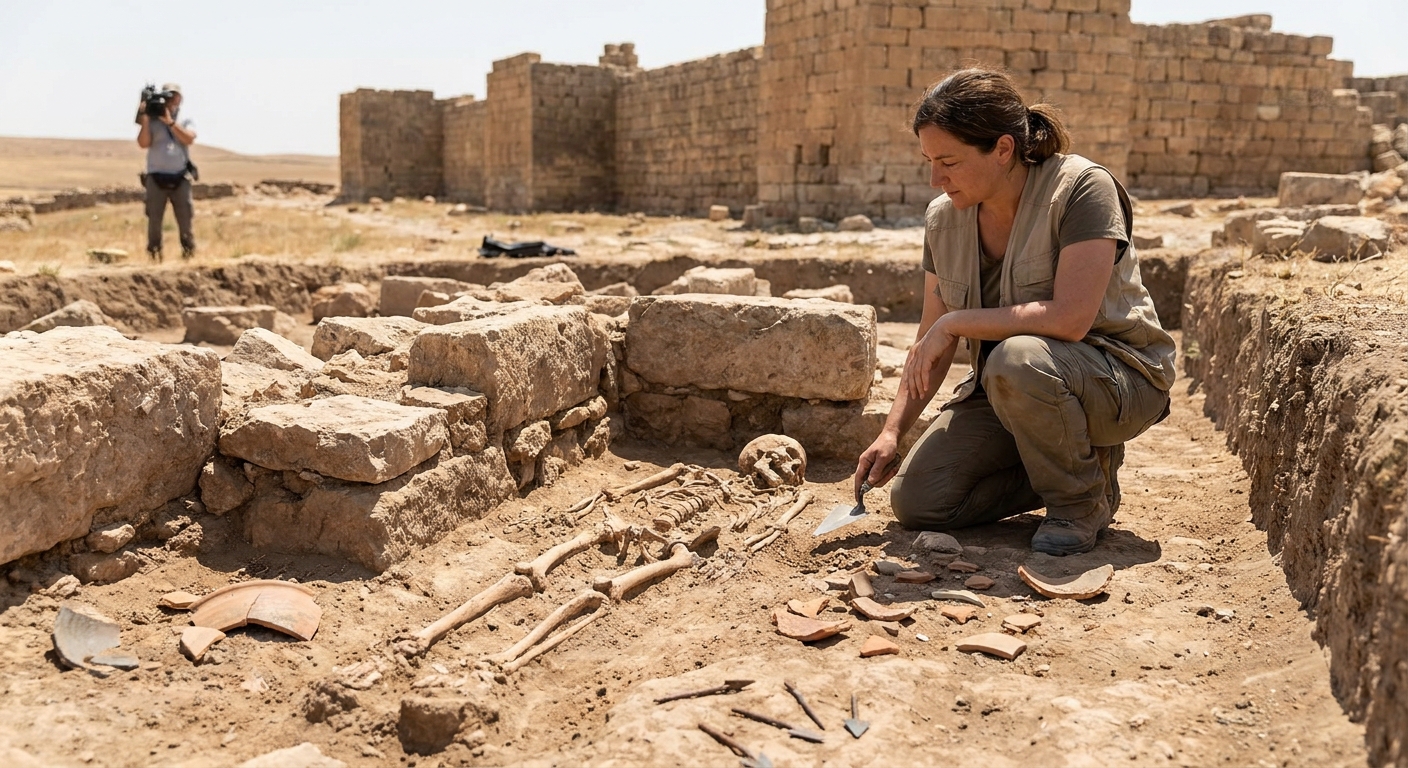
The quarrel is about honor and status, not strategy in a modern sense. Archaeological finds from Mycenaean shaft graves—gold masks, ornate weapons—underscore that elite warfare was entangled with display and burial practice.
Similarly, in Late Bronze Age Near Eastern treaties, kings address each other as "brothers," framing warfare and alliances as a closed conversation among aristocratic households.
Pros and Constraints
- Pros: Strong incentives for elite courage; clear social narratives of honor; relatively low long-term costs if engagements are limited.
- Constraints: Vulnerability to demographic shocks; overreliance on a narrow warrior class; difficulty scaling to large campaigns.
Echoes Today
Modern special forces operations and strategic bombing sometimes inherit a "heroic" aura—small numbers, high risk, outsized cultural attention—even when their practical importance is embedded in larger systems.
2. Mass-Levy Warfare: The Citizen in Arms
Defining Features
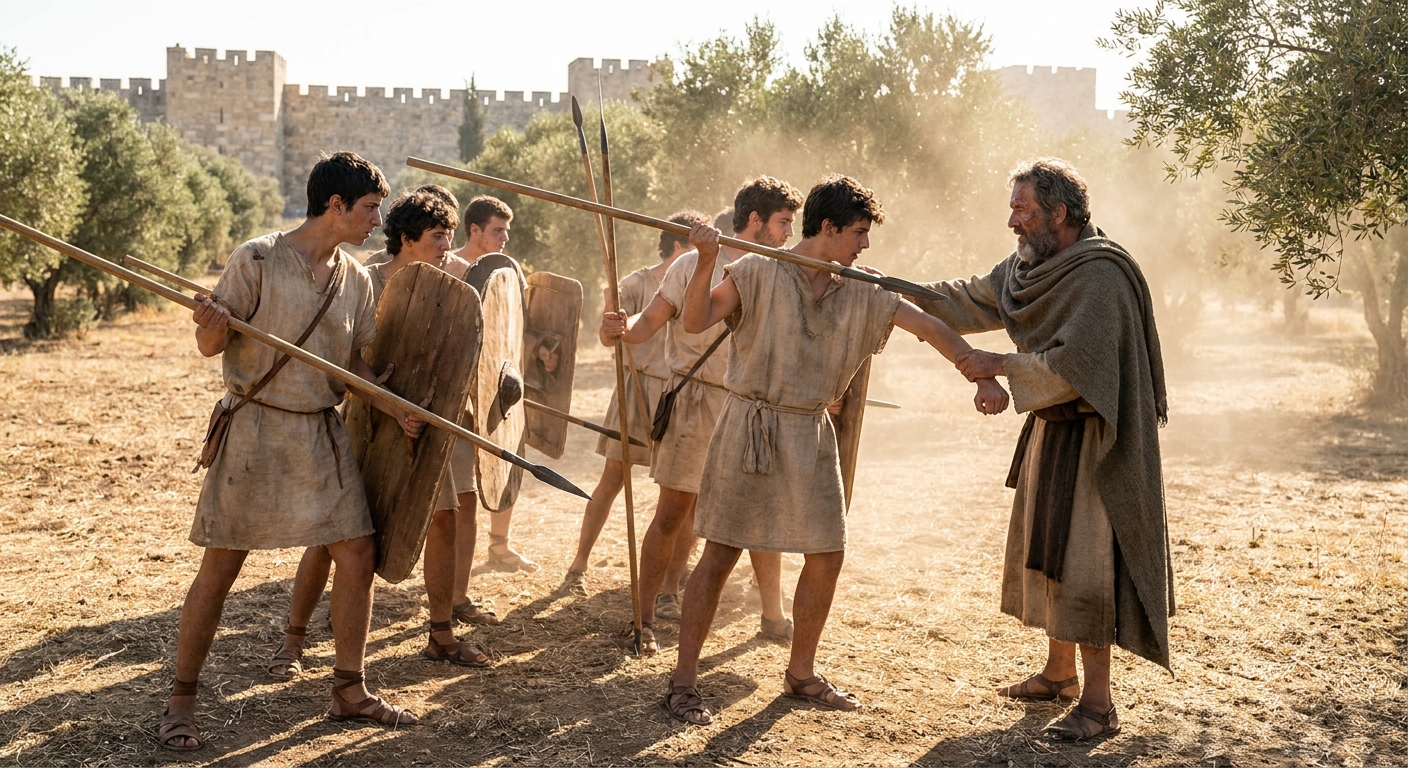
This model emerges when states tie military service to political membership. The battlefield fills with citizens or subjects whose participation is framed as a duty and a right.
Example: The Greek Hoplite Phalanx
Classical Athens and its peers provide a clear case. In Herodotus’ account of Marathon (490 BCE), Athenian citizens charge the Persians:
"The Athenians were the first of the Hellenes who, when they were in full sight of the Median [Persian] troops, charged them at a run..."
— Herodotus, Histories 6.112 (tr. Godley)
Behind this sentence lies a social system. The hoplite was a property-owning citizen who supplied his own armor. Excavations at sites such as Olympia and the Athenian Agora have yielded bronze cuirasses, helmets, and shield fittings that attest to standardized yet individually-owned equipment.
In Rome, the Republican legions similarly rested on a census-based levy. Livy preserves a speech where a Roman general reminds his men:
"You are citizens of a free state... the valor you show will protect your own liberty."
— Livy, Ab Urbe Condita 2.30 (paraphrased)
Pros and Constraints
- Pros: Large manpower pool; strong linkage between military service and political stake; capacity for sustained campaigning.
- Constraints: Social upheaval if casualties rise; politicization of military decisions; resistance to wars perceived as unjust.
Echoes Today
Conscription in the World Wars and in states like Israel or Cold War-era France follows this model. Debates over "citizen-soldiers" versus professional volunteers revisit classical tensions: who should bear the risks of war, and what does that confer in terms of rights?
3. Industrial Warfare: The Age of Steel and Steam
Defining Features
From the mid-19th century onward, the logic of factories, railroads, and mass bureaucracy reshaped warfare. The front line expanded, and the home front became a strategic target.
Example: Verdun and the Somme
Primary accounts from World War I convey a shattering shift. French lieutenant-colonel Philippe Pétain described Verdun succinctly:
"Fire kills."
— Attributed to Pétain, 1916 (summarizing his focus on artillery)
War diaries from British soldiers on the Somme speak of continuous shelling, mud, and the anonymity of death. Archaeological excavations along the Western Front uncover endless belts of shell craters, trench systems, and personal items—identity tags, mess tins, rosaries—illustrating the scale and impersonality of the conflict.
The underlying engine was industrial capacity. Railway timetables, shell-filling factories, and standardized rifles turned warfare into a problem of resource allocation. The German Schlieffen Plan and French Plan XVII were logistical blueprints as much as operational concepts.
Pros and Constraints
- Pros: Enormous destructive potential; ability to sustain forces across vast fronts; integration of science and engineering.
- Constraints: Catastrophic casualties; vulnerability of civilian infrastructure; political radicalization as societies strain under total war.
Echoes Today
Although contemporary conflicts often seem cleaner at distance, the industrial model still underpins large-scale war: armored brigades, artillery logistics, and munitions supply chains remain decisive in conflicts from the Iran–Iraq War to the current fighting in eastern Europe.
4. Post-Industrial and Networked Warfare: The Drone’s-Eye View
Defining Features
In the late 20th and early 21st centuries, advanced states increasingly rely on precision weapons, information dominance, and small professional forces, often paired with proxy fighters. The aim is to reduce visible costs at home while maintaining coercive reach.
Example: The 1991 Gulf War
The phrase "shock and awe" gained prominence later, but the 1991 air campaign against Iraq set the pattern. Television audiences saw green-tinged footage of laser-guided bombs. U.S. General H. Norman Schwarzkopf spoke of minimizing casualties via technology.
Primary sources in this era include satellite imagery, cockpit video, and digital logs. Declassified mission reports show meticulous target lists; at the same time, human-rights organizations collect testimonies of civilians facing "surgical" strikes that were anything but clean.
Archaeology has begun to approach these wars too. Surveys in Iraq and Afghanistan document crater patterns from air strikes and the remains of destroyed infrastructure. Like Bronze Age destruction layers, they leave a material palimpsest of political decisions.
Pros and Constraints
- Pros: Lower personnel risk for advanced states; rapid, global reach; integration of cyber, space, and kinetic domains.
- Constraints: Moral distance from killing; temptation to use force more readily; difficulty translating tactical superiority into sustainable political outcomes.
Echoes Today
Drone strikes, special operations raids, and cyberattacks on critical infrastructure represent the cutting edge of this model. Yet resistance movements often respond with low-tech but resilient tactics: IEDs, tunnels, and social media campaigns that weaponize narrative.
Tying the Models Together
These four models rarely exist in pure form. States blend them according to circumstance:
- A modern democracy may field a professional high-tech military (post-industrial) while leaning on reservists (mass-levy) and celebrating elite commandos (heroic).
- Non-state actors may adopt industrial-era trench warfare techniques with improvised materials.
A key thread is the relationship between society and battlefield:
- In heroic systems, war is the private drama of elites.
- In mass-levy systems, war is a civic obligation and trauma.
- In industrial systems, war is a test of entire economies.
- In post-industrial systems, war is often politically distant yet technologically intimate.
Why This History Matters for Policy and Ethics
Understanding these models clarifies contemporary dilemmas:
Who pays the price?
Drone pilots operating from thousands of kilometers away invert the old expectation that those who vote for war also bleed in it.
What counts as victory?
Industrial wars often ended with clear surrenders. Post-industrial campaigns—counterinsurgencies, "wars on terror"—produce ambiguous, prolonged outcomes.
How do narratives lag behind reality?
Political speeches still invoke citizen-army metaphors even when militaries are small and professional, or heroic myths when outcomes are structurally industrial.
Conclusion: Choosing a Way of War
States inherit traditions of violence but also make conscious choices. They decide whether to mobilize whole populations or rely on contractors, whether to valorize sacrifice or promise casualty-free wars, whether to show the battlefield or hide it behind classification.
By comparing heroic, mass-levy, industrial, and post-industrial ways of war, we glimpse not only technological change but evolving ideas about what a state is and what it owes to those who fight in its name. The shield walls of Marathon and the glowing crosshairs of a drone feed still belong to the same story: how polities organize, justify, and survive conflict.