Ancient battles often appear in our sources as sudden, dramatic clashes—kings trading boasts, armies colliding in a single decisive day. Missing from these set pieces is the long, unglamorous work of turning farmers, craftsmen, and aristocrats into functional soldiers.
Introduction: Before the Battlefield
This article reconstructs how ancient societies trained for war, drawing on primary texts, inscriptions, and archaeological remains. Far from being chaotic mobs, many ancient armies were products of deliberate, even sophisticated, preparation.
Sparta: Crafting a Warrior Citizen
The Agōgē in Words
Few ancient training systems are as famous—or as mythologized—as the Spartan agōgē. Plutarch, writing centuries later, describes a regime of discipline beginning in childhood:
"From their earliest boyhood, [the Spartans] were trained to endure hardship…"
— Plutarch, Life of Lycurgus 16
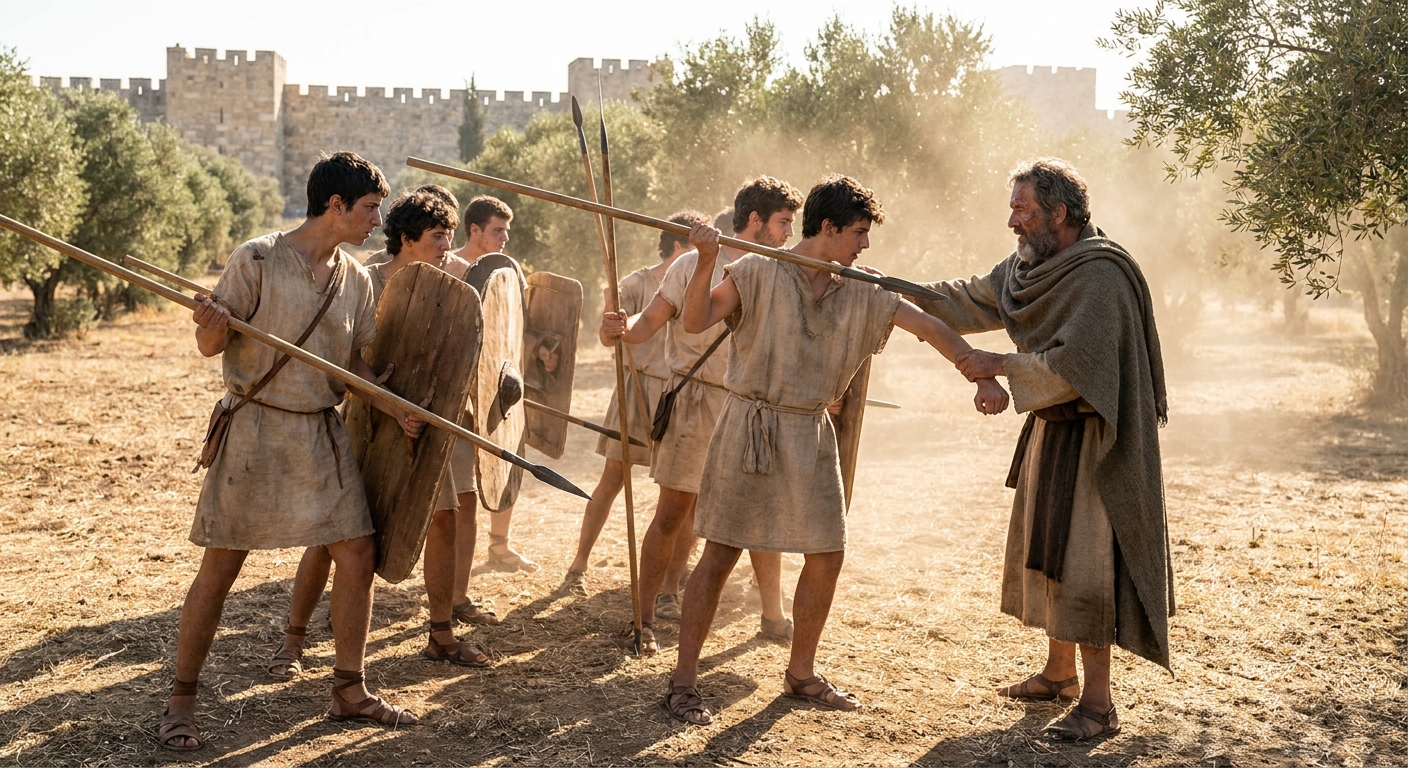
Boys were taken from their families at age seven, organized into herds (agelai), and subjected to constant physical and moral testing. Xenophon, an admirer of Sparta, emphasizes obedience and communal spirit:
"Lycurgus gave the command of the boys to a warden... with authority to punish severely."
— Xenophon, Constitution of the Lacedaemonians 2.2
Archaeological Traces of Spartan Training
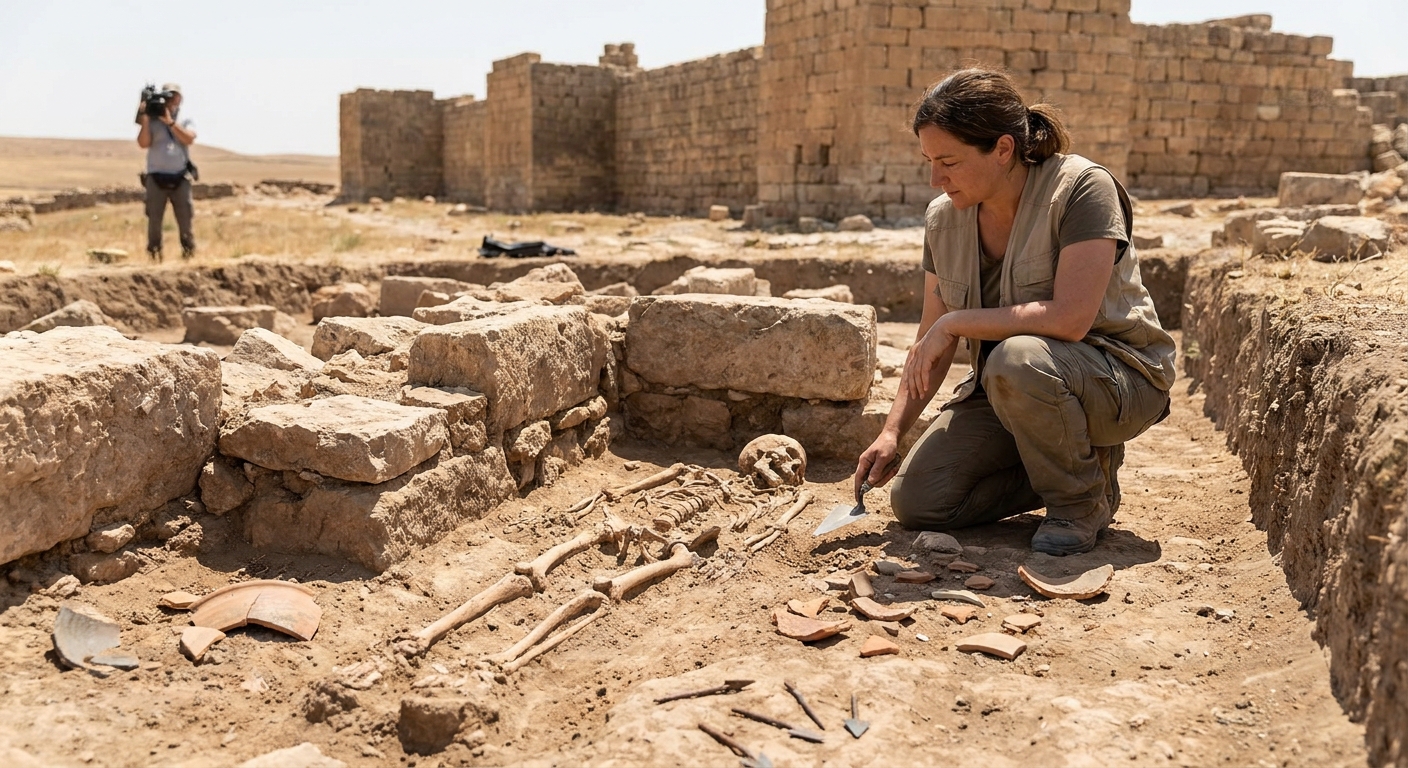
Sparta itself leaves fewer monumental remains than other Greek cities, partly because of continuous occupation and later building. Yet excavations have revealed:
- Gymnasia and training grounds near the Eurotas River.
- Votive offerings—bronze figurines of warriors, shields, and weapons—at sanctuaries associated with youth contests, such as Artemis Orthia.
These finds corroborate textual descriptions of a culture that fused athletic, religious, and military training.
What the Agōgē Really Produced
While some modern historians argue Plutarch exaggerates for effect, there is consensus that Spartan males underwent systematic conditioning in:
- Endurance (limited clothing and food).
- Group discipline (choral dances, drill-like maneuvers).
- Weapons use (spear and shield, practiced in ritualized contests).
Rather than a unique "super-soldier factory," Sparta represents an extreme case of a broader ancient pattern: embedding military readiness into civic upbringing.
Rome: Drilling the Citizen Legionary
The Legion on the March—In Text
Polybius, a Greek historian of the 2nd century BCE, offers a near-handbook of Roman military practice. He notes the Roman focus on repetitive drill:
"They practice... throwing their javelins, and after this they practice cutting and thrusting with their swords against a post."
— Polybius, Histories 6.23 (tr. Shuckburgh)
Recruits trained with wooden swords and javelins twice as heavy as the real ones. Vegetius, writing during the late Roman Empire, echoes this centuries later:
"Let them be exercised by frequent running, and by carrying weights, that they may be rendered capable of bearing their arms."
— Vegetius, Epitoma Rei Militaris 1.9
Archaeological Evidence of Drilled Armies
Roman military sites across Europe and the Mediterranean—Vindolanda in Britain, Carnuntum in Austria, Dura-Europos in Syria—reveal:
- Principia (headquarters), barracks, and parade grounds, laid out with geometric regularity.
- Practice ditches and walls, used to rehearse fortification building.
- Writing tablets and papyri documenting equipment inventories and drill schedules.
At Vindolanda, waterlogged tablets preserve mundane letters from soldiers, including requests for more socks and instructions from centurions—evidence that everyday military life involved routine, oversight, and incremental training rather than constant combat.
The Logic of Roman Training
Roman drill had two major aims:
- Standardization: Turning recruits from diverse regions into interchangeable legionaries.
- Endurance and engineering: Legionaries were not just fighters but also road-builders and fortification crews.
The modern idea of "basic training" finds a clear ancestor here: a structured process designed to erase local habits and imprint a new identity centered on discipline and group cohesion.
Egypt: Soldiers of the Pharaoh
Textual Glimpses of Training
New Kingdom Egypt (c. 1550–1070 BCE) fielded professionalized troops, especially charioteers and archers. Instruction scenes in tombs and temples give rare visual hints. In the tomb of Kenamun (TT93), an 18th Dynasty official, artists depict soldiers marching in formation, practicing with bows, and maneuvering chariots.
Papyrus Anastasi I, a scribal exercise text from the Ramesside period, contains mock letters in which an officer criticizes a subordinate’s poor performance:
"You are a scribe who does not know how to march, who cannot evaluate the state of the troops."
— Papyrus Anastasi I, lines 20–25 (paraphrased)
Though satirical, the text presupposes standards for movement, formation, and tactical literacy.
Material Culture of Egyptian Warriors
Archaeological finds include:
- Archery ranges identified by concentrations of arrowheads and target stones at certain sites.
- Chariot parts (wheels, yokes) in royal tombs, such as those of Thutmose IV and Tutankhamun, illustrating elite training equipment.
- Military camps—rectangular enclosures with regular internal divisions—found in the Sinai and Nubia, interpreted as staging and training areas.
Egyptian warfare scenes at Karnak and Luxor, while propagandistic, also reveal practicing poses: archers with uniform stances, charioteers in standardized positions, suggesting drilled body techniques.
Ordinary Recruits: Beyond the Elite Narratives
Texts and reliefs often focus on noble warriors, but most ancient armies relied on non-elite manpower. How were these men prepared?
Evidence from Weapons Deposits and Graves
In Iron Age Europe, for example, La Tène and Hallstatt sites contain weapon graves—burials with swords, spears, and shields. Many show signs of:
- Repeated sharpening and repair.
- Healed injuries consistent with training or combat.
At the same time, some weapons appear almost unused, perhaps ceremonial or belonging to young warriors recently initiated.
In Mesoamerica, iconography and Spanish accounts suggest that Aztec youths trained in telpochcalli (youth houses) where they learned to carry loads, march, and fight with the macuahuitl (obsidian-edged club). Bernal Díaz del Castillo, a conquistador, observed:
"They were trained from youth to carry burdens and to go to war."
— Bernal Díaz, The Conquest of New Spain (tr. Maudslay)
Ad Hoc vs. Institutional Training
Not all societies had formalized systems like Sparta or Rome. Many organized training around:
- Seasonal musters, where men practiced with weapons during festivals.
- Hunting and raiding, which doubled as combat rehearsal.
- Ritualized contests—stick-fighting, wrestling, mock battles.
Nonetheless, the underlying objective was similar: accustoming bodies to hardship, weapons, and coordinated movement.
What Ancient Training Tells Us About War and Society
Training is where societal values meet military necessity:
- Sparta inculcated equality among warrior citizens by subjecting them to the same harsh regimen.
- Rome used drill to build obedience to officers and the state, embedding hierarchy.
- Egypt framed military preparation within rituals of royal power and divine favor.
The intensity and formality of training correlate with how central warfare was to political order. Highly militarized states invested heavily in preparation; others relied more on improvisation.
Parallels to Modern Basic Training
Several continuities span millennia:
Breaking and remaking identity
From Spartan boys to modern recruits, training often begins by stripping previous markers (hair, clothes, speech) and imposing new ones (uniforms, oaths).
Physical conditioning as moral education
Ancient authors repeatedly equate endurance with virtue. Today’s emphasis on physical fitness and mental resilience continues that ethos.
Drill as choreography of violence
Repetitive movements—shield locks, spear thrusts, rifle drills—normalize and routinize lethal action.
Ritual and ceremony
Initiation rites, parades, and award ceremonies bind individuals into a collective narrative.
Conclusion: The Long March to the Battlefield
When we read of battles like Cannae or Kadesh, we see only the tip of an iceberg of preparation. Archaeological training grounds, worn practice weapons, and textual complaints about lazy recruits reveal that ancient warfare depended as much on day-to-day discipline as on momentary courage.
The ordinary people who filled ancient ranks did not spontaneously transform into soldiers on the eve of combat. They were honed—sometimes brutally, sometimes ritualistically—by systems that linked personal identity to the ability to fight. Understanding those systems brings the ancient battlefield closer and highlights an uncomfortable truth: the capacity for organized violence is not innate; it is carefully taught.