In the first two centuries CE, two vast empires dominated Eurasia: Rome in the Mediterranean and Western Europe, and Han China in East Asia. They never directly bordered each other, but indirect contacts flicker in the historical record—the Hou Hanshu mentions envoys from "Da Qin," usually identified with the Roman Empire.[^1]
Two Empires, One Eurasian Stage
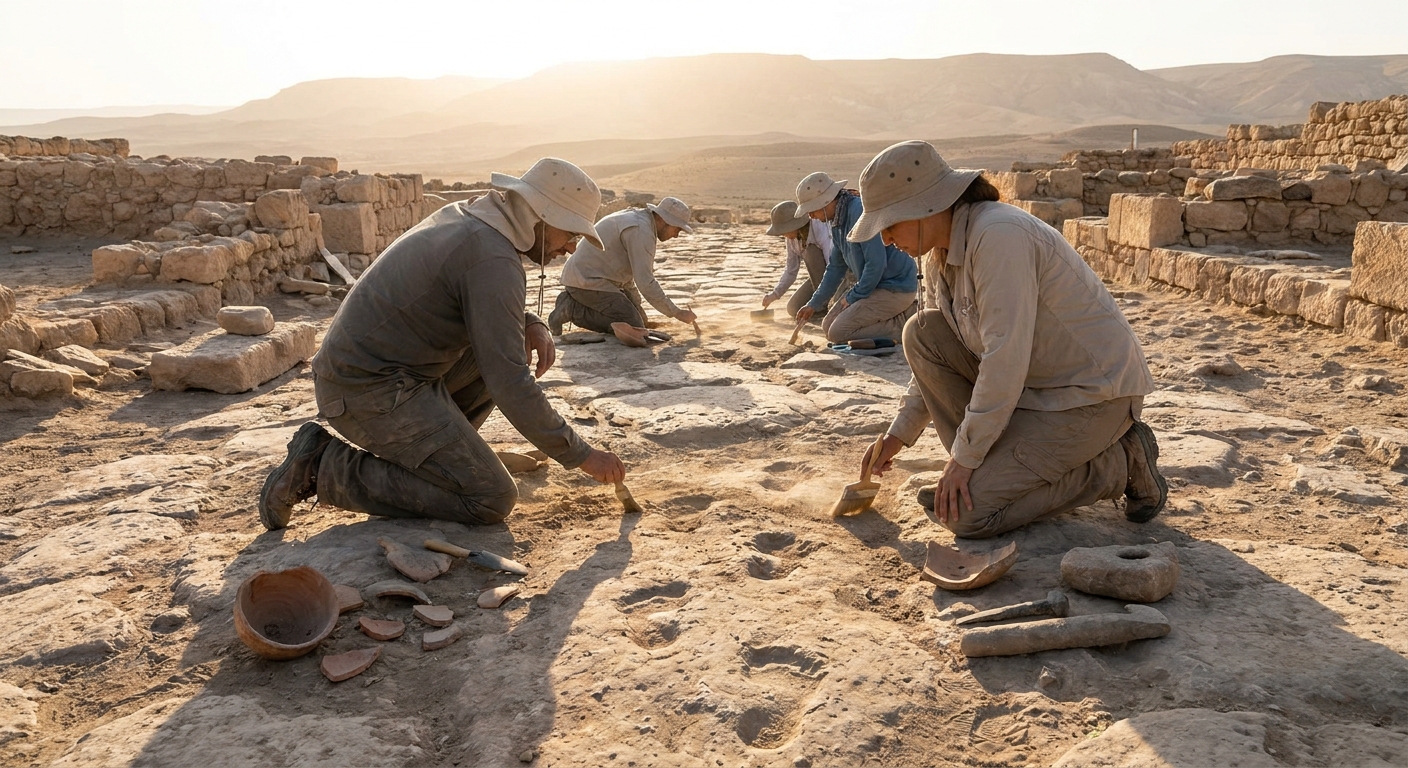
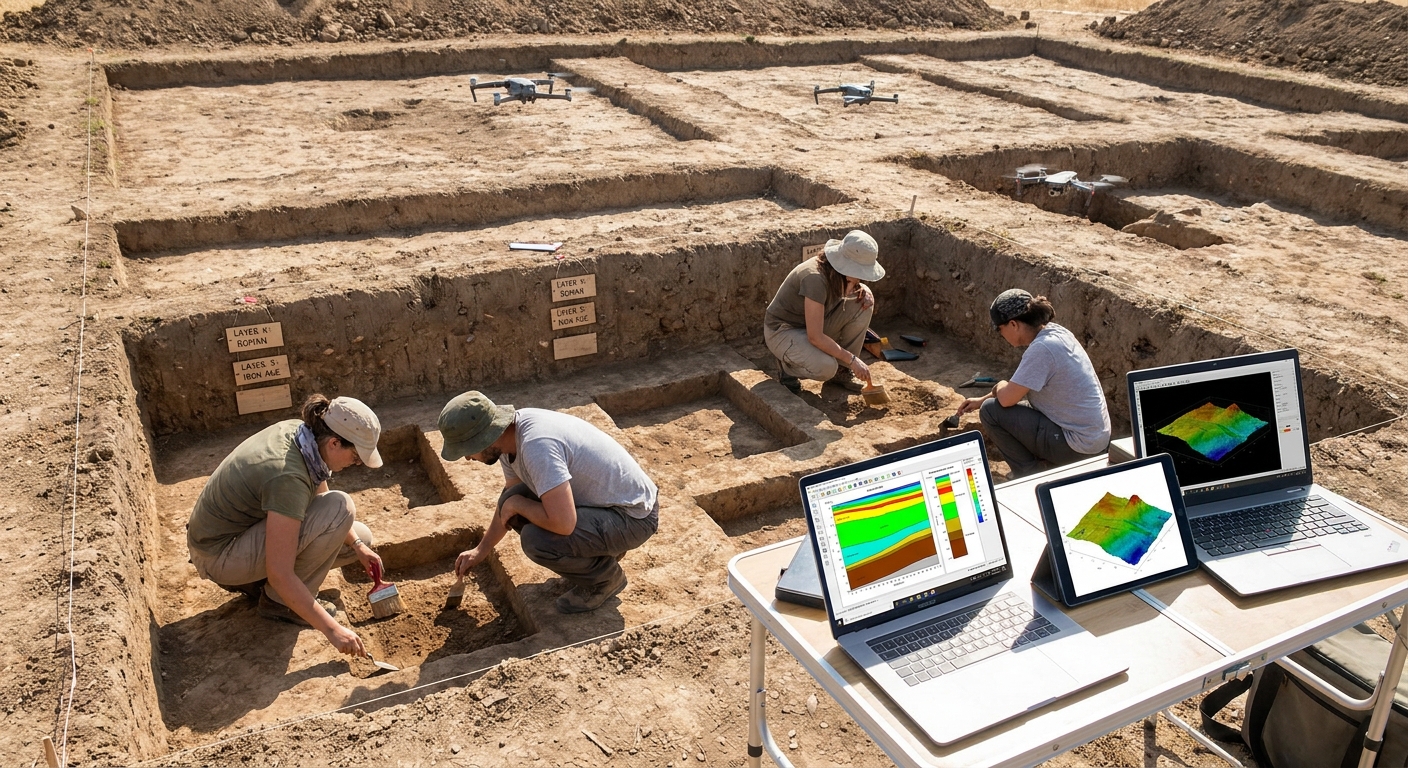
Archaeology lets us compare these distant powers beyond the boasts of their official chronicles. By examining cities, tombs, infrastructure, and everyday objects, we can see convergences and contrasts in how they organized space, projected power, and managed ordinary life.
1. Capitals in Earth and Stone: Rome and Chang’an
Rome: Monumental Stone and Public Spectacle
Ancient authors like Suetonius quote Augustus as claiming to have "found Rome a city of brick and left it a city of marble."[^2] Excavated remains largely bear him out:
- The Forum Romanum and adjacent imperial fora reveal a dense cluster of basilicas, temples, and arches.
- The Colosseum, whose substructures still stand, embodies Rome’s emphasis on public spectacle.
Inscriptions carved into stone—like the Res Gestae Divi Augusti, Augustus’s self-authored epitaph—turn architecture into political text. Archaeology of building techniques (opus caementicium concrete, brick stamps recording consular dates) shows coordinated state-sponsored construction on a massive scale.
Chang’an: Gridded Earth and Palatial Compounds
Han Chang’an (near modern Xi’an) is less visually imposing today; its rammed-earth walls and palaces have eroded. Yet archaeological surveys and excavations reveal a meticulously planned capital:
- A rectilinear grid of wards and streets, echoing the ritualized city planning described in the Kaogong ji ("Record of Trades").
- Vast palace complexes like Weiyang Palace, whose foundations cover far more ground than the Roman Forum complex.
Where Roman building leaves grand stone hulks, Han construction often survives as subtle elevation differences, postholes, and tile fragments. Roof tiles stamped with imperial workshop marks, recorded in excavation reports, echo the Roman brick stamps that date and attribute buildings.[^3]
Comparison: Both empires used architecture as propaganda, but with different emphases: Rome on public monuments and spectacles, Han on palatial, bureaucratic enclosures and cosmological city ordering.
2. Roads, Frontiers, and the Archaeology of Control
Roman Roads and Forts
Roman itineraries, like the Itinerarium Antonini, list road stations across the empire; milestones inscribed with emperors’ names mark distances. Archaeological excavation and aerial photography confirm a dense network:
- Paved roads with cambered surfaces and drainage.
- Roadside towns and mansiones (way stations).
- Linear frontier systems like Hadrian’s Wall, dotted with milecastles and forts.
Material culture—standardized military equipment, stamped tiles from legionary workshops—demonstrates the army’s role as both garrison and construction corps.
Han Highways and the Great Wall
The Han inherited and expanded networks of roads and postal relays (驿道 yidao), described in the Hanshu ("Book of Han"). Excavations have uncovered:
- Rammed-earth roadbeds and bridges in the northwest.[^4]
- Relay stations with stamped wooden slips recording official communications.
Sections of what we collectively call the "Great Wall" date to the Han, especially in Gansu and Xinjiang. Archaeologists have documented beacon towers, garrisons, and watchposts along these lines.
At Juyan and Dunhuang, caches of wooden documents—reports, inventories, exile orders—found in tower ruins give granular insight into frontier life, comparable in some ways to papyri from Roman Egypt.
Comparison: Both states invested heavily in overland infrastructure to project power into frontier zones. Roman remains are more visible in stone; Han infrastructure often survives as earthen features and documental archives preserved in arid zones.
3. Tombs and the Afterlife: Terracotta and Sarcophagi
China: Monumental Tomb Mounds and Terracotta Armies
The most famous Chinese imperial tomb belongs to Qin Shihuang, predating the Han but deeply influential. His terracotta army at Lintong—thousands of life-size soldiers, each uniquely modeled—was recorded in Sima Qian’s Shiji ("Records of the Grand Historian"):
"Palaces and scenic towers of a hundred officials were constructed, with weaponry and wondrous artifacts ... Mercury was used to fashion the hundred rivers, the Yellow River, and the Yangzi."
— Shiji 6
Archaeological excavation has confirmed many details:
- Pits of terracotta warriors, stable complexes, acrobats, and bureaucrats.
- Evidence of a sophisticated production system with modular assembly.
Han imperial and aristocratic tombs, like those at Mancheng (Prince Liu Sheng) and Mawangdui, contained:
- Jade burial suits sewn with gold or silk thread.
- Silk manuscripts (like the Mawangdui medical texts and early versions of the Daodejing).
- Miniature models of houses, wells, and servants—"substitute" afterlife provisions echoing textual prescriptions in ritual classics.[^5]
Rome: Sarcophagi, Columbaria, and Mausolea
Roman elite burials ranged from monumental mausolea (like that of Augustus) to richly carved stone sarcophagi. Funerary inscriptions are abundant:
"To the spirits of the departed (D.M.). To Gaius Valerius Primus, who lived 25 years... his parents set this up."
— CIL VI 21552
Archaeological evidence from catacombs and cemetery excavations in Rome and Ostia shows:
- Family tombs with niches for urns (columbaria) in the early empire.
- Increasing use of inhumation and elaborately decorated sarcophagi in the 2nd–3rd centuries CE.
Grave goods are modest compared to Chinese counterparts: some jewelry, coins (often "Charon’s obol"), lamps, and perfumes.
Comparison: Han elites invested heavily in providing material comforts and symbolic protections for the deceased; Roman elite tombs emphasized commemoration and status display in this world, with inscriptions foregrounding social identity.
4. Everyday Objects: Pottery, Coins, and Standardization
Roman Ceramic and Coin Economies
The spread of terra sigillata, a glossy red tableware, from factories in Gaul and Italy across the empire shows a high degree of standardization. Stamped maker’s marks on bowls allow archaeologists to map trade flows and dates.
Coins, too, are ubiquitous. Hoards—like the Cunetio hoard in Britain—give chronological anchors and hints of economic anxiety (sudden burial, never retrieved). Portraits and legends on coins functioned as mass-propaganda, their iconography studied alongside surviving imperial panegyrics.
Han Wares and Cash
Han ceramic typologies distinguish utilitarian gray wares from green-glazed vessels. Excavations at production sites reveal kiln technologies and distribution patterns. Like Rome, Han China minted standardized bronze coins, often with square holes—"banliang" and later "wuzhu" types.
Burials and hoards containing strings of these coins attest to both state control and everyday use. Wooden tablets from frontier sites list tax payments and rations in coin and grain, echoing the Roman use of coinage in taxation.
Comparison: Both economies leveraged standardized mass-produced objects—ceramics and coins—to integrate vast territories. Archaeology, by quantifying and mapping such finds, helps reconstruct trade and state reach beyond what texts explicitly mention.
5. Urban Neighborhoods and Domestic Life
Insulae and Domus in Pompeii and Ostia
Excavations in Pompeii and Ostia provide unparalleled views of Roman urban housing:
- Insulae (apartment blocks) with small rental units above shops.
- Domus (townhouses) with atria, peristyles, and decorative programs.
Wall paintings, graffiti, and small finds (toys, tools, shrines) sketch domestic rhythms. Written primary sources—like Pliny the Younger’s letters describing his Laurentine villa—offer elite perspectives; archaeology broadens the spectrum.
Han Courtyard Houses
At sites like Luoyang and smaller walled towns, excavations reveal courtyard-centric houses:
- Rooms arranged around open spaces.
- Pits storing grain or used as refuse.
- Hearths, wells, and drainage channels.
Tomb models of houses, found at Mancheng and other sites, provide 3D blueprints: multi-story towers, pigsties, wells, and latrines. These models align closely with excavated architectural footprints.
Comparison: Both cultures organized domestic space around courtyards (Roman peristyles, Chinese inner courts), but differ in verticality and street interaction: Roman insulae penetrated upward into crowded skylines; Han towns often emphasized horizontal sprawl and walled compounds separating internal family life from the street.
6. Approaches and Biases: What Archaeology Privileges
The archaeological record of Rome and Han China reflects not just ancient behaviors but modern research histories.
- Roman archaeology has long prioritized monumental architecture, art, and texts—sometimes reinforcing a focus on imperial centers and elite villas.
- Chinese archaeology, heavily influenced by state institutions, has invested intensively in early dynastic and Bronze Age sites, sometimes framing them within narratives of continuous, unified civilization.
In both contexts, rural sites, marginalized communities, and "barbarian" peripheries have historically received less attention, though this is changing. Recent work:
- On Roman rural landscapes via intensive survey (e.g., the Tiber Valley Project).
- On Han-period non-Han groups in the northeast and northwest, through cemeteries and hillforts.
Archaeology is not neutral; choices about where to dig and what to publish shape the narratives we tell about empires.
7. Connected Histories: Tracing the Silk Roads in the Ground
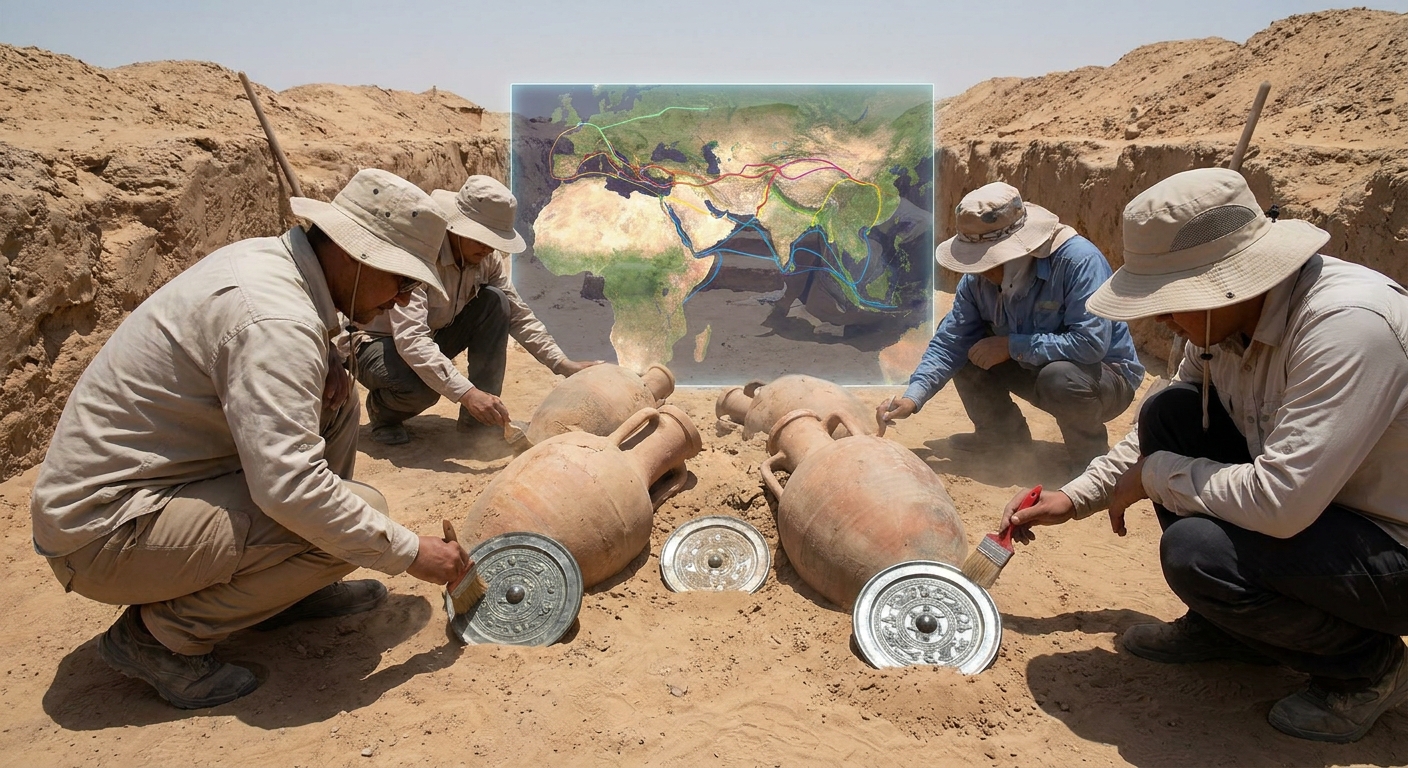
Texts like the Hou Hanshu describe caravans bearing Roman glass and textiles to the Han court. Archaeology confirms pieces of this long-distance puzzle:
- Roman glass vessels have been found in Han and later Chinese tombs, notably at Guangwu and Luoyang.[^6]
- Chinese silks have turned up in Roman Egyptian burials and in the Roman fort of Palmyra.
- At the site of Niya in Xinjiang, wooden tablets record local officials mediating caravan traffic, while material culture shows a blend of Indian, Central Asian, and Chinese traits.
These finds complicate neat binary comparisons. Rome and Han were not isolated experiments but nodes in a web of exchange that archaeologists are gradually tracing item by item.
Lessons for a Global Present
Comparing Roman and Han archaeology highlights both the diversity of imperial solutions and recurring themes:
- Infrastructure and integration: Roads, walls, and postal systems as nervous systems of power.
- Death and memory: Tombs and epitaphs as arenas where people negotiated identity and status.
- Standardization: Coins and ceramics as tools of economic and ideological unification.
Today, as scholars debate "globalization" and "multipolarity," looking at how ancient empires managed distance, diversity, and dissent can provide deep time case studies. Archaeology, grounded in physical evidence yet open to multiple interpretations, keeps these comparisons honest—reminding us that even the grandest narratives rest on the stubborn particularity of bricks, bones, and broken potsherds.
[^1]: Fan Ye, Hou Hanshu (Book of the Later Han), ch. 88, "Account of the Western Regions".
[^2]: Suetonius, Divus Augustus 28.
[^3]: Institute of Archaeology, CASS (2004). Chang’an City of the Han Dynasty: Archaeological Report.
[^4]: Han Wei & Lee, Y. K. (2013). Rammed Earth Roads of the Han Frontier. Journal of East Asian Archaeology.
[^5]: Loewe, M. (1993). Ways to Paradise: The Chinese Quest for Immortality. George Allen & Unwin.
[^6]: Liu, X. (2010). The Silk Road in World History. Oxford University Press.