Medieval warfare often arrives in popular imagination pre-packaged: armored knights locked in honorable duels, peasants cowering in mud, castles standing impregnable against crude siege engines. Over the last half-century, a wave of archaeological discoveries—battlefield surveys, castle excavations, mass graves—has reshaped this picture.
Introduction: Beyond Knights and Castles
This article examines five persistent myths about medieval war and contrasts them with what spades, metal detectors, and forensic labs have uncovered.
Myth 1: Knights Fought Mostly in Noble Single Combat
The Myth
Chivalric romances and later paintings suggest that medieval battles were dominated by individual duels between armored nobles. War, in this view, was a tournament scaled up.
The Evidence
Contemporary chronicles already complicate this. At the Battle of Bouvines (1214), chronicler William the Breton describes dense formations and group charges, not orderly one-on-one contests.
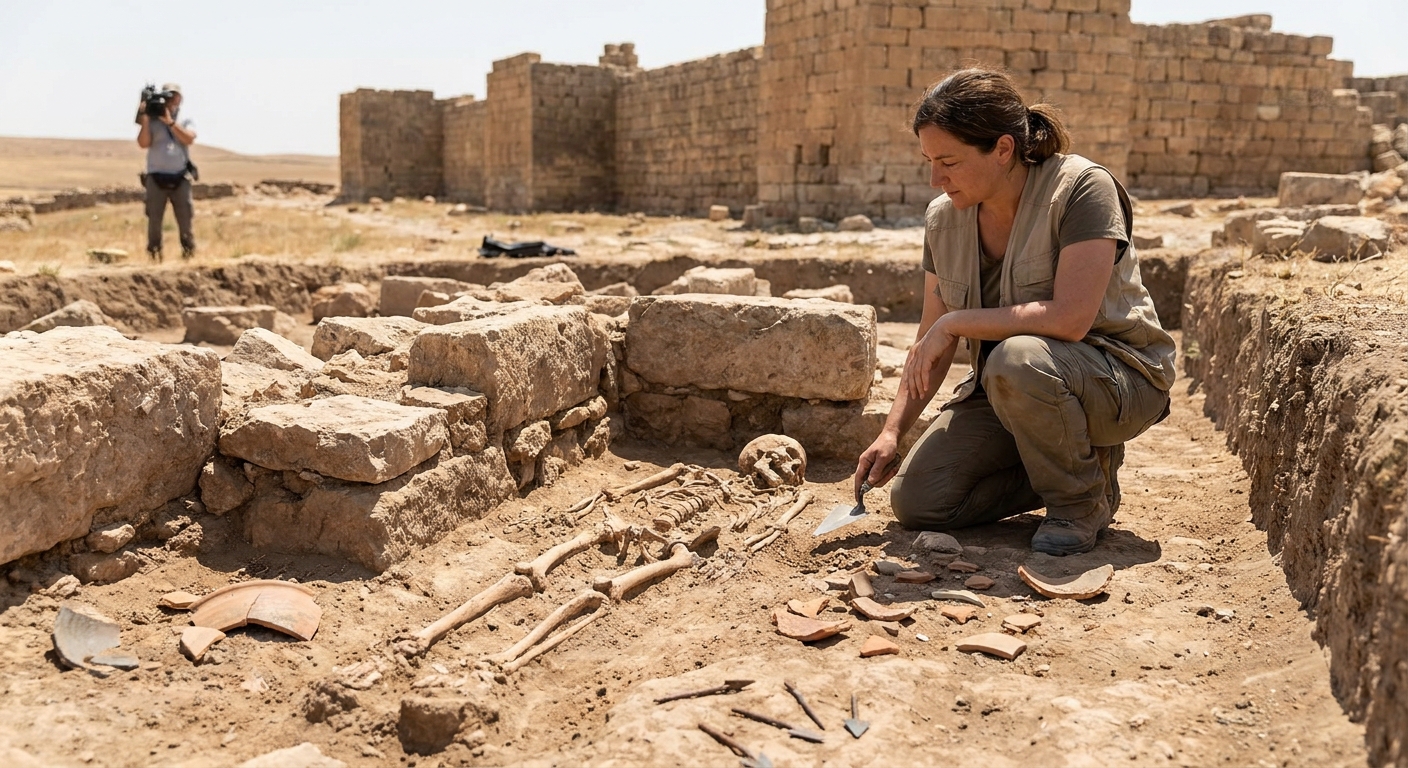
Archaeology goes further. Surveys at sites like Towton (1461), one of the bloodiest battles of the Wars of the Roses, have unearthed mass graves with skeletons bearing multiple wounds:
- Cuts to the back of the head, suggesting attacks from behind.
- Clusters of arrow injuries.
- Crushing trauma consistent with polearms.
Forensic analysis of the Towton graves (notably by the Towton Battlefield Archaeology Project) indicates close-quarters melee in chaotic groups, where fallen men were finished off on the ground.
The Reality
Knights certainly sought personal glory, and individual feats sometimes swayed engagements. Yet actual battlefields were dominated by collective action: dismounted men-at-arms fighting in ranks, infantry blocks, and coordinated charges. The romanticized duel was the exception, not the norm.
Myth 2: Peasants Were Helpless Rabble on the Battlefield
The Myth
A long-standing stereotype portrays commoners as untrained, poorly equipped, and largely irrelevant once "real" warriors—nobles—engaged.
The Evidence
Battlefield archaeology and muster records tell another story.
At Courtrai (1302), Flemish militia—largely townsmen and peasants—defeated French knights. Chronicler Guillaume de Nangis attributes this to the dense infantry formation and the boggy ground hindering cavalry. Excavations in the region and analysis of period weapons show mass-produced goedendags (club-like polearms) and pikes: affordable, lethal tools for organized infantry.
In England, the Hundred Years’ War saw the emergence of yeoman archers as a decisive force. The skeletons from the Mary Rose (a Tudor warship sunk in 1545, but preserving older training traditions) include individuals with:
- Asymmetric bone development in arms and shoulders, indicative of lifelong longbow use.
- Spinal changes reflecting heavy physical strain.
These are the bodies of professionals, not occasional amateurs.
The Reality
Commoner soldiers in many regions underwent regular training through town militias, seasonal musters, and archery laws (such as England’s 14th-century statutes requiring practice). Their contribution was not incidental; in battles like Crécy (1346) and Agincourt (1415), massed archers shaped outcomes.
Myth 3: Medieval Castles Were Impregnable Fortresses
The Myth
Castles are often imagined as nearly unassailable, requiring long sieges and starvation to capture.
The Evidence
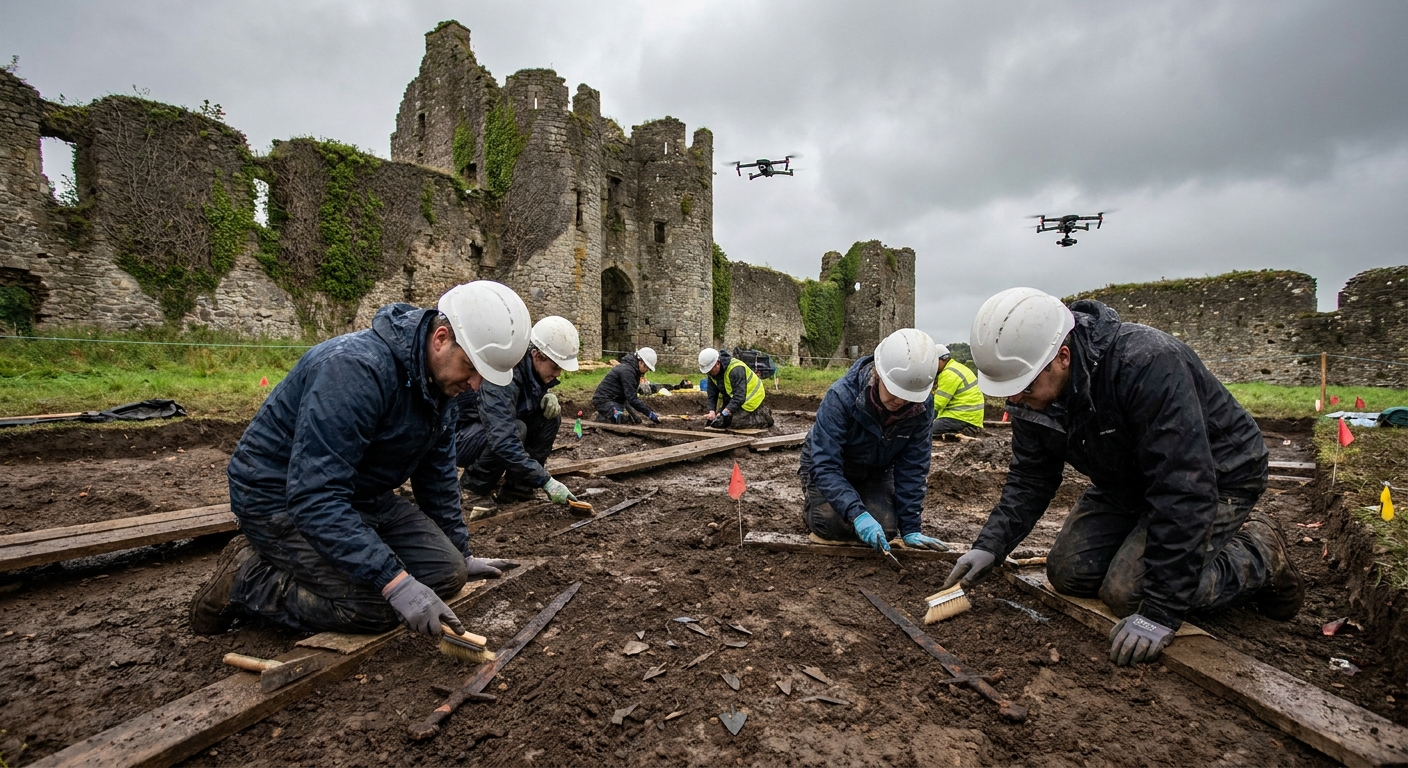
Excavations at numerous castle sites—such as Rochester and Kenilworth in England, Château Gaillard in France, and fortified sites in the Holy Land—reveal a variety of breach methods:
- Undermining (sapping): At Rochester (1215), King John’s forces burned fat under a mine to collapse a corner tower. Archaeological work has located the filled-in mine tunnels and collapse patterns.
- Artillery damage: Later medieval sieges employed trebuchets and early cannon. At Château de Tiffauges and other sites, stone balls and cannon shot embedded in walls testify to sustained bombardment.
- Assault through vulnerable points: Excavations often find secondary gates, postern doors, and weak angles that show signs of forced entry.
Chroniclers back this up. The siege of Château Gaillard (1203–04) ended not after decades, but in about a year, through combined blockade, mining, and storming.
The Reality
Castles were strong, but not absolute. Their main functions included deterrence, control of routes, and administrative authority, as much as last-resort defense. Skilled besiegers, given time and resources, could usually reduce them.
Myth 4: Medieval Weapons and Armor Were Crude and Cumbersome
The Myth
Films and fantasy art often portray knights moving like tin cans—barely mobile in overly heavy armor—carrying unwieldy swords intended for hacking rather than precision.
The Evidence
Museum collections and excavations, when properly dated and weighed, tell a different story.
- A full suit of late 15th-century Gothic plate armor typically weighs between 20–25 kg (44–55 lbs), distributed across the body—comparable to a modern soldier’s combat load.
- Experimental archaeologists and reenactors wearing accurate reproductions have demonstrated running, vaulting into saddles, and even performing cartwheels.
Excavations at battlefields and rivers (such as the River Thames and sites along the Danube) have recovered:
- Finely balanced arming swords and longswords designed for both cutting and thrusting.
- Specialized weapons like estocs (rigid thrusting swords) and pollaxes, optimized against armor.
Contemporary fight books—such as the 15th-century manuals of Fiore dei Liberi and Hans Talhoffer—depict sophisticated techniques: half-swording, grappling, joint attacks. These are martial arts treatises, not instructions for bludgeoning.
The Reality
Medieval arms and armor were the product of skilled metallurgy and design. Far from clumsy, they balanced protection with mobility for trained users. The "clanking knight" is more cinematic convention than historical norm.
Myth 5: Medieval Battles Were Short, One-Day Affairs with Clear Winners
The Myth
The archetype of medieval battle is a single decisive clash resolving a conflict: banners meet in a field at dawn, and by dusk the outcome is known.
The Evidence
While some battles were indeed single-day engagements, campaigns often stretched over months or years, with skirmishes, raids, and sieges.
Archaeological signatures show prolonged conflict:
- Layered burn and rebuild phases at castles and towns, indicating repeated attacks.
- Long-term fieldworks, such as siege lines and counter-fortifications, documented at sites like Orléans (during the Hundred Years’ War) and Tannenberg/Grunwald regions in Poland.
Written sources support this. The Albigensian Crusade (1209–1229) involved decades of campaigning, punctuated by sieges and occasional pitched battles. Even within a "single" battle, like Hastings (1066), there were multiple phases: archery, cavalry charges, feigned retreats.
Moreover, victory could be politically ambiguous. After Bannockburn (1314), Scotland’s status remained contested for years. Archaeology at associated sites reveals continuing military occupation and fortification long after the famed clash.
The Reality
Medieval warfare was protracted and uncertain. Battles were dramatic nodes in broader conflicts defined by attrition, negotiation, and shifting alliances.
Why These Myths Persist—and Why They Matter
The enduring myths of medieval warfare owe much to:
- Chivalric literature that elevated elite perspectives.
- 19th-century romanticism, which monumentalized castles and knights.
- Modern media, which favors clear-cut, cinematic confrontations.
Archaeology challenges these narratives by:
- Giving voice to ordinary combatants through their remains and equipment.
- Revealing the messiness of real battlefields—mass graves, scattered gear, improvised defenses.
- Highlighting the economic and logistical underpinnings of war: supply depots, forge sites, horse cemeteries.
Understanding the realities of medieval warfare has contemporary resonance. It reminds us that:
- Heroic imagery often obscures the collective, brutal nature of combat.
- Civilian spaces—towns, churches, farms—have long been entangled in military operations.
- The technologies and institutions of war are usually more advanced, adaptive, and rational than stereotypes suggest.
Conclusion: A Sharper, Stranger Middle Ages
Walk across a surveyed battlefield like Towton or through the excavated layers of a besieged castle, and the tidy images of knights in shining armor quickly dissolve. In their place emerges a complex world of trained infantry, calculated sieges, and weapons engineered with unsettling care.
Archaeology does not strip the Middle Ages of drama; it changes the cast. The anonymous archer, the town militiaman gripping a pike, the miner tunneling under a wall—their stories, written in bone and soil, reveal a medieval warfare at once more familiar to modern soldiers and more alien to our myths.