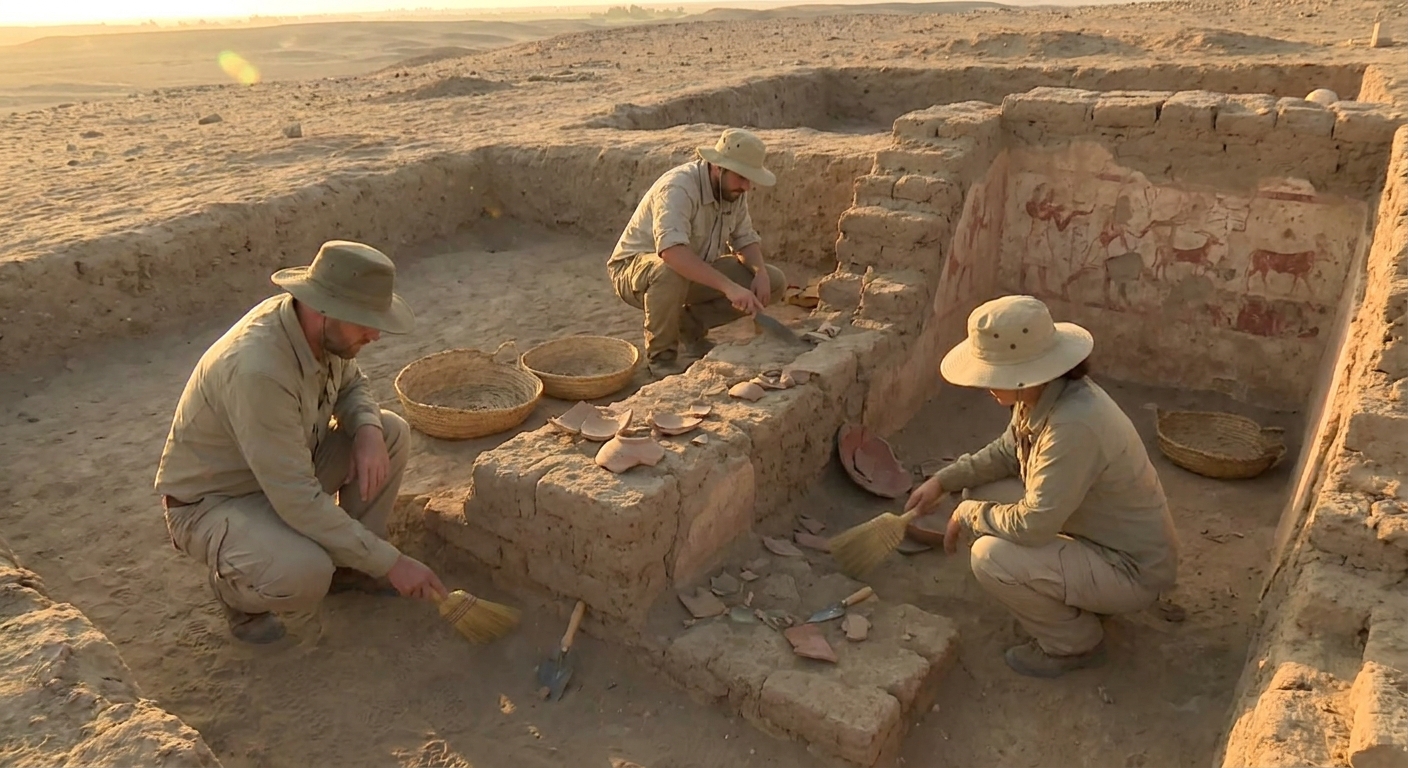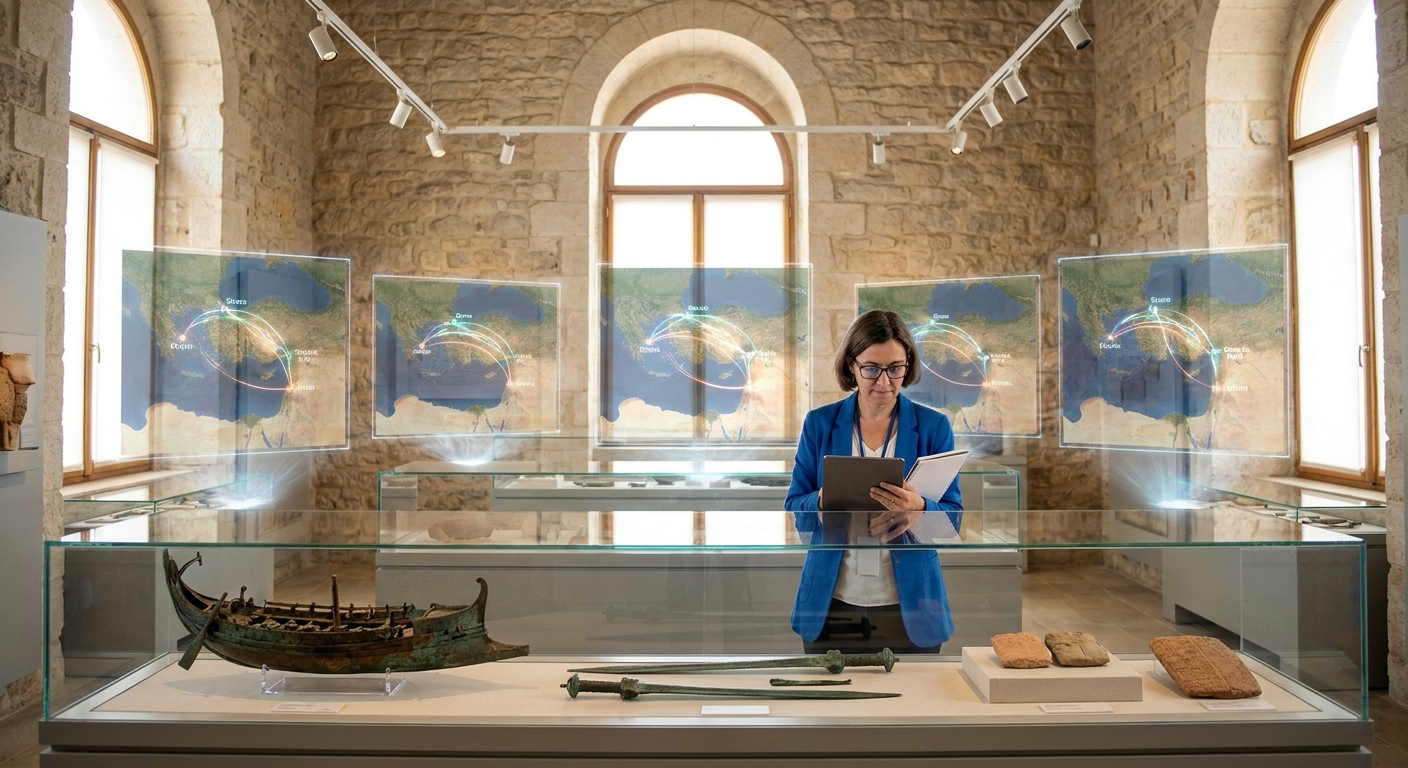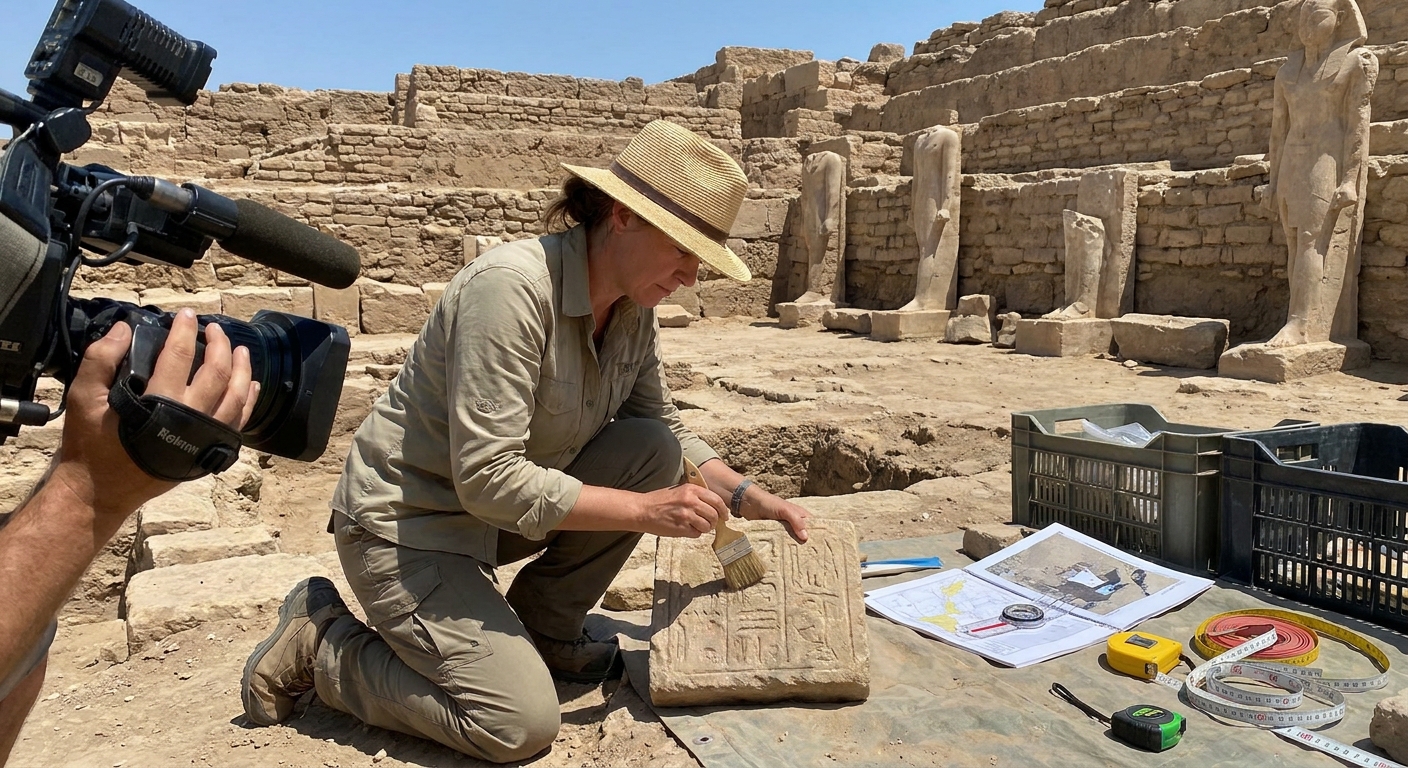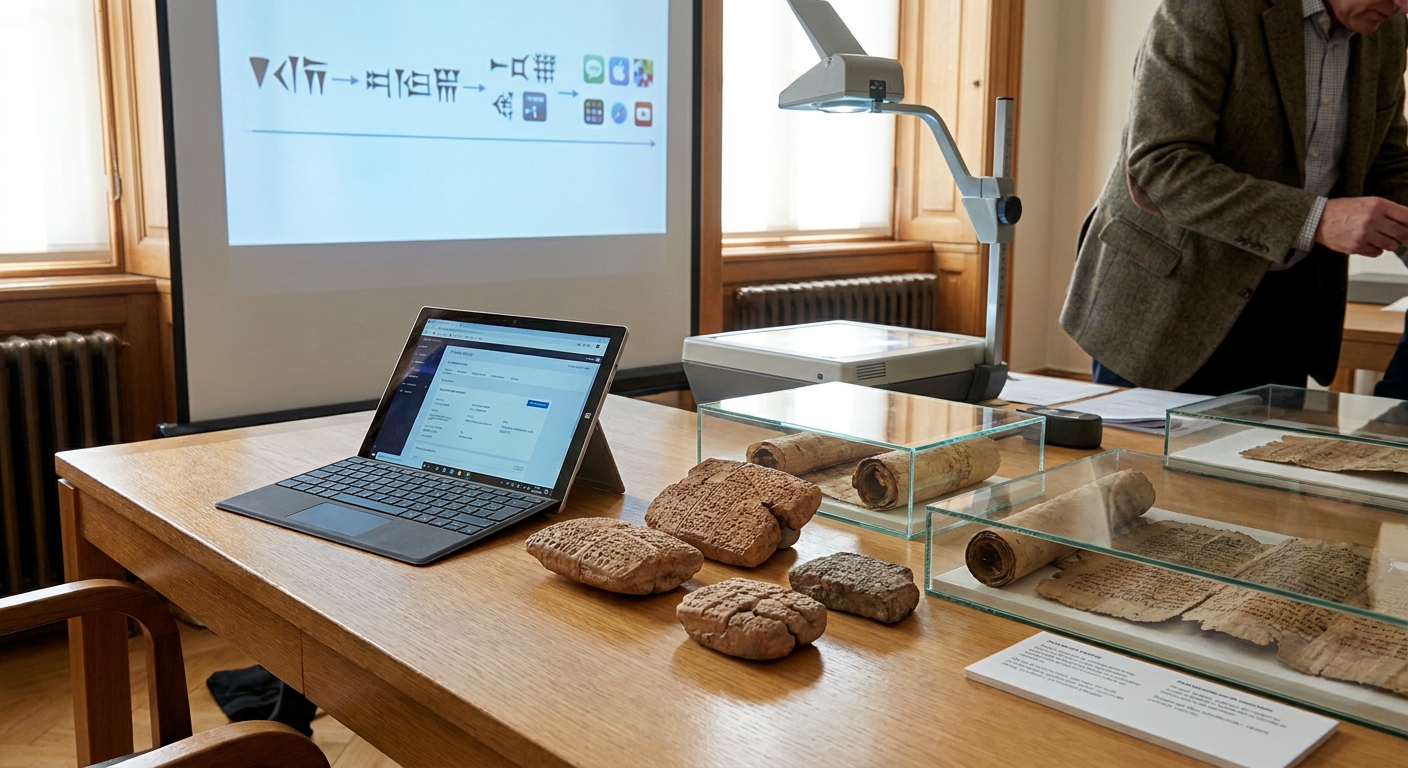
Long before cloud servers and spreadsheets, ancient civilizations grappled with the same core problem: how to store, retrieve, and trust information across time and space. From Sumerian clay tablets to Inca knotted cords, record‑keeping systems underpinned taxation, trade, law, and memory.
Introduction: The First Data Revolutions
This comparative explainer traces four major ancient systems of information management—Mesopotamian cuneiform, Egyptian hieroglyphs and hieratic, Chinese bamboo and silk records, and Andean quipu—and asks how their logic survives in modern digital practices.
Mesopotamia: Clay, Cuneiform, and the Birth of the Archive
Tokens, Bullae, and Tablets
In southern Mesopotamia (modern Iraq), the earliest writing emerges around 3300–3000 BCE at sites like Uruk. Archaeologist Denise Schmandt‑Besserat has shown how clay tokens representing commodities (sheep, jars of oil, measures of grain) were sealed in clay envelopes called bullae.
Impressions on the outside recorded what was inside; eventually, scribes dispensed with the tokens and impressed signs directly on flat tablets—proto‑cuneiform.
Early tablets from Uruk and Jemdet Nasr primarily list:
- Rations for workers
- Deliveries of grain or beer
- Land allocations
One tablet might read, in later Sumerian translation:
“30 measures of barley, ration for the brewer, month of the barley harvest.”
(After Nissen, Damerow & Englund, Archaic Bookkeeping)
Libraries and Legal Proof
By the Old Babylonian period (c. 2000–1600 BCE), cuneiform tablets recorded contracts, letters, mathematical tables, and epic literature. The law code of Hammurabi, carved on a basalt stele, proclaims:
“To bring about the rule of righteousness in the land, to destroy the wicked and the evil-doers; so that the strong should not harm the weak…”
(Prologue to the Code of Hammurabi)
Tablets were stored on shelves in scribal houses and temple archives, often with colophons stating the scribe, date, and series—metadata for retrieval.
Modern Echoes
- Clay tablets function like write‑once, tamper‑evident storage.
- Seals and bullae resemble modern signatures and authentication tokens.
- Serial numbering of tablets anticipates version control and database indexing.
When we trust a digital record because it is time‑stamped, replicated, and cryptographically sealed, we are extending a Mesopotamian concern: how to make information resistant to forgery and oblivion.
Egypt: Hieroglyphs, Hieratic, and the Power of Red Ink
Two Scripts, Many Contexts
In ancient Egypt, hieroglyphs—pictorial signs carved in stone—coexisted with cursive scripts (hieratic, later demotic) written on papyrus, pottery sherds (ostraca), and wood.
- Hieroglyphs: used for monumental inscriptions, religious texts, and elite self‑presentation
- Hieratic: a more fluid script for administrative records, letters, and literary texts
A Middle Kingdom papyrus might contain a mixture of black and red ink, with red used to mark headings, key terms, or the start of new sections—an early form of text highlighting.
The Papyrus Anastasi I, a humorous New Kingdom instructional text for scribes, imagines a superior berating an inept subordinate:
“You are no scribe, you do not know the art of writing… You are a mere Wasserträger (water‑carrier).”
(Papyrus Anastasi I, translation after Gardiner)
The very existence of such satire presupposes a class of professional information workers.
Temples as Data Centers
Temples like Karnak functioned as ritual and economic hubs, with:
- Tax and land registers
- Lists of temple personnel and rations
- Inventories of offerings and festival equipment
The Great Harris Papyrus, composed in the 12th century BCE, catalogs donations of land and goods by Ramesses III in painstaking detail.
Modern Echoes
- Script bifurcation (formal vs. cursive) parallels modern differences between, say, legal documents and quick notes, or between HTML markup and rendered webpages.
- Color coding and rubrication anticipate visual hierarchies in user interfaces.
- Temple archives show how data concentrates around institutions that wield both symbolic and economic power—like today’s large platforms and state agencies.
Early China: Bamboo, Silk, and the Imperial Gazetteer
Writing on Strips and Scrolls
Before paper, Chinese scribes wrote on bamboo slips and silk. Bundles of bamboo strips, tied with cords, formed portable documents.
At sites like Shuihudi and Zhangjiashan, archaeologists have discovered tombs containing legal texts, administrative manuals, and medical treatises written on such strips.
A Qin‑dynasty law text from Shuihudi stipulates precise penalties for bureaucratic failures:
“If a document is lost or damaged, the responsible official shall be punished by …”
(Shuihudi Qin Legal Texts, after Hulsewé)
Here, record‑keeping itself is an object of regulation.
Standardization and the State
Under the Qin (221–206 BCE) and Han (206 BCE–220 CE), the Chinese state standardized scripts, weights, measures, and administrative forms. Wooden tallies split in two—one half kept by the government, one by the subject—served as matching tokens to verify decrees.
Imperial gazetteers compiled geographic, economic, and historical data about regions. Sima Qian’s Shiji (Records of the Grand Historian) in the 1st century BCE integrated archival records with narrative history, creating a durable reference framework.
Modern Echoes
- Bamboo bundles resemble file folders or database tables, each holding related fields.
- Standardized forms and tallies parallel modern APIs and verification protocols.
- The combination of narrative histories with raw data anticipates our mix of dashboards and long‑form reports.
China’s experience highlights a recurring tension: centralization improves consistency and oversight, but risks rigidity and surveillance overreach.
The Andes: Quipu and the Art of Knotted Numbers
Recording Without Writing?
In the Inca Empire (c. 1400–1530 CE) and possibly earlier Andean societies, information was recorded on quipu (khipu): cords with subsidiary strings bearing knots in different positions and configurations.
Spanish chroniclers like Felipe Guaman Poma de Ayala and Bernabé Cobo report that quipu kept track of:
- Census data
- Tribute and labor obligations
- Storehouse inventories
Cobo writes:
“By means of these cords and knots they recorded all the provinces, villages and households, and the number of people and what tribute each had to pay.”
(Cobo, Historia del Nuevo Mundo, 1653)
Decoding the Cords
Modern research by scholars such as Marcia and Robert Ascher, Gary Urton, and Manuel Medrano shows that quipu encode at least:
- Decimal numbers using knot clusters and positional values
- Category information via cord color, ply direction, and grouping
Some quipu appear to map directly to Spanish‑era written censuses, suggesting a robust administrative system.
Modern Echoes
- Quipu embody a relational database in tactile form: each pendant cord is a record; knot positions are fields.
- Multimodal encoding (color, knot type, spacing) parallels how modern systems store data across bits and metadata layers.
- The absence of phonetic writing in quipu reminds us that not all data systems need to be text‑centric.
In a world exploring alternative interfaces—voice, gesture, haptics—quipu offer a non‑alphabetic precedent for complex information processing.
Common Threads: Trust, Redundancy, and Power
Across these diverse systems, three themes recur.
1. Trust and Authenticity
Whether through cylinder seals on clay, scribal signatures on papyrus, tallies split in two, or authorized quipu‑keepers (khipu kamayuq), ancient record‑keeping revolves around establishing trust.
Modern analogues include:
- Digital signatures and public‑key cryptography
- Blockchain “blocks” chained with hashes
- Role‑based access controls and audit logs
The mechanisms differ; the problem—ensuring that a record is genuine and unaltered—remains.
2. Redundancy and Fragility
Ancient archives often used:
- Multiple copies (e.g., treaty versions in both Hittite and Egyptian)
- Diverse media (stone, clay, perishable materials)
Yet survival is uneven. Fire can bake clay tablets into durability, while water rots papyrus and bamboo. Our knowledge is skewed by what happens to preserve or destroy.
Modern systems mitigate with backups, mirroring, and off‑site storage—but remain vulnerable to correlated risks (e.g., cyberattacks, geomagnetic events).
3. Information and Inequality
Control of record‑keeping has long been a source of power.
- Scribes in Mesopotamia and Egypt formed elite corps.
- In China, mastery of texts opened paths to officialdom.
- In the Inca realm, khipu specialists mediated between rulers and subjects.
Today, data literacy, server ownership, and algorithm design occupy similar roles. Who writes the records—and who can read them—shapes law, economy, and identity.
Conclusion: Ancient Futures of Information
Our digital infrastructures are not unprecedented novelties; they are the latest layer in a 5,000‑year experiment with external memory. Clay tablets, papyrus rolls, bamboo bundles, and knotted cords each solved, in their own way, problems we still face:
- How to quantify obligations and entitlements
- How to maintain institutional memory across generations
- How to balance transparency with control
Studying ancient record‑keeping is not nostalgia. It clarifies which features of our information systems are contingent (formats, devices) and which are structural (the need for trust, redundancy, and governance).
When we debate blockchain ledgers, open data, or the right to be forgotten, we are reenacting arguments that Sumerian scribes, Egyptian temple accountants, Han bureaucrats, and Inca quipu‑keepers would recognize—though cast in clay, ink, and fiber rather than code.