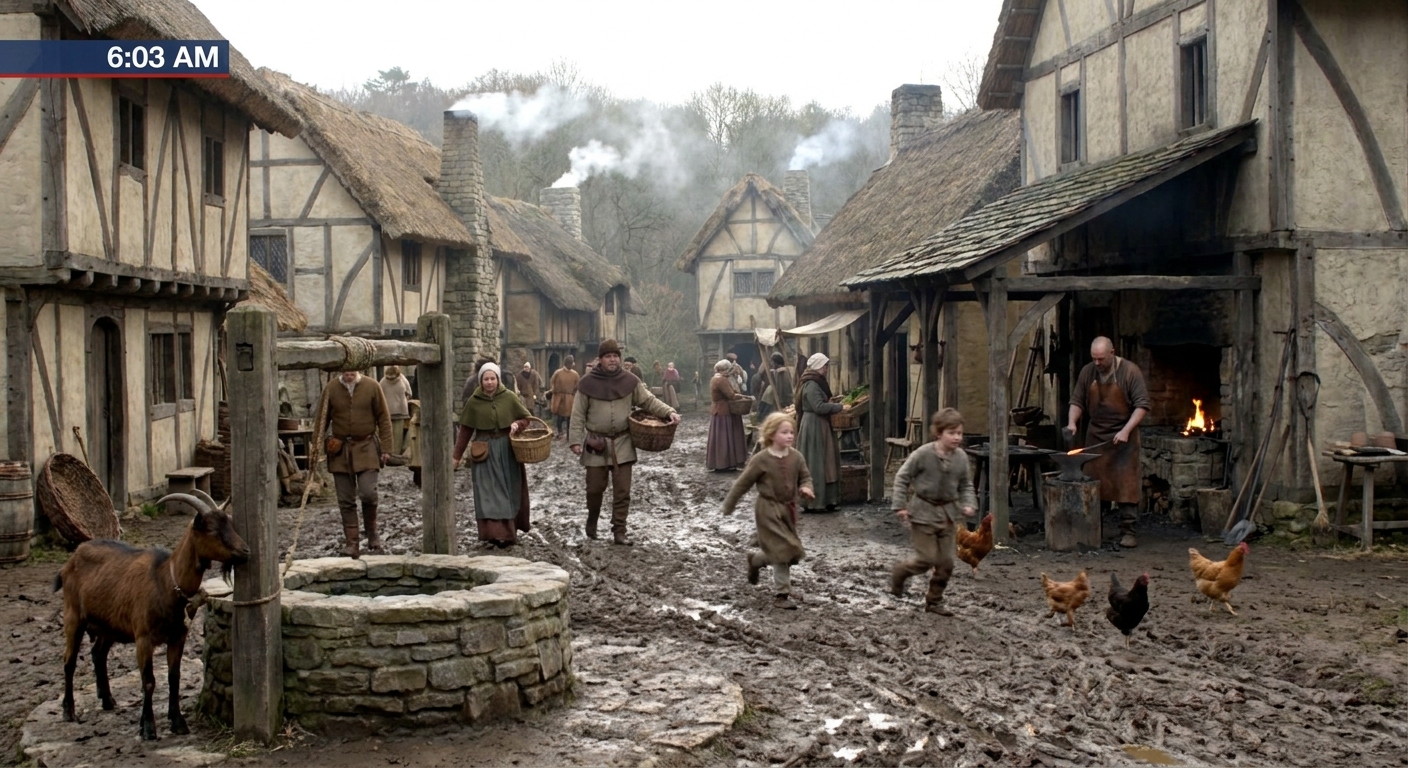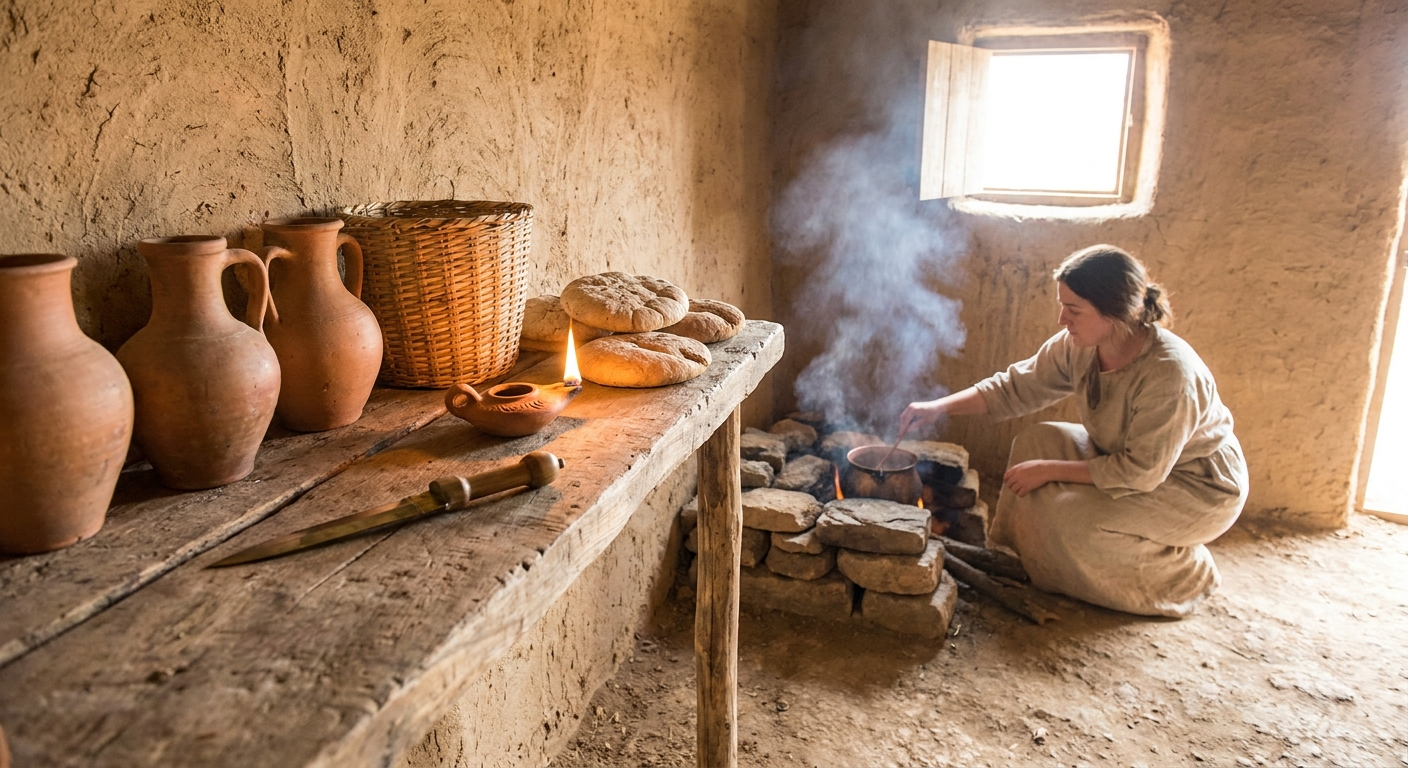
When we imagine the past, we often default to wars and rulers. Yet what humans have done most, across 50,000 years, is wake up, eat, work, care, argue, rest, and dream. Archaeology, paired with written sources, has become a discipline of the ordinary—a long‑running experiment in reconstructing what "a normal Tuesday" felt like in different eras.
Daily Life as Humanity’s Deepest Tradition
This article is not a simple tour through time. It’s a guide to patterns: what changes in daily life, what stubbornly persists, and what that might mean for our own futures. From Ice Age campsites to industrial tenements, we’ll trace a few recurring structures of everyday existence and connect them to a world now mediated by screens and algorithms.
Pattern 1: The Architecture of Togetherness
Then: Rings of Fire and Courtyards
Some of the earliest clear traces of daily life come from sites like Dolní Věstonice in the Czech Republic (c. 25,000 BCE), where archaeologists have found hearths, sleeping areas, and clusters of tools. The arrangement suggests small groups sharing tasks—cooking, toolmaking, caring for children—around central fires.
Fast‑forward to Neolithic Çatalhöyük in Anatolia (c. 7400–6000 BCE). Excavations led by James Mellaart and later Ian Hodder reveal tightly packed houses with no streets; people moved across rooftops and down ladders. Interiors show designated areas for hearths, food storage, and sleeping platforms. Walls hold murals and bull horns, suggesting that significant rituals occurred in domestic space.
In later urban contexts—Roman insulae, medieval longhouses, Chinese siheyuan courtyards, West African concession compounds—the pattern persists: built environments that cluster people into small, cooperative units.
Now: Open‑Plan Kitchens and Digital Living Rooms
Modern apartments and houses still revolve around shared spaces: kitchens, living rooms, courtyards in dense cities. Digital infrastructure has added virtual rooms—group chats, social feeds, online games—where people co‑present without physical proximity.
Future Implication
Archaeology suggests that humans consistently reinvent architectures of togetherness. Co‑housing initiatives, online communities, and shared workspaces are not anomalies but new versions of an old pattern: small groups arranging their environments to balance privacy and support.
When designing future housing or digital platforms, the archaeological record counsels skepticism toward visions of radical individualism. Even hunter‑gatherers with minimal material possessions built "living rooms" around fires.
Pattern 2: The Work of Making Food
Then: Grinding Stones and Communal Ovens
Across Neolithic sites—from Jericho to Mehrgarh—archaeologists find mortars, pestles, and grinding slabs worn smooth by repeated use. At Çatalhöyük, the density of such tools in domestic spaces indicates that much of daily labor centered on transforming grain into edible meals.
In Roman towns like Herculaneum, carbonized loaves in bakery ovens show standardized bread production; millstones and bakeries line certain streets. Medieval villages reveal communal ovens and shared mills; court records document disputes over access and fees.
Texts like Egyptian grain accounts or Mesopotamian ration lists, paired with isotopic analysis of ancient bones, confirm that securing and preparing calories dominated daily energy budgets.
Now: Supermarkets, Apps, and Invisible Farms
Most urban dwellers today do not grind grain or slaughter animals. Yet daily life is still anchored by food logistics: planning, shopping, cooking, eating. The labor has shifted and often been outsourced and obscured—to industrial farms, migrant workers, factory kitchens.
Meal‑delivery apps and processed foods appear to free time, but they also detach eaters from the material processes that archaeology uses to read the past.
Future Implication
Climate change and supply‑chain shocks are already reminding societies that food systems are fragile. The long arc of daily life research suggests that cultures with redundant, local ways of feeding themselves—home gardens, communal kitchens, robust markets—weather crises better than those reliant on single‑source infrastructures.
Archaeology’s quiet lesson: the closer daily eaters stay to at least some aspects of food production, the more resilient their routines.
Pattern 3: Tools of Memory and Coordination
Then: Knotted Cords, Clay Tablets, Wax Tablets
Before writing, societies used physical aides‑mémoire: notched bones, marked pebbles, knotted strings (as in the later Andean quipu). At Neolithic European sites, archaeologists find tally sticks that may record debts or livestock.
The invention of writing—cuneiform in Mesopotamia, hieroglyphs in Egypt, later alphabets—initially served mundane needs: tracking rations, property, deliveries. A Sumerian tablet from Uruk might list barley allocations for workers; a Roman wax tablet from Vindolanda might record a request for more beer or socks on the frontier.
These were the ancient equivalents of calendars, reminders, and spreadsheets. They changed daily life by enabling scheduled cooperation at larger scales.
Now: Smartphones as Everyday Archives
Our daily lives are coordinated through digital reminders, maps, chats, and feeds. The cognitive function is similar to that of an Old Babylonian tablet; the scale and opacity are radically different. Algorithms now insert themselves into the timing and content of our routines.
Future Implication
From tally sticks to tablets to phones, humans continuously offload memory into material systems. Archaeology shows that each shift reshapes who controls information and who is excluded.
Looking ahead, questions arise:
- Who will own and curate our daily digital traces in 50 or 500 years?
- Which aspects of our routines will be legible to future historians, and which will be as opaque as an undeciphered script?
The deep record suggests that participatory control over these tools—scribes within neighborhoods, community archives—produces more equitable daily lives than systems where only distant elites manage information.
Pattern 4: Managing Waste and Cleanliness
Then: Latrines, Dumps, and Smellscapes
Archaeologists love ancient trash. Middens (rubbish heaps) at sites like Skara Brae in Orkney or ancient Athens hold bones, broken pots, shells, and ash. Their layers chart changes in diet, technology, and social status.
Urban excavations in Pompeii reveal sophisticated sewage systems in some blocks and simple cesspits in others. Medieval city bylaws from London or Lübeck include fines for dumping waste in streets. Ottoman Istanbul’s court records include complaints about neighbors’ refuse.
Daily life research makes clear that cleanliness has long been both moralized and unequal: elites enjoyed latrines and baths; the poor improvised.
Now: Hidden Infrastructures
Modern plumbing and garbage collection have largely removed waste from daily consciousness in wealthy regions. These services are among the greatest yet least celebrated transformations in daily life—but they remain uneven globally.
Future Implication
Historical patterns warn that when waste management falters—through war, neglect, or climate‑driven disasters—daily life degrades rapidly. The archaeological emphasis on infrastructure as daily life’s skeleton argues for treating water, sewage, and sanitation as core civic priorities, not afterthoughts.
Pattern 5: Inequality in the Rhythm of a Day
Then: Different Days Under the Same Sun
From Egyptian tomb paintings to Maya murals at Bonampak, elite depictions of daily life often foreground banquets and rituals. Archaeology complicates this by uncovering non‑elite housing, skeletal evidence of labor stress, and modest grave goods.
In Roman Britain, for example, villas with mosaics coexist with small, cramped huts. In classical Athens, richly furnished townhouses sat near workshops and taverns. Bioarchaeology shows shorter lifespans and higher disease burdens for lower‑status groups.
Court records, like medieval manorial rolls or Ottoman probate files, reveal differential access to time: some people’s days were carved up by others’ demands, through corvée labor, slavery, or debt.
Now: Time Poverty and Gig Schedules
Contemporary social science confirms that inequality is lived as time scarcity and unpredictability: multiple jobs, long commutes, unstable shifts. The daily lives of precarious workers today more closely resemble those of medieval villeins than of modern professionals.
Future Implication
The long view suggests that societies that stabilize daily rhythms across classes—through predictable work hours, public transit, and social safety nets—tend to generate more innovation and cultural flourishing. Athens’ democracy and Rome’s municipal institutions both rested on at least some citizens having discretionary time.
Designing just futures means asking not only "Who owns what?" but also "Who controls whose hours?"—a question archaeology has been pushing onto the historical agenda through its focus on embodied labor.
How the Past Can Inform Our Next Tuesday
Seeing Our Habits as Historical
Archaeology and primary texts teach us that:
- Cooking, commuting, caring, and resting have always been technologically mediated, from stone tools to induction stoves.
- Communities repeatedly reinvent ways to share space and tools, whether in Neolithic storage pits or modern coworking hubs.
- Inequality becomes starkly visible at the scale of the day: crowding, exposure to waste, control over time.
Imagining Better Futures
Drawing on these insights, we might ask of any new technology or policy:
- Does it help us build trustworthy shared spaces (physical or digital), or does it isolate and surveil?
- Does it increase local food and energy resilience, or deepen dependence on fragile, distant systems?
- Does it expand people’s autonomy over their daily schedules, or tighten hidden constraints?
The archaeological record does not dictate answers, but it dramatically widens the sample size of human experiments in living.
Your Daily Life as Future Evidence
One final twist: everything you do today—the food wrapper you toss, the location data your phone pings, the messages you send—joins a growing archive. Some traces will dissolve quickly; others may persist in landfills, data centers, or soil strata.
Future historians and archaeologists will reconstruct our daily lives from:
- Building remains and city plans.
- Landfills layered with plastics.
- Surviving (and selectively preserved) digital records.
We rarely live with that long perspective in mind. Yet engaging with prehistoric hearths, Roman apartments, and industrial tenements invites a subtle shift: to see our routines as part of a deep, ongoing human story, not simply as private, fleeting matters.
From hearth to hashtag, the means have changed; the questions—how to eat, share, remember, and endure—have not. The study of daily life across millennia offers, at minimum, this comfort: humans have always improvised within constraints, and they have often, against the odds, found ways to make ordinary days meaningful.