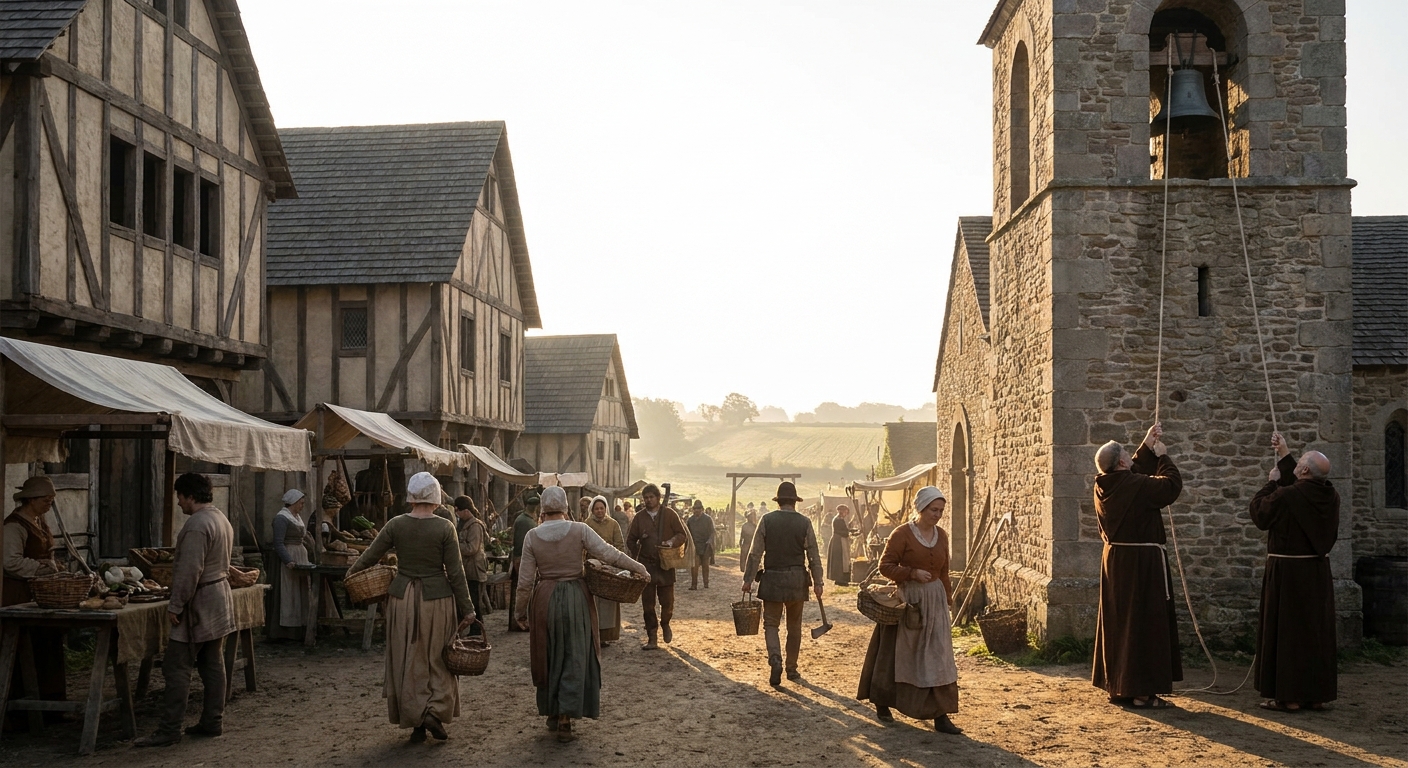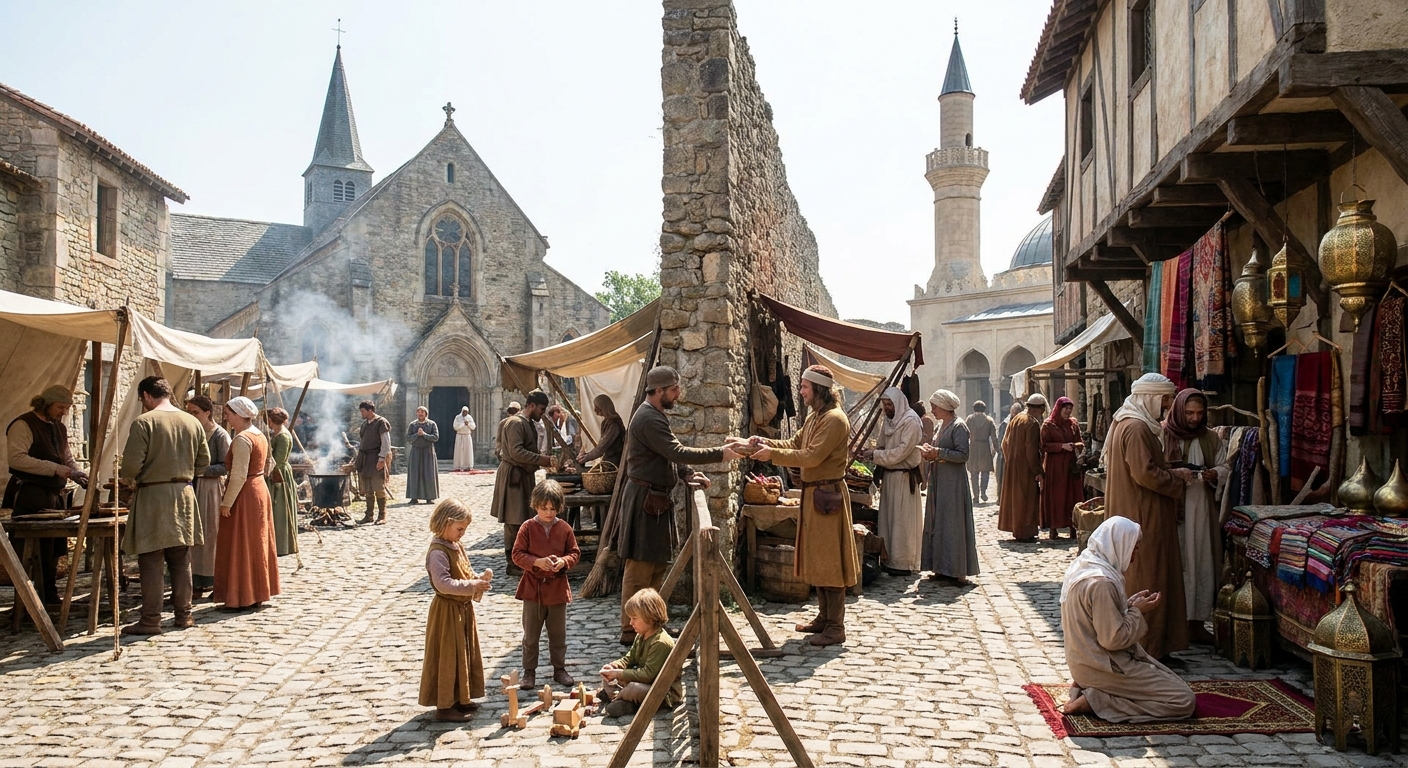
Popular imagination turns castles into fantasy backdrops—looming walls, roaring fires, clanking armor. Archaeology and surviving documents reveal something richer: castles as living machines of power, administration, and domestic life.
Beyond Moats and Drawbridges: Rethinking the Medieval Castle
This guide walks room by room through a high medieval castle (c. 1100–1400), using excavations from sites like Château Gaillard (France), Dover Castle (England), and Malbork (Poland), alongside letters, household ordinances, and chronicles. The aim: to see how castles really worked and how their logic still shadows modern architecture and security.
1. Approaching the Castle: Landscapes of Control
A castle is more than a building; it’s a manipulated landscape. Documents like the 12th-century Gesta Tancredi describe fortresses perched on crags, controlling routes and river crossings.
Archaeological surveys show common placement strategies:
- Hilltops and spurs for maximum visibility (e.g., Château Gaillard).
- River bends and fords for toll collection (e.g., Warwick Castle).
- Border zones for projecting royal or princely power (e.g., Edward I’s castles in Wales).
Earthworks often predate stone. At many sites—Cardiff, Chepstow, countless motte-and-bailey castles—excavations reveal an initial wooden phase: a timber tower on an earthen mound, enclosed by a palisade. Only later do stone curtain walls and keeps appear.
These choices weren’t just military. Position signaled status. In charters, lords proudly style themselves "of" their castle: Robertus de Monteforti, etc. The hill and tower redesign the skyline as a political statement.
2. Gatehouses and Drawbridges: The Medieval Checkpoint
Passing into the castle meant crossing thresholds engineered for scrutiny. The gatehouse concentrated defenses and social control.
Typical features, many confirmed by excavations at sites like Caerphilly and Bodiam, include:
- Portcullises: Heavy grilles; excavation slots in masonry show where they slid.
- Murder-holes: Openings for dropping stones or boiling liquids.
- Guardrooms: Small side chambers, often identified by hearths and finds like weapon fragments.
Written sources help reconstruct use. A 14th-century English household ordinance specifies gatekeeper duties:
"The porter shall suffer no strange person to enter without leave… and shall close the gate at curfew." (Harleian MS 642)
This is early access control. The gate filtered not only enemies but also beggars, pedlars, and suspicious strangers—much like modern security desks or border posts.
3. The Courtyard: A Working Yard, Not an Empty Space
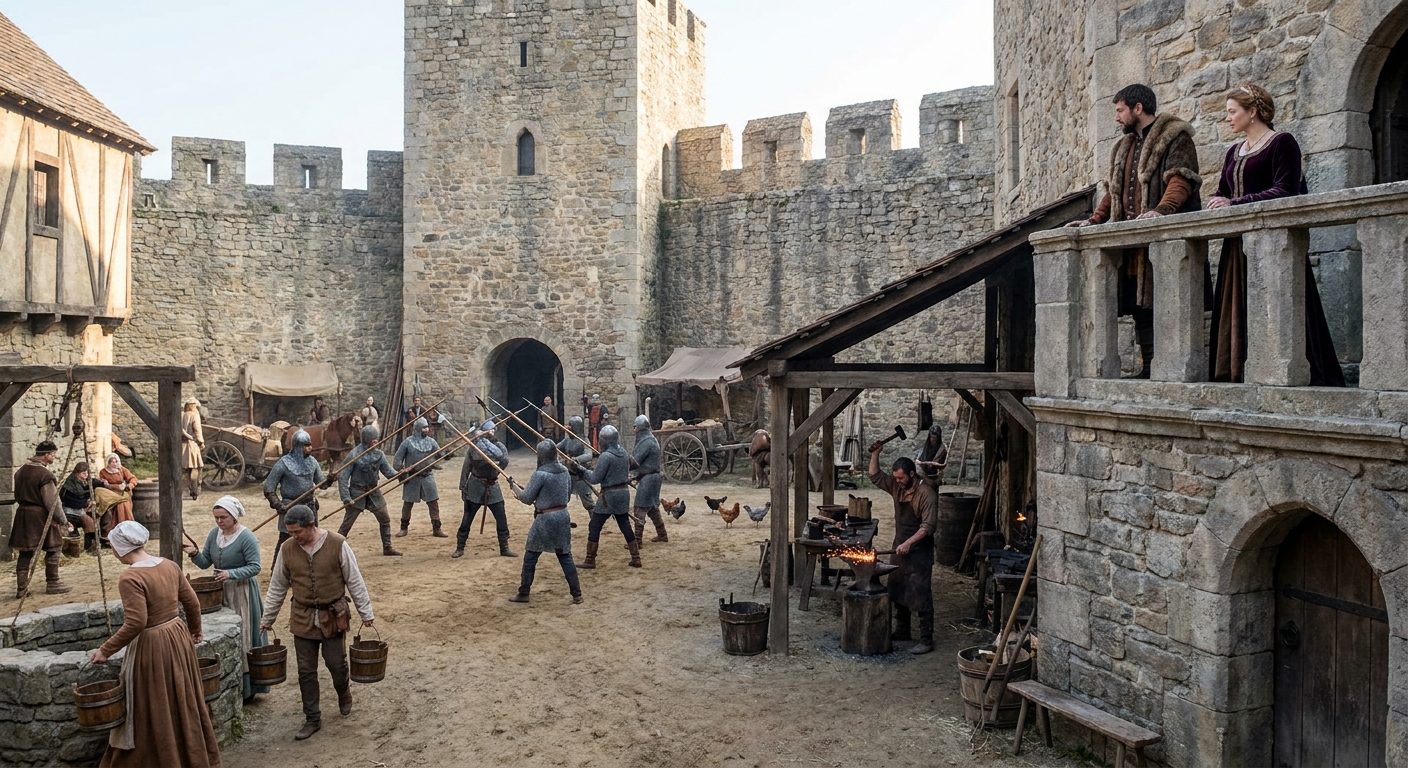
Step inside many castles today and you see a grassy void. In the Middle Ages, the bailey or inner courtyard was crowded with life.
Excavations routinely uncover:
- Workshops: Smithies, carpenters’ yards, indicated by slag, nails, offcuts.
- Stables and byres: Animal bones, hoof prints in compacted surfaces, dung layers.
- Kitchens and bakehouses: Ovens, drainage channels, heaps of charred seeds and fish bones.
At Cardiff Castle, for example, archaeologists found evidence of industrial-scale food preparation—huge ovens, butchered cattle bones—matching documentary references to large garrisons and household staffs.
The courtyard was noisy and smelly: clanging iron, braying animals, cooked meat, tanning hides. It was closer to an industrial estate than a romantic lawn.
4. The Great Hall: Stage of Authority and Community
The architectural and symbolic heart of the castle was the great hall. Here the lord dined, dispensed justice, and staged hospitality.
Surviving halls (Westminster, Chepstow, the Wawel in Kraków) share key features:
- High central space with timber roof.
- Raised dais at one end for the lord’s table.
- Central or side hearth, replaced later by wall fireplaces.
The 13th-century Household Ordinance of Edward II specifies arrangements for daily meals, with strict seating hierarchies:
"The king shall sit at his board on the dais… below the salt shall sit knights and clerks…" (British Library, Cotton Nero A.iii)
Here, architecture enforces social order. Where you sat, what you ate, and how visible you were to the lord all carried meaning.
Archaeology supports the grandeur. At Doué-la-Fontaine and other sites, fragments of carved stone, decorative tiles, and imported pottery (e.g., Saintonge ware) show elite consumption and visual display. The hall projected wealth as much as power.
Modern parallels abound: corporate boardrooms, parliamentary chambers, courtrooms—spaces where seating, visibility, and architectural focus encode hierarchy.
5. Kitchens and Storage: Feeding Fortress and Household
Feeding a castle was a logistical feat. Castles were not permanent garrisons under siege; they were hubs of ongoing consumption.
Account rolls from castles like Windsor and the Teutonic Order’s Malbork detail massive quantities:
- Thousands of loaves per week.
- Barrels of ale and wine.
- Seasonal surges for feasts and hunts.
Archaeological evidence complements the numbers:
- At Malbork, extensive cellars and granaries demonstrate storage capacity.
- At Rothenburg and other German sites, charred grain stores indicate both normal use and occasional disaster.
Discarded bones reveal diet:
- High-status cuts of beef, pork, mutton.
- Game (venison, boar) in noble contexts.
- Vast quantities of herring and cod, especially in northern Europe, fitting with Lenten fasting rules.
The need to store and process food for large numbers shaped the castle’s form as much as defensive concerns.
6. Private Chambers: Intimacy, Status, and Gender
Contrary to fantasy portrayals, privacy was limited. But from the 13th century onward, we see the gradual multiplication of smaller rooms: solar, wardrobe, retiring chambers.
Wardrobe accounts from Queen Eleanor of Provence’s household mention:
"the Queen’s chamber, the little chamber within, and the wardrobe with her jewels" (PRO E/101 roll series)
Archaeological traces—a fireplace in an upper room, wall paintings, window seats—signal more intimate, comfortable spaces. At sites like Bolsover Castle, painted plaster fragments and traces of glazing indicate efforts to beautify and insulate private rooms.
Gender shaped access. Ladies’ chambers were not isolated; they were social and semi-public, staffed by attendants. Yet they formed key nodes in networks of patronage, letter-writing, and cultural production (embroidery, book commissioning).
The evolution from one big multi-use hall to a complex of specialized, private spaces anticipates modern domestic layouts: living rooms, studies, bedrooms with en suite facilities.
7. Chapel and Religion: Stone Sanctity Inside Stone Power
Most castles had chapels, sometimes lavishly endowed. Royal and princely chapels, such as the Sainte-Chapelle in Paris (though not in a castle strictly speaking), set the standard for stained glass and relic display.
At more modest sites, excavations typically find:
- A dedicated rectangular room with an east-facing apse.
- Fragments of altars and liturgical stonework.
- Occasionally wall paintings of saints or biblical scenes.
Charters and inventories list altar vessels, reliquaries, and vestments donated by lords and ladies, underscoring the chapel’s role in displaying devotion and prestige.
Daily masses, prayers for the lord’s lineage, and commemorations for the dead fused the household into a spiritual community. The chapel sacralized the exercise of power—literal "holy ground" inside a stronghold.
8. Dungeons and Myths: Imprisonment in Reality
The iconic "dungeon"—a dripping underground torture chamber—is largely a modern construct. Medieval castles did hold prisoners, but conditions and spaces varied.
Primary sources like the Chronicle of the Abbey of St Albans mention high-status captives held in relative comfort, occasionally allowed visitors and servants.
Archaeological identification of prison spaces is tricky. Some lower chambers in keeps (e.g., at the Tower of London) were indeed used for confinement, as graffiti and restricted access suggest. Others were stores or cisterns.
Legal records show imprisonment was one punishment among many, alongside fines, mutilation, or banishment. Castles, as administrative centers, naturally hosted cells. But the stereotype of universal subterranean torture owes more to later imagination and selective memory than to typical practice.
9. Siege Mode: How a Castle Fought—and Fell
In wartime, the castle’s latent military design came to the fore. Chronicles describe sieges with vivid detail: the long siege of Château Gaillard (1203–1204) by Philip Augustus, for example, ended in starvation and assault.
Siege archaeology at sites like Kenilworth and Rochester reveals:
- Undermining: Tunnels dug under walls; collapsed sections show where fires were lit to bring down masonry.
- Projectile damage: Stone balls from trebuchets, sometimes embedded in walls.
- Emergency works: Hasty ditches, counter-fortifications.
Provisioning was decisive. A castle could fall not because its walls cracked but because its granaries emptied. Modern siege psychology has roots here: the slow grind of hunger, disease, and attrition.
Yet many castles surrendered without full-scale assault, negotiated into hands that could pay ransoms and respect elite codes. Warfare and law intertwined.
10. Castles After the Middle Ages—and in Our Heads
By the late Middle Ages, gunpowder artillery challenged traditional designs. Some fortresses—like the Italian trace italienne star forts—evolved, but many feudal castles declined or transitioned into palaces.
Their afterlives:
- Quarries: Stone stripped for nearby building.
- Romantic ruins: 18th–19th century artists and tourists invented the "picturesque" ruin.
- National symbols: From Edinburgh to Malbork, castles became emblems of states and identities.
Today, the logic of the castle survives in:
- Gated communities and walled compounds.
- Government "secure zones" and bunkers.
- Corporate campuses with controlled entries, surveillance, and symbolic architecture.
We still build in stone, glass, and steel to project power, manage access, and organize daily life—just as medieval lords did with towers and gates.
Understanding how castles actually worked grounds the fantasy in real human choices: how to feed people, how to separate and connect, how to sanctify authority, and how to live with the ever-present possibility of violence. The stones are old, but the problems they addressed feel very current.