Open a monastery door at dawn in the year 1200, and you are stepping into a clockwork world—long before mechanical clocks were common. Time was not a neutral grid of hours but a sacred rhythm that shaped prayer, work, politics, and even rebellion. To understand the medieval world, it helps to follow people through a single day.
The Medieval Day as a Window into a Lost World
This article reconstructs a typical day in Western Europe around the 12th–13th centuries, drawing on monastic rules, urban records, letters, miracle collections, and archaeological evidence. By tracing 24 hours, we see how people experienced power, faith, gender, and community in ways both alien and surprisingly familiar.
Dawn: Bells, Matins, and the Soundscape of Faith
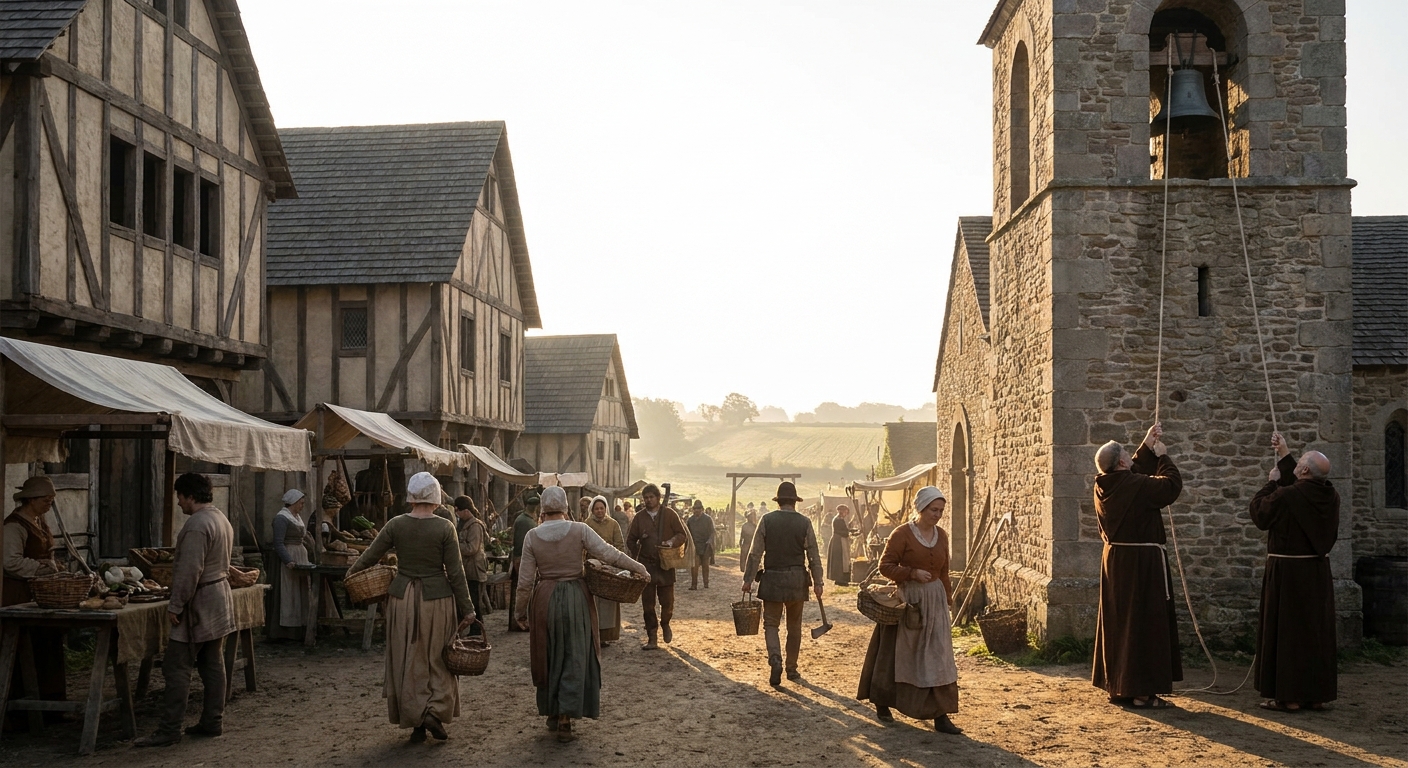
For monks and nuns, the day often began in darkness with the night office—Matins—summoning the community to the choir.
The Rule of St Benedict (6th century), still influential in the High Middle Ages, prescribes:
> "At the hour of Matins... let them hasten to the Work of God… let nothing, therefore, be preferred to the Work of God." (Rule, ch. 43)
At Cluny or Citeaux, bells called communities to prayer seven or eight times each day. Archaeological surveys of monastic complexes—such as those at Cluny in France—show how architecture was literally organized around this liturgical schedule: dormitory doors opening toward the church, covered passageways leading from cloister to choir.
Outside the cloister walls, village churches often used hand-bells or simple wooden clappers. In towns like 13th-century London, the ringing of parish bells structured the day of lay people as well: signaling market openings, curfew, and public announcements.
In both sacred and secular spaces, the sound of bells made time audible. Before mechanical clocks, this ringing was the shared heartbeat of a community.
Morning: Fields, Workshops, and Gendered Labor
As dawn light spread, peasants went to the fields. Manorial court rolls—such as those from the estates of the Bishop of Winchester—list obligations owed by tenants: plowing, sowing, weeding, harvesting, carting, and repairing hedges.
These records rarely name women, but they worked alongside men. Archaeobotanical studies from rural sites in England and France show the intense labor needed for grain production: from sowing to milling. Women’s roles in grinding grain, brewing ale, dairying, and textile production emerge more clearly in other sources:
- Wills and inventories listing spinning wheels, looms, and brewing equipment.
- Iconography such as the Bayeux Tapestry, where women appear brewing and preparing textiles.
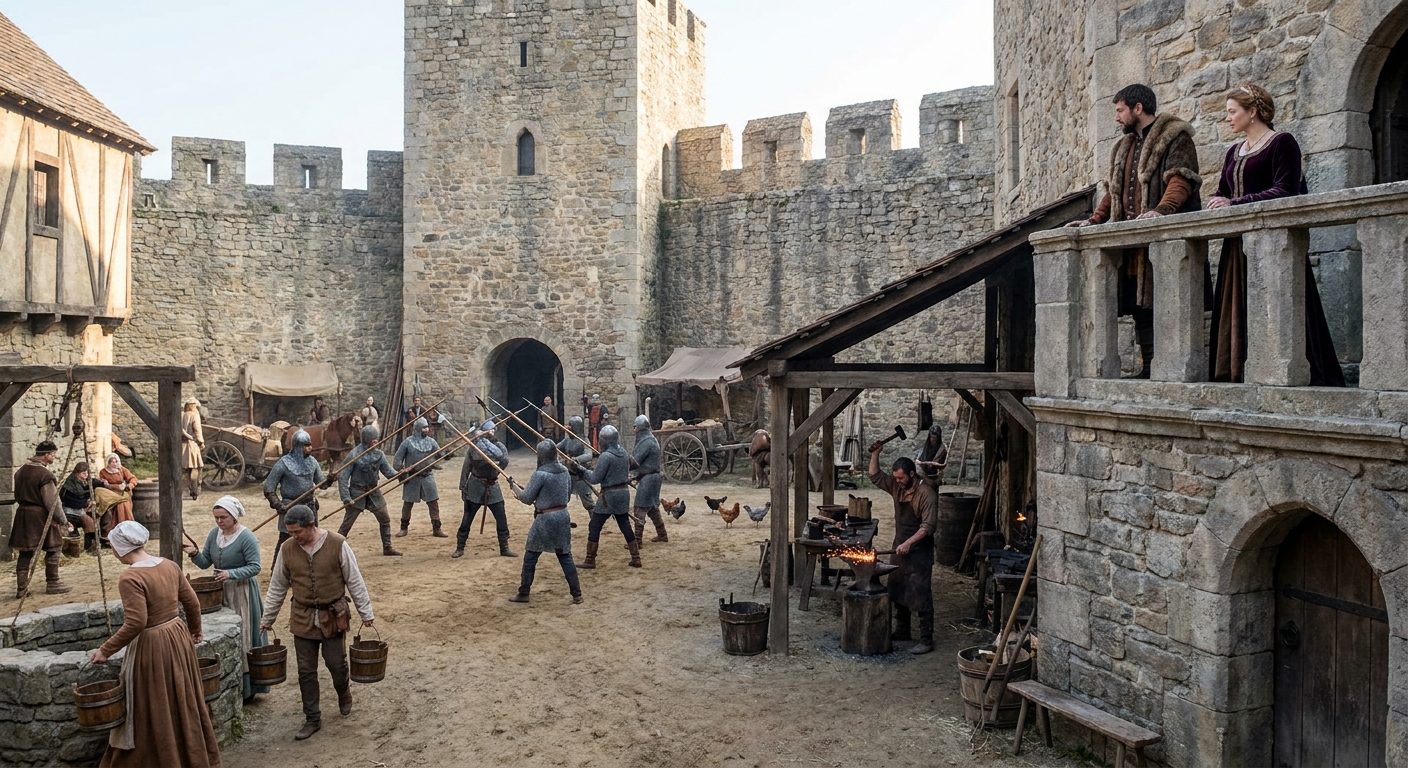
In towns, mornings filled with artisanal noise: hammering at forges, scraping hides, the rhythmic thump of fulling cloth. City customs and guild statutes from places like Ghent, Florence, and York reveal the regulation of this labor: apprenticeships, quality standards, and strict market hours.
A 13th-century regulation from London’s fishmongers, for instance, dictates:
> "No one shall sell fish before the hour of prime… under penalty of forfeiture." (Liber Albus)
Time here is commercial as well as spiritual—a reminder that medieval cities were not timeless backdrops, but carefully scheduled machines of profit.
Midday: Markets, Food, and the Politics of Survival
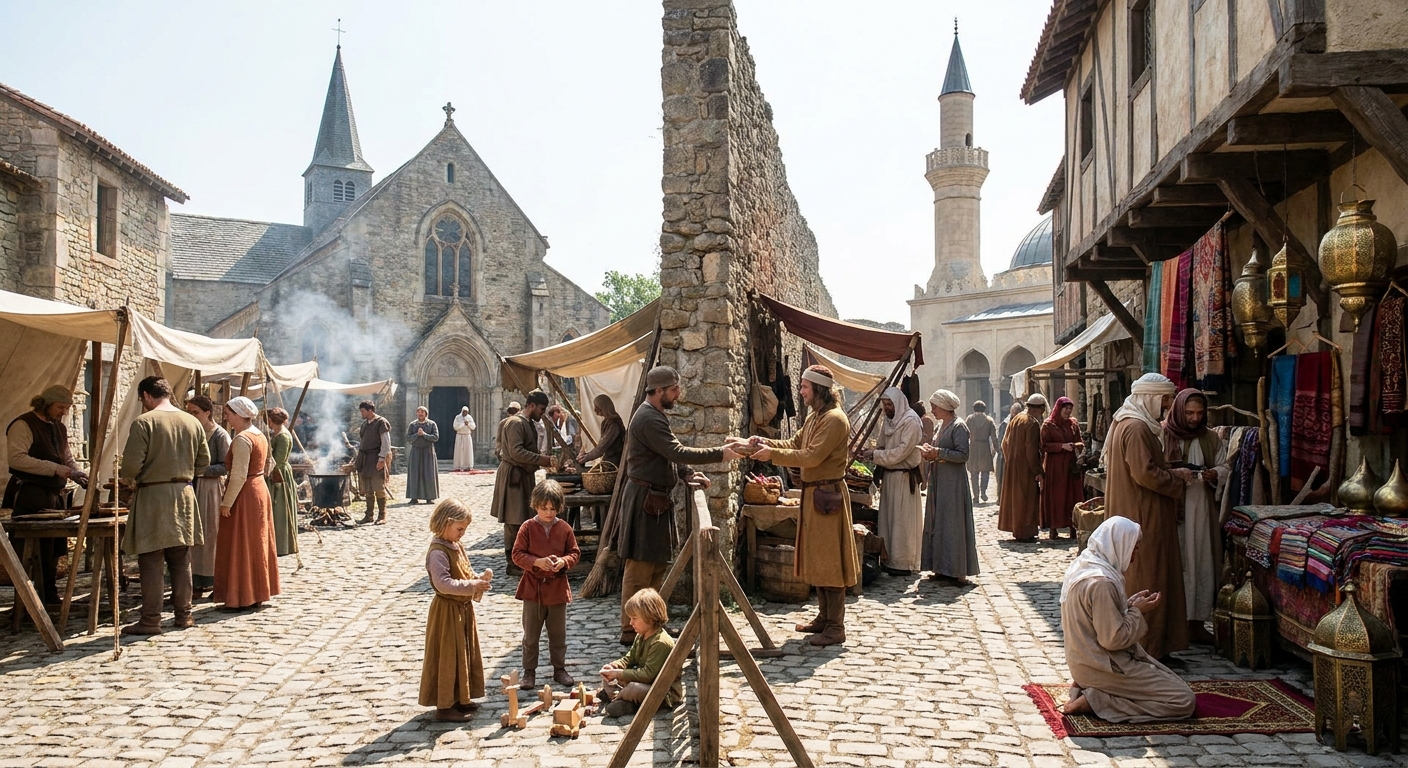
By late morning and midday, those who could afford it took their main meal. Archaeological excavations in medieval urban layers—from London to Lübeck—regularly recover animal bones, fish remains, pottery shards, and cooking tools that reveal diet and social status.
Patterns in the bones tell a story:
- Nobles consumed more beef, venison, and high-status cuts.
- Urban dwellers relied heavily on fish, especially during religious fasts.
- Rural peasants ate more cereals, legumes, and cheaper cuts.
Monastic cartularies and papal decrees, such as the 1215 Fourth Lateran Council, regulated fasting and abstinence days. This calendar of permitted foods shaped fisheries, trade routes, and urban markets, tying diet to doctrine.
The immediacy of food politics appears vividly in a letter from Abbot Suger of Saint-Denis (early 12th c.), bragging about his abbey’s wine estates and granaries as shields against famine. Famine was never far away.
Diets and food anxiety persist as modern concerns. Our interest in seasonal, local food and "food miles" echoes medieval preoccupations with provisioning, proximity, and the ethics of consumption—though we frame them in environmental rather than theological terms.
Afternoon: Courts, Conflicts, and Writing Power
Afternoons often brought legal and political business. Royal itineraries—like those of Henry II of England or Philip Augustus of France—show kings perpetually on the move, holding court in castles and towns.
Royal charters recorded in collections such as the Regesta Regum Anglo-Normannorum give glimpses of a typical day:
- Confirm grants to monasteries before witnesses.
- Hear disputes between nobles.
- Issue orders about roads, bridges, and markets.
On a smaller scale, manor courts met to fine tenants, settle boundary disputes, or regulate village life. Court rolls from places like Halesowen or Evesham (13th–14th c.) record fines for brewing bad ale, encroaching on common land, or refusing required labor.
These records are invaluable: they capture ordinary voices—complainants, witnesses, offenders—filtered through a clerical hand. They show a world where law was public, oral, and deeply local, even as royal and canon law grew more sophisticated.
The scholastic revival of the 12th century brought a new class into the afternoon landscape: university students and masters. In Paris, Bologna, and Oxford, lectures in law, medicine, and theology clustered around church hours. Surviving lecture notes and glossed manuscripts show how afternoons might be spent arguing about Aristotle, canon law, or the nature of the soul.
Evening: Stories, Songs, and the Fabric of Memory
As work ended, evenings were times for storytelling and sociability. No court records capture this directly, but chronicles, miracle stories, and later folklore preserve echoes.
The 12th-century chronicler Orderic Vitalis describes winter evenings in Norman halls where:
> "…knights and their squires, having feasted, listened to minstrels chanting the deeds of ancient heroes." (Ecclesiastical History)
Archaeological remains of great halls, like the one at Chepstow or in the royal complex at Winchester, show central hearths and long benches—spaces built for eating, listening, and remembering.
In humbler homes, light came from tallow candles or rushlights. Excavations of peasant houses—from Wharram Percy in England to deserted villages in France and Germany—reveal small interiors, earthen floors, and hearths that were both kitchen and heater. Here, oral stories, local legends, and family histories circulated.
The evening was also a time of fear. Church penitentials and sermons warn against demons, night wandering, and illicit sexuality. Night was morally dangerous as well as physically dark.
Night: Sleep, Dreams, and the Sacred
Medieval people did not sleep as we do. Literary and medical sources suggest segmented sleep—"first sleep" and "second sleep"—with a waking period in the middle of the night.
A 13th-century medical text attributed to Aldobrandino of Siena advises on appropriate sleep positions, while penitentials warn against "bed sins"—linking the night to spiritual peril.
In monasteries, night hours were punctuated by prayer. Monastic dormitories at sites like Clonmacnoise and Cluny show easy access to the church for nocturnal offices. The built environment enforced spiritual vigilance.
Visions and dreams, recorded in saints’ lives and miracle collections, often occur at night. The Miracles of Saint Thomas Becket (late 12th c.) includes numerous accounts of dream healings and nocturnal visitations—reinforcing the sense that night was a liminal time when the boundary between worlds thinned.
From Bell to Smartphone: Medieval Time and the Modern World
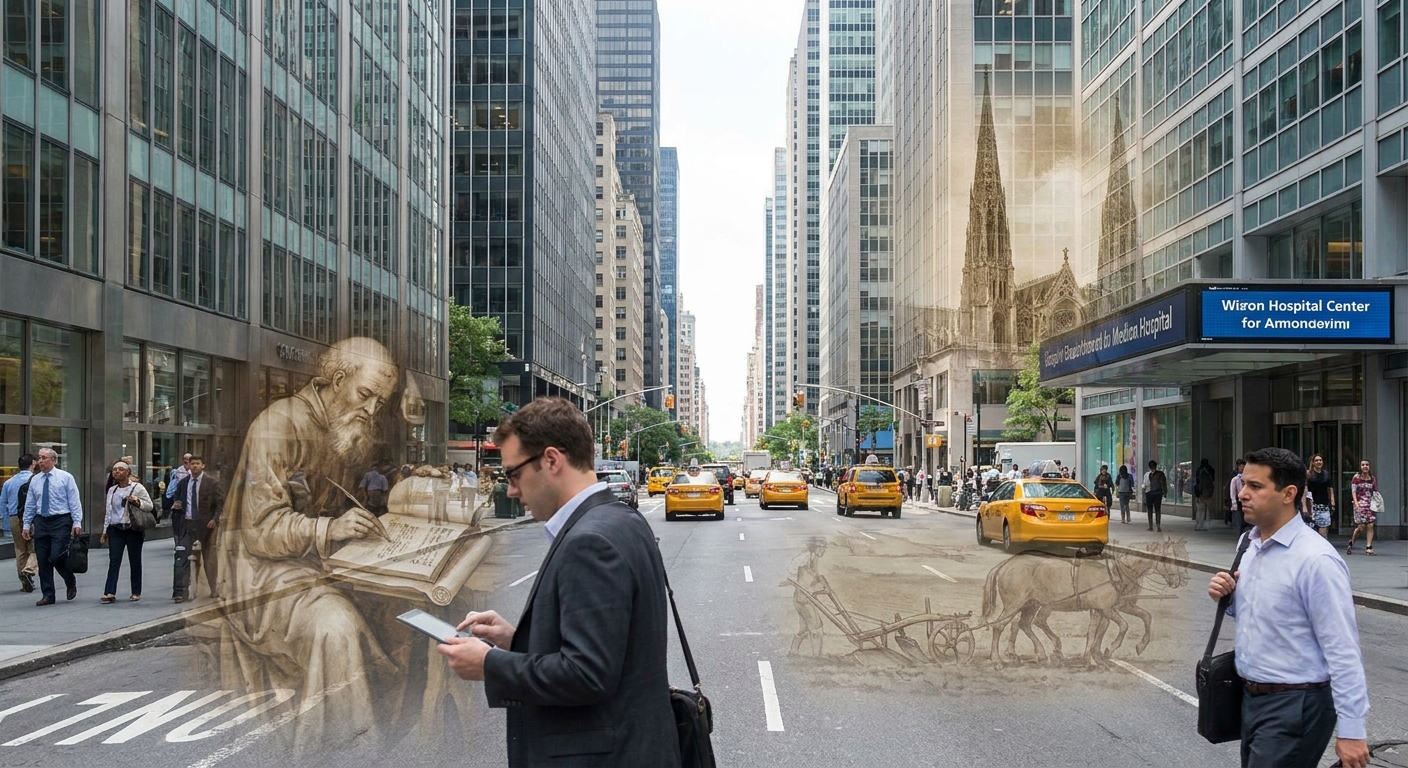
Our days, too, are structured—by alarms, calendars, and push notifications. The medieval day reminds us that time is always social and ideological, not simply mathematical.
Connections to the present include:
- Work and time discipline: Today’s debates about work–life balance and the gig economy echo medieval tensions between customary rhythms and external demands (lords, markets, liturgy).
- Soundscapes: Where bells once ruled, we now have alerts and ringtones. Both create shared expectations and intrusions.
- Sacred vs. secular time: Religious calendars still shape holidays, while secular versions (sports seasons, school years) mirror liturgical structures.
By following a medieval day hour by hour, we see not a "dark" age but a highly organized, meaning-saturated world. Bells and candles, plows and prayer, law courts and lullabies—together they formed a dense web of practices that gave structure to lives often precarious yet rich in significance.
Understanding this daily choreography helps us rethink our own schedules and the invisible assumptions built into them. The medieval world may be gone, but we still live inside carefully constructed days.