In 1858, the British scholar A. H. Sayce read a passing reference in the Bible to a mysterious people: the Hittites. To his dismay, his academic peers scoffed. No such empire had ever existed, they insisted; the Hittites were, at best, a minor tribe inflated by biblical authors. There were no inscriptions, no chronicles, no visible ruins.
Introduction: An Empire Erased from Memory
By the early 20th century, that confidence had dissolved into embarrassment. Tablets pulled from the earth at a remote site in central Anatolia—Boğazköy, modern Boğazkale—revealed an expansive empire that once rivaled Egypt and Assyria. The Hittites had not been small. They had been forgotten.
This is the story of how archaeologists, linguists, and a few stubborn iconoclasts brought a lost empire back into history.
A Capital Rediscovered: Hattusa and the Shape of Power
The modern rediscovery of the Hittites is inseparable from the ruins of their capital, Hattusa, perched above the plains of central Turkey.
In the 1830s, the French explorer Charles Texier visited Boğazköy and sketched the cyclopean stone walls and strange reliefs of warriors and gods. He recognized the site’s scale but not its identity. Only later would excavations led by Hugo Winckler and Theodor Makridi (from 1906 onward) establish that this was Hattusa, capital of a Bronze Age great power.
Walking Hattusa today, the archaeological strata still convey imperial ambition:
- The Great Temple (Temple 1): Once shimmering with polished limestone and timber beams, this complex measured over 14,000 square meters. Storage rooms held vast ceramic jars. Some may have contained oils and grain for offerings to the storm-god Tarḫunna and the sun-goddess of Arinna.
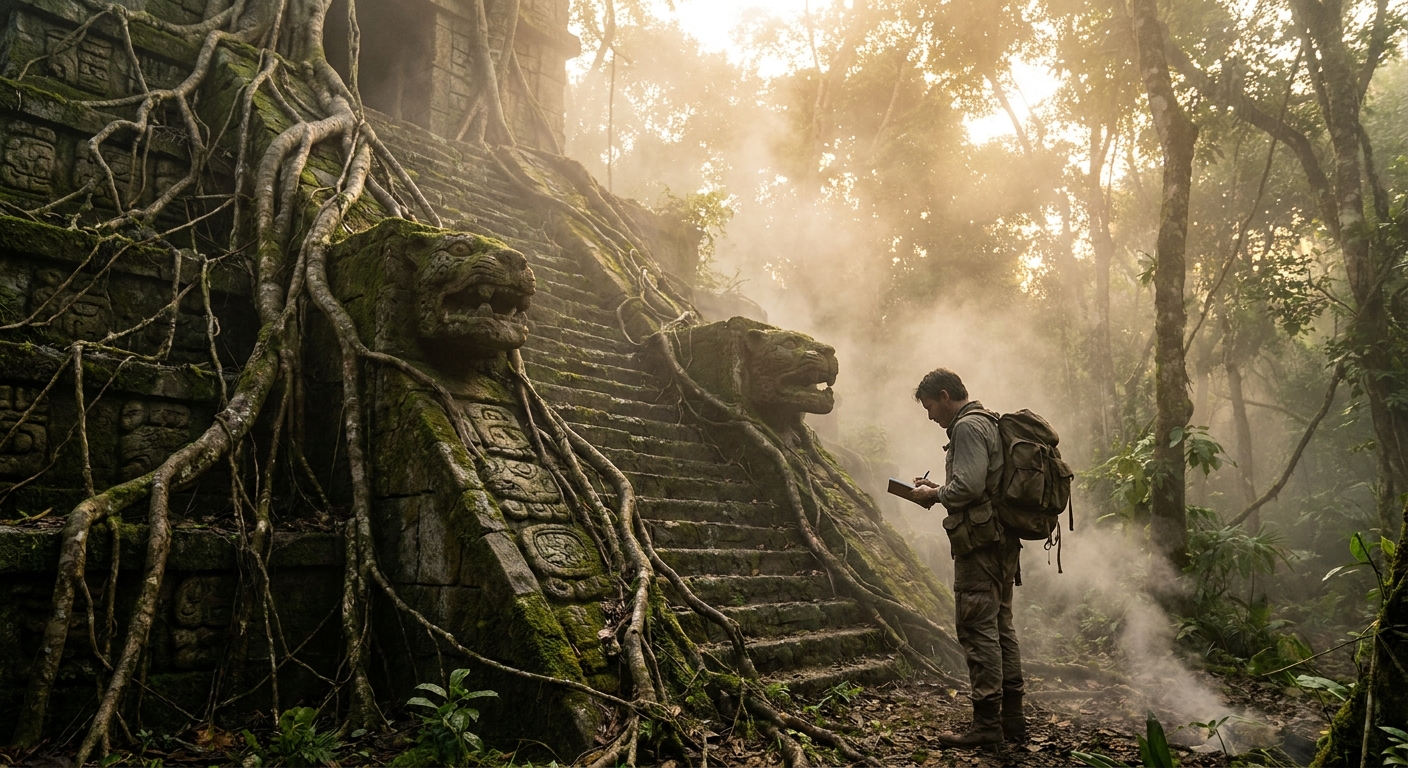
- City Walls and the Lion Gate: Over 6 kilometers of fortifications snake over hills, interspersed with monumental gates. At the Lion Gate, massive stone lions—their eyes now worn—once glared down at entering envoys.
- The Tunnel (Postern): A covered, corbelled passage beneath the walls, nearly 70 meters long, allowed the garrison to move unseen. The stones, still snugly fitted without mortar, echo with footsteps today.
Everything about Hattusa—its commanding hilltop, its terraced temples, its layered defenses—speaks of a polity that saw itself as a "great king" among equals, standing beside Egypt and Babylon.
The Clay Archive: Voices from a Lost Court
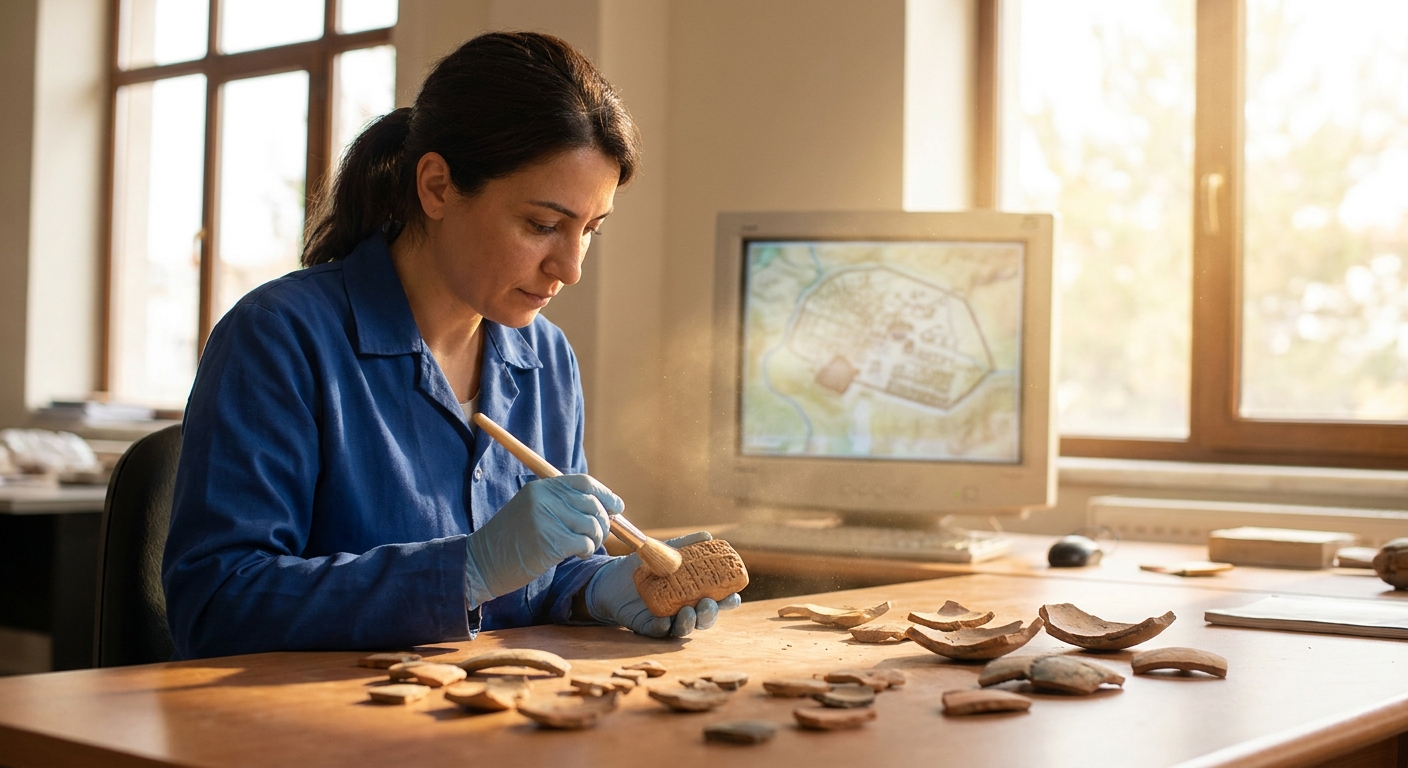
The true revolution in Hittite studies came not from walls but from words. Between 1906 and 1912, excavators uncovered tens of thousands of cuneiform tablets in palace and temple archives.
Written in Akkadian (the diplomatic lingua franca) and in Hittite (what scholars call Nesili), these tablets include:
- Royal edicts and laws – for example, the Hittite Laws (CTH 291–292), prescribing fines in silver and cattle for various offenses.
- Historical annals – such as the Annals of Hattusili I and The Deeds of Suppiluliuma, which read like royal memoirs.
- Treaties and oaths – none more famous than the treaty of Ramesses II and Ḫattušili III, after the Battle of Kadesh (c. 1259 BCE).
- Myths and rituals – including the Myth of the Missing God and seasonal festivals that reveal a rich religious life.
One tablet (KBo 1.1), an account of the reign of King Mursili II, records how plague ravaged the empire. In his prayer, Mursili pleads:
“O gods, my lords, I did not commit this sin. My father’s sin has fallen upon me. The sin of my father I have confessed to you.”
— Mursili II Plague Prayers (CTH 378)
This is not mythic distance; it is personal, almost modern in its tone of inherited crisis and political helplessness.
The First Known International Peace Treaty
The Hittite Empire forced its way into world-historical narratives through a single spectacular document: a treaty etched in both clay and stone.
After the inconclusive Battle of Kadesh (c. 1274 BCE) between Ramesses II of Egypt and Muwatalli II of Hatti, hostilities lingered. Eventually, Ramesses negotiated a peace with Muwatalli’s successor, Ḫattušili III.
The resulting agreement—found in multiple Hittite copies at Hattusa and in an Egyptian hieroglyphic version at the Temple of Karnak—is often called the world’s earliest surviving international peace treaty.
It stipulates:
- Mutual non-aggression: “The great ruler of Egypt shall not attack the land of Hatti forever. The great ruler of Hatti shall not attack the land of Egypt forever.”
- Extradition agreements: Runaway subjects would be returned, but not punished harshly.
- Dynastic alliance: The treaty was later sealed with marriage, as a Hittite princess married Ramesses II.
A replica of this treaty, presented by Turkey to the United Nations, hangs at UN headquarters in New York as an emblem of ancient diplomacy. A document born in the ashes of a lost empire now symbolizes the modern ideal of negotiated peace.
Deciphering a Forgotten Language
For decades, cuneiform tablets from Hattusa were mute. They used Mesopotamian signs, but the language was unknown. Some scholars thought it was a bizarre dialect of Akkadian; others suggested a non-Indo-European isolate.
In 1915, the Czech linguist Bedřich Hrozný made a bold claim. Examining a line from one tablet, he read:
“NINDA-an ezzatteni watar-ma ekutteni”
which he interpreted as: "You eat bread, and you drink water."
He argued that Hittite was an Indo-European language. Ninda paralleled words for "bread" or "food," watar resembled English water and German Wasser; verb endings echoed Indo-European patterns.
Hrozný’s work, published in 1917, reoriented not just Hittite studies but Indo-European linguistics. It extended the family tree to Anatolia and pushed its probable origins further back in time.
Everyday Life in a Vanished Kingdom
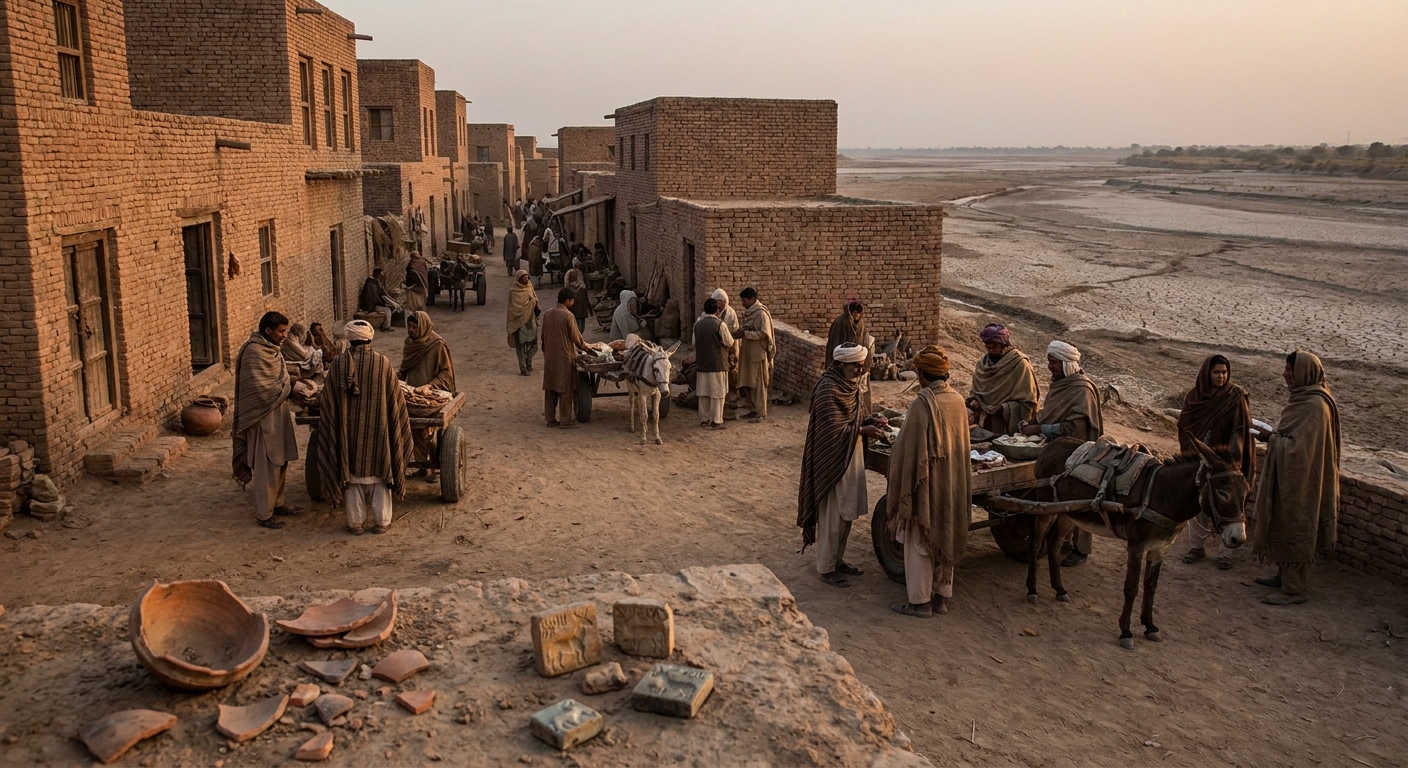
While royal annals and treaties dominate popular narratives, the Hittite tablet collections are peppered with traces of people who never imagined themselves as historical.
Tablets of Contracts and Inventories:
- Lists of sheep and goats assigned to temples.
- Contracts for land sales and adoptions, revealing complex property laws.
- Regulations on physicians’ fees—fines if they failed to heal a patient.
Religious Rituals:
Texts like the Purulli Festival describe processions, recitations of myths, and the symbolic defeat of chaos—ritual rhythms that may have accompanied seasonal agricultural cycles.
Art and Iconography:
The rock sanctuary of Yazılıkaya, near Hattusa, preserves a Hittite pantheon carved in procession along the limestone walls. Deities stride in profile, wearing horned crowns and pointed shoes. The storm-god Teshub stands upon mountains personified as men; the sun-goddess Hebat is borne on a lion. This visual program, likely tied to New Year festivals, is a cosmic diagram of royal legitimacy.
Collapse and Silence: What Happened to the Hittites?
Around 1200 BCE, the eastern Mediterranean’s political order convulsed. The so‑called "Sea Peoples," shifting trade networks, climate stress, and internal upheavals all contributed to the Late Bronze Age collapse.
For the Hittite Empire, the effects were devastating:
- The last known Hittite king, Suppiluliuma II, records naval battles off the coast of Anatolia.
- Excavations at Hattusa show destruction and subsequent abandonment. The great capital never again housed a major state.
Yet the Hittites did not simply vanish. Smaller Neo-Hittite states, such as Carchemish and Karkamish, persisted in northern Syria and southeastern Anatolia for centuries, blending Hittite, Aramaean, and Assyrian traditions. Their monumental inscriptions in Hieroglyphic Luwian—visible today at sites like Karatepe—form a bridge between the Bronze and Iron Ages.
Why the Hittites Matter Now
The rediscovery of the Hittites offers several enduring lessons for the modern world:
Historical Memory Is Fragile
A kingdom powerful enough to sign a mutual treaty with Egypt disappeared so thoroughly that its very existence was mocked in 19th‑century scholarship. Our understanding of the past is always partial—and subject to radical revision.
Multilingual, Multicultural Governance
Hittite scribes wrote in Akkadian, Hittite, Hattic, Hurrian, and Luwian. Governance in this empire depended on managing diversity, codifying law, and brewing fragile alliances—problems familiar to today’s multinational states.
Law, Diplomacy, and the Deep Roots of International Order
The Hittite treaty with Egypt is not a direct ancestor of modern international law, but it reveals that ideas of mutual security, extradition, and formalized peace have Bronze Age pedigree.
Climate, Crisis, and Systemic Collapse
Pollen cores, dendrochronology, and isotopic analyses from Anatolia suggest episodes of drought around the period of Hittite collapse. The empire’s fate underscores how climatic stress can push complex systems over the edge.
Primary Sources and Further Reading
For readers who want to engage directly with the evidence:
- Beckman, Gary. Hittite Diplomatic Texts. 2nd ed. Society of Biblical Literature, 1999.
- Hoffner, Harry A. The Laws of the Hittites: A Critical Edition. Brill, 1997.
- Bryce, Trevor. The Kingdom of the Hittites. Oxford University Press, 2005.
- Otten, Heinrich, et al. Keilschrifturkunden aus Boghazköi (KBo series) – the principal publication of Hittite tablets.
Walk the walls of Hattusa at sunset, and the stones still murmur fragments of this once‑lost empire. Clay tablets and weathered lions have done something extraordinary: they have pulled a vanished world back into the stream of human memory.